
IBM Patent Lets Self-Driving Cars Decide Their Own Automation Level as a Group
Instead of letting each car figure out how autonomous to be on its own, IBM wants a central AI to pool data from an entire fleet and tell every vehicle exactly how much to automate — in real time.
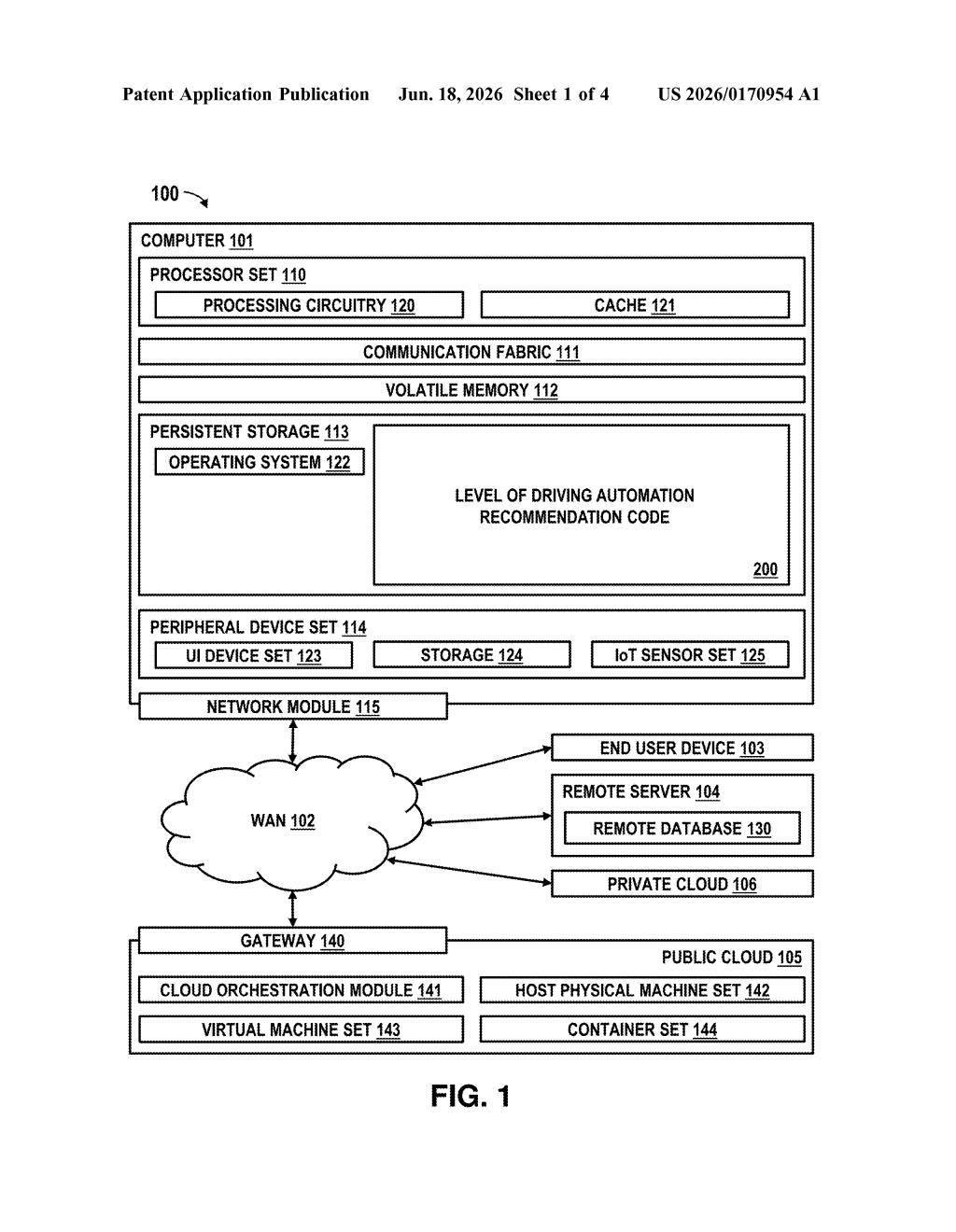
What IBM's collaborative driving automation system actually does
Imagine you're driving on a highway and conditions change fast: construction pops up, traffic bunches together, weather turns. Most self-driving systems today make decisions in isolation, using only what their own sensors can see. IBM's patent proposes something different.
The idea is to pool information from multiple vehicles at once — not just your car, but all the cars nearby — and feed that combined picture into an AI system. That AI then recommends a specific "level" of driving automation back to your car. Think of it as a dial that goes from "you're fully in control" to "the car handles everything," with several steps in between.
The recommendation isn't fixed. It shifts based on what the whole group of vehicles is experiencing, so your car can step up or step down its automation depending on what's actually happening around it, not just what it can see on its own.
How IBM's ML model picks the right automation level
The patent describes a server-side system (meaning the heavy thinking happens in the cloud, not just on the car) that collects contextual data from an autonomous vehicle. That data includes two streams: what the vehicle's own sensors are picking up, and what neighboring vehicles are reporting.
The system feeds all of that into a machine learning model — a type of AI trained to find patterns — which then predicts which SAE level of driving automation (the industry-standard 0-to-5 scale, where 0 is full manual and 5 is fully self-driving) would give that specific vehicle the best efficiency at that moment. "Efficiency" here likely covers a mix of factors like safety, traffic flow, fuel or energy use, and travel time.
Once the model makes its call, the system transmits a recommendation back to the vehicle. The key steps are:
- Collect sensor and telemetry data from the car itself
- Pull in data from other vehicles in the area
- Run the combined data through an ML model
- Send the optimal automation-level recommendation back to the car
The patent frames this as a multi-vehicle collaboration — the collective data picture is what makes the recommendation better than anything a single car could derive alone.
What this means for self-driving car deployment
Self-driving technology has struggled partly because individual cars make decisions with incomplete information. A car can only see so far and sense so much. IBM's approach treats nearby vehicles as a distributed sensor network, giving the AI a much richer picture of road conditions before it makes any recommendation. That could mean fewer edge-case failures, smoother traffic flow, and better energy efficiency across a whole fleet.
For the broader autonomous vehicle industry, this patent signals that cloud-connected, fleet-level intelligence may become a key piece of the puzzle — not just better onboard hardware. If IBM pursues this commercially, it could position the company as infrastructure for whoever ends up building the self-driving cars of the future, rather than building the cars themselves.
This is a solid systems-level idea, not a flashy consumer feature — IBM is essentially proposing to be the brain behind someone else's self-driving fleet. The multi-vehicle data pooling angle is the genuinely interesting part; a single car's sensors are limited, but a coordinated network is much harder to fool. Whether IBM can actually land fleet contracts is a separate question, but the technical logic here is sound.
There are more where this came from
We read every patent application Big Tech publishes and send you the ones worth knowing. Plain English, free, every week.
Want this weekly breakdown for a company we don't cover? Patentlyze Pro →