
Qualcomm's New Patent Stops AR Glasses from Filming What You're Not Looking At
Your AR headset is doing a lot of work to show you the real world in high detail — but what if it could just stop when you're not actually looking at it? That's the core idea behind Qualcomm's latest imaging patent.
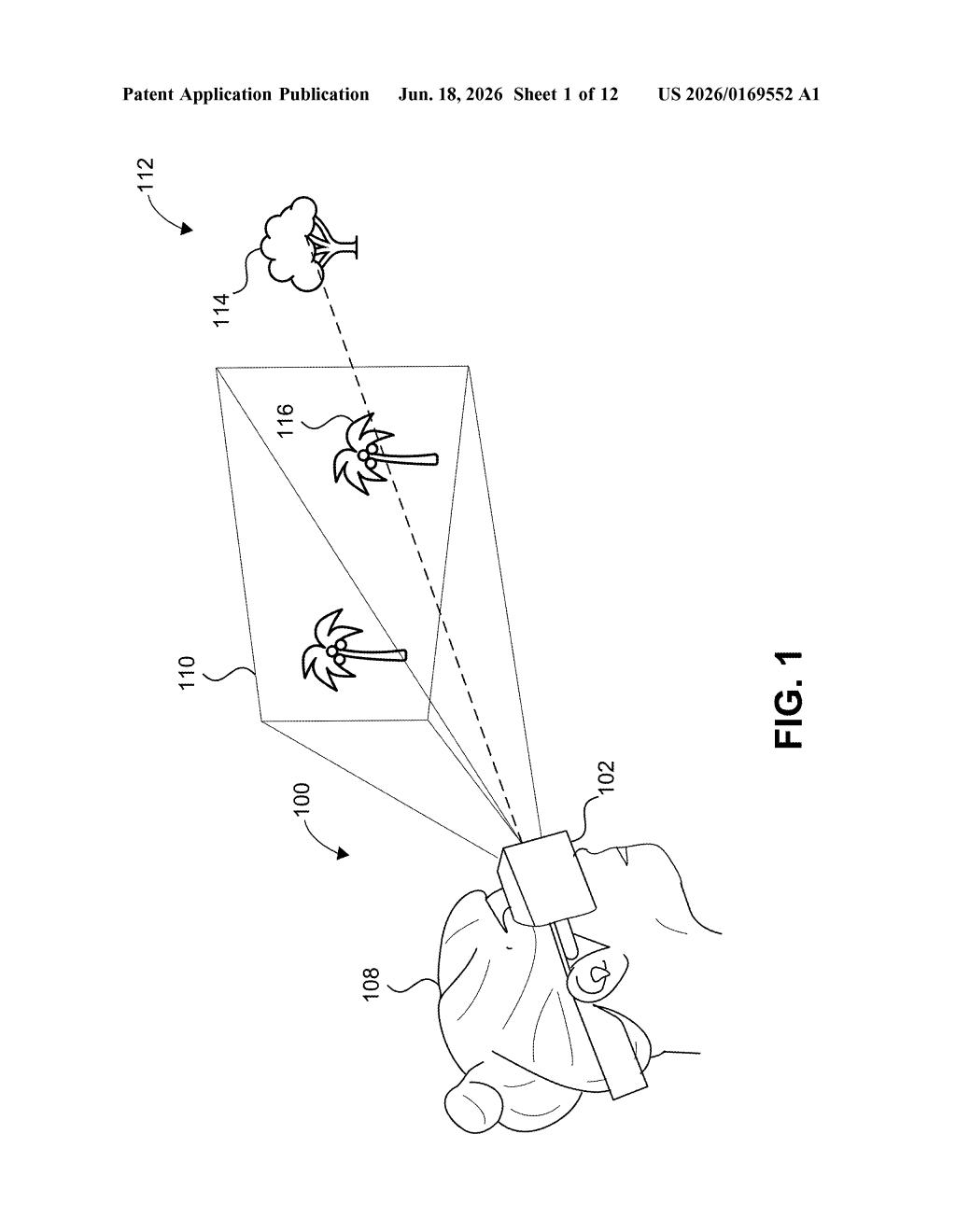
What Qualcomm's gaze-aware camera switching actually does
Imagine wearing AR glasses that blend the real world with floating menus, directions, or video calls. Those glasses have cameras constantly filming everything around you at high resolution so the display looks sharp and accurate. That takes serious power — which is why AR headsets still have notoriously short battery lives.
Qualcomm's patent describes a system that watches where your eyes are pointing. If you're looking at a virtual object — a floating notification, a 3D map, a video overlay — the headset quietly switches off the expensive, high-detail camera feed. It keeps a lower-resolution wide-angle view running (enough to track your surroundings), but stops processing the sharp, detailed image that would normally power the passthrough view.
The logic is simple: if you're staring at a digital object, you don't need a crisp real-world image behind it. So why pay the power cost for one? This kind of selective processing is exactly the sort of engineering that could help AR devices last through a full workday.
How the system disables the high-res feed mid-frame
The system uses what's called foveated imaging — a technique inspired by how human eyes actually work. Your eye has a small central region (the fovea) that sees in sharp detail, while your peripheral vision is much lower resolution. Foveated camera systems mimic this by capturing two simultaneous feeds: a narrow, high-resolution image of whatever is directly ahead, and a wide, lower-resolution image covering the broader scene.
Normally, both feeds are processed and sent to the headset's display pipeline. Qualcomm's patent adds a gaze-detection layer on top. The device tracks where your eyes are pointed in real time. When it detects that you're looking at virtual content (a rendered overlay rather than a passthrough view of the physical world), it disables the high-resolution feed entirely.
Only the wide, low-res feed continues — which keeps spatial awareness intact without burning through compute resources on image data the user isn't benefiting from.
Key components described in the patent include:
- A dual-resolution camera system capturing two simultaneous fields of view
- A gaze-detection mechanism that determines whether the user is focused on real or virtual content
- Logic that disables the high-res stream as a direct response to gaze direction
- An output pipeline that routes the appropriate feed to the host computing device
What this means for battery life in next-gen AR glasses
Battery life and heat are two of the biggest reasons AR glasses haven't gone mainstream. Processing high-resolution camera data continuously is expensive, and most current headsets can only sustain mixed-reality sessions for an hour or two. A system that dynamically skips that processing when it's not needed could meaningfully extend how long a device lasts between charges — without the user noticing any difference, since their eyes are pointed elsewhere anyway.
For Qualcomm specifically, this is strategic territory. The company supplies the chips inside many AR and XR headsets — including devices from Meta and others — so patents around efficient on-device imaging directly support its pitch to headset makers. Less compute, same experience is exactly the kind of story that sells silicon.
This is a practical, well-scoped power-saving idea rather than a flashy headline feature — and that's actually a point in its favor. The insight that 'you don't need high-res passthrough when the user is staring at a virtual object' is obvious once you hear it, but obvious solutions that nobody has shipped yet are exactly what moves hardware categories forward. Whether this ends up in a Snapspace or a future Snapdragon XR chip, it's a real engineering problem getting a real answer.
There are more where this came from
We read every patent application Big Tech publishes and send you the ones worth knowing. Plain English, free, every week.
Want this weekly breakdown for a company we don't cover? Patentlyze Pro →