
Qualcomm
Qualcomm · AR / VR · Filed Dec 17, 2024 · USPTO published Jun 18, 2026 · Jun 18 release
Qualcomm Patents a System That Predicts What You're About to Touch in VR
Before your hand even finishes moving, Qualcomm's patented system wants to know which virtual button you're heading for. It's a prediction engine for mixed-reality interfaces — and it could make VR feel dramatically less clunky.
- Publication number
- US 2026/0169551 A1(US20260169551A1)
- Applicant
- QUALCOMM Incorporated
- Filed · Published
- Dec 17, 2024 · Jun 18, 2026
- Inventors
- Laurent Ghislain GAIDON, Ludovic RIVALLAND, Mickael TINSEAU
- Status when we published
- Examiner raised objections; the company can respond
- Document
- 20 claims
- US classification
- 345/156
- Examiner
- HONG, RICHARD J (Art Unit 2623)
What Qualcomm's intention-prediction system actually does
Imagine using a VR headset and reaching toward a virtual button, but the system registers the wrong one — or lags just long enough to break the moment. That's one of the most frustrating parts of virtual reality today, and it's largely a sensor-reading problem.
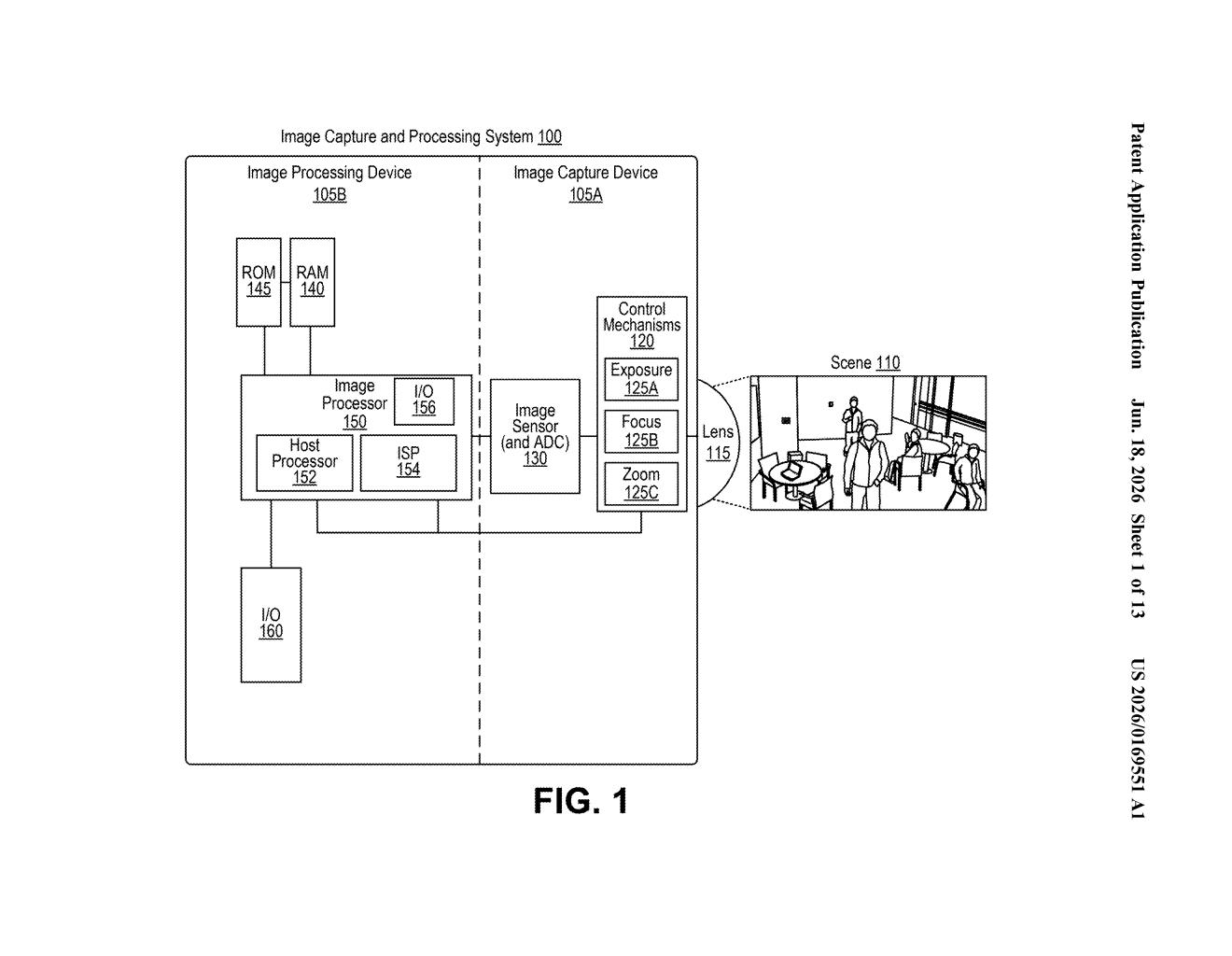
Qualcomm's patent describes a system that takes data from multiple sensors at once — things like hand tracking, eye gaze, or controller position — and runs them through a set of models trained specifically to predict which element in a virtual scene you're about to interact with. Rather than waiting for you to complete a gesture, it anticipates your intent.
The key idea is that the system normalizes all that sensor input into a common format before making its prediction. That matters because VR devices come with wildly different sensors, and a system that can speak all of their "languages" could work across many headsets without being rebuilt from scratch.
How the sensor data gets normalized and matched to VR elements
The patent describes a pipeline that takes raw sensor data — from cameras, depth sensors, hand trackers, eye trackers, or whatever inputs a device supports — and processes it in two parallel ways.
- Perception data: A higher-level interpretation of what the sensors see (e.g., "the user's index finger is extended and moving forward").
- Normalized sensor data: The raw sensor readings transformed into a standardized format so they can be compared and combined consistently, regardless of where they came from.
- Interactable element info: Data about the virtual objects in the scene — buttons, sliders, menus — that the user could potentially engage with.
Those three streams get combined into what the patent calls normalized output data, which is then fed into one of a set of interaction models — small, specialized AI models each trained to predict interactions with a specific type of virtual element. Think of it like having a different expert for "menu taps" versus "slider drags" versus "grab gestures."
The result is a prediction of what the user is about to do, before they finish doing it — which could let the system respond faster or more accurately than conventional input handling.
What this means for future XR headsets and controllers
For anyone who has used a VR or mixed-reality headset, input lag and mis-registration are constant annoyances. A system that predicts intent rather than just reacting to completed gestures could make interfaces feel more responsive, especially in fast-moving or precision-heavy scenarios like spatial computing apps or industrial VR tools.
For Qualcomm specifically, this fits squarely into its push to be the chip and platform layer inside third-party XR headsets — the Snapdragon XR chip family powers devices from Meta, Sony, and others. A framework that abstracts across different sensor configurations could let Qualcomm offer a consistent input-prediction layer regardless of which specific sensors a headset maker chooses to include.
Source: US 2026/0169551 A1 at the USPTO (PDF). Full patent text and figures are in the official publication.
Get our take in your Top Stories
Liked this breakdown? Add Patentlyze as a preferred source on Google, and our plain-English take shows up more often in your Top Stories the next time Qualcomm patent news breaks.
Add Patentlyze on Google
One click.
There are more where this came from
We read every patent application Big Tech publishes and send you the ones worth knowing. Plain English, free, every week.
More from Qualcomm
All 624 Qualcomm patents →
More in AR / VR
All 690 AR / VR patents →
Apple
Apple Patents a Headset Camera That Wakes Up Before You Tap the Button
Sony
Sony Patents a Finger Ring That Controls AR Displays With a Tap
Meta
Meta Patent Lets Smartwatch Users Trigger Smart Glasses Camera With a Tap
Meta