
Apple Patents a Way to Pull Live Camera Feeds Into Augmented Reality Spaces
Imagine popping open a virtual room and pinning your front-door camera feed to one wall — live, in 3D, without switching apps. That's the core idea in Apple's latest patent.
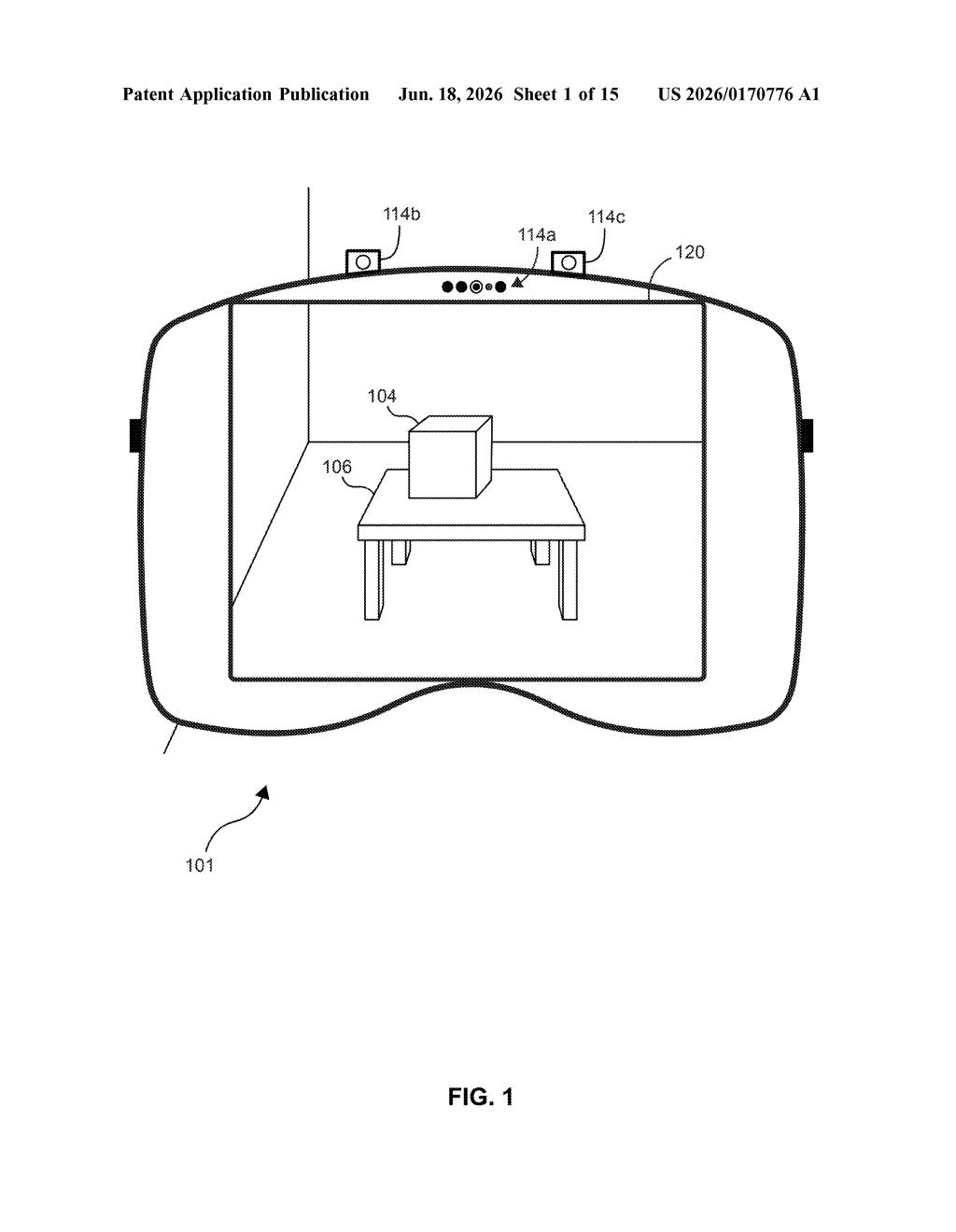
What Apple's AR camera-feed patent actually does
Picture a virtual workspace floating in your living room — the kind you might use with Apple's Vision Pro headset. Right now, if you want to check a security camera or a webcam, you have to leave that 3D space and open a separate app. Apple's new patent describes a way to bring those live camera feeds directly into the 3D environment, pinned to specific spots in the virtual room.
The system works by letting your device scan a visual code displayed on a connected gadget — similar to a QR code — to create a direct communication link to a camera. Once that link is made, the live footage appears at a pre-set location inside your virtual space.
You could, in theory, set up a corner of your virtual home office to show your baby monitor, your doorbell cam, or a colleague's webcam — all without breaking out of the immersive experience.
How the media link connects a camera to a 3D scene
The patent describes a computer system — likely a headset or spatial computing device — that can receive and display image sensor data (live footage from cameras or other imaging devices) inside a three-dimensional environment.
There are two main ways the connection gets set up:
- Visual code pairing: An electronic device (like a smart display or a phone) shows a visual code on its screen. The headset scans it, and that scan bootstraps a communication link directly to the camera attached to that device — similar to how you'd scan a QR code to join a Wi-Fi network.
- Pre-defined location selection: The 3D environment can include designated "slots" — fixed spots in the virtual space reserved for camera feeds. The user picks which camera goes in which slot, and the system routes the live footage there.
Once the link is established, image sensor data streams in real time and is rendered at that pre-set location in the virtual scene. The patent is broad enough to cover ordinary cameras, webcams, and any other imaging device that can send a data feed.
What this means for Vision Pro and spatial computing
For anyone using a spatial computing headset like the Vision Pro, one of the bigger friction points is that the virtual world and the real world feel disconnected. You see your apps floating in space, but your actual cameras — security feeds, video calls, monitoring setups — live in separate apps. This patent pushes toward a future where real-world video feeds become objects inside your virtual space, which is a meaningful shift in how people might actually use this kind of hardware.
It also hints at a more practical use case beyond productivity: home security and monitoring. If you can glance at your front door or backyard camera without leaving your immersive environment, headsets start feeling less like a novelty and more like something worth wearing for longer stretches.
This is a sensible, practical patent — not a headline grabber, but the kind of feature that makes a headset feel less like a prototype. The visual-code pairing approach is clever because it sidesteps the question of manual IP address entry or app-based setup, which are the usual friction points in camera integration. If Apple ships something like this in Vision Pro software, it would quietly close a real gap in the current experience.
There are more where this came from
We read every patent application Big Tech publishes and send you the ones worth knowing. Plain English, free, every week.
Want this weekly breakdown for a company we don't cover? Patentlyze Pro →