
Sony Patents a Camera Motor That Moves Each Lens Element on Its Own
Most camera lenses move their focusing elements together, like a single piston. Sony is patenting a motor that lets multiple lens elements slide independently along one shared magnetic rod — a design that could make autofocus faster and more precise without adding bulk.
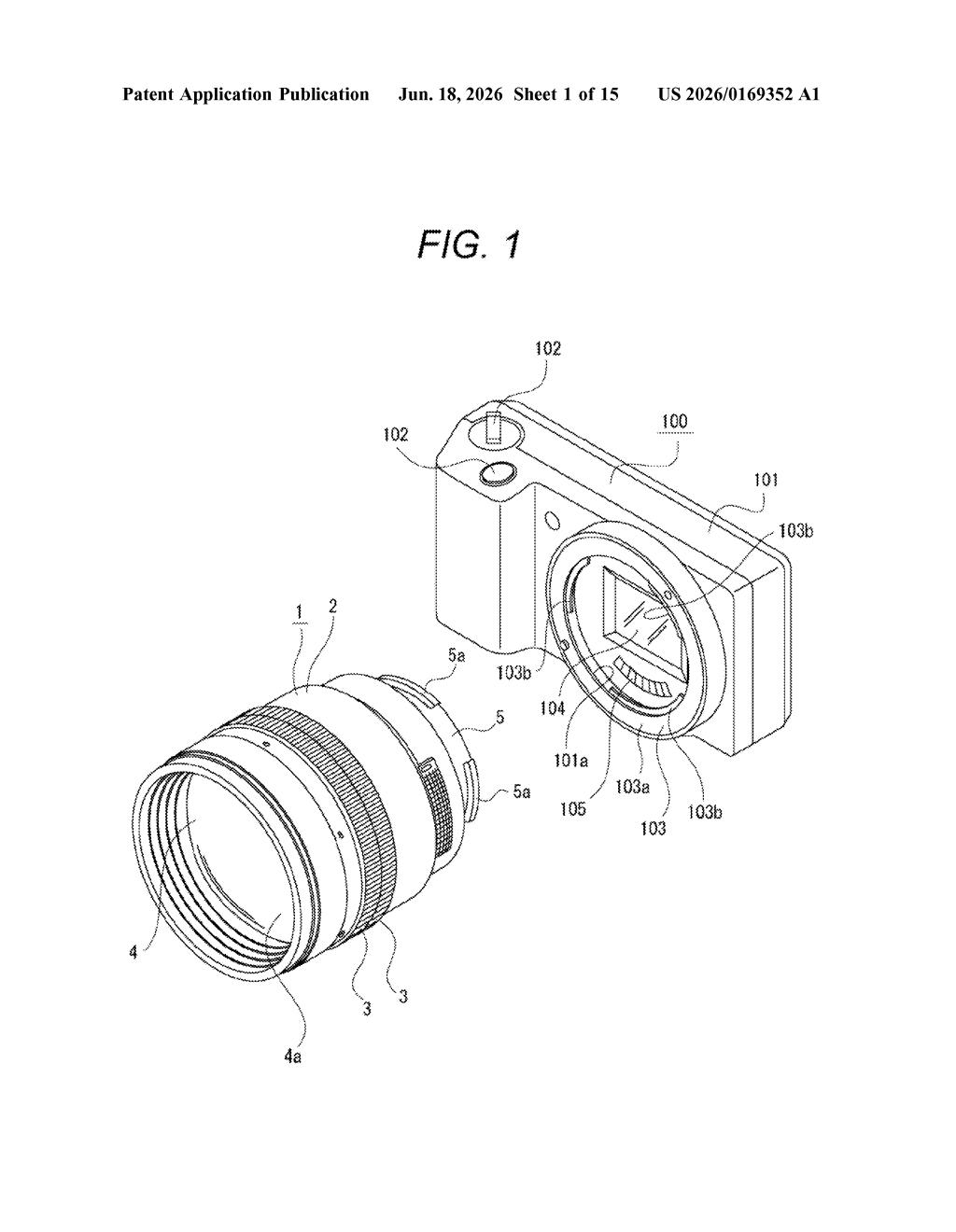
What Sony's multi-coil lens motor actually does
Imagine the focusing system inside a camera lens as a train track. Right now, most lenses move all their "cars" at once — you focus, and the whole group shifts together. Sony's patent describes a way to put several independent cars on the same track, each one able to stop, reverse, or accelerate on its own.
The "track" here is a magnetic rod — a fixed bar lined with magnets and metal spacers. Slipped over that rod are several ring-shaped coils, each acting like its own small electric motor. Send current through one coil and it slides; adjust the current in another and that one moves without disturbing the first.
For you as a photographer or videographer, the payoff is a lens that can reposition different optical elements at different speeds and distances in one smooth motion — something that's very difficult when everything is mechanically linked together.
How the fixed rod and movable coils work together
The patent covers a linear actuator — a device that converts electrical energy into straight-line mechanical motion, as opposed to rotational motion from a conventional motor. Linear actuators are already used in high-end camera autofocus systems, but Sony's design introduces a key structural difference.
The core component is a fixed rod assembled from alternating magnets and inner yokes (metal pieces that shape and concentrate the magnetic field). Each magnet is oriented so the same magnetic pole faces both neighboring yokes — a configuration that creates strong, consistent magnetic force along the entire length of the rod.
Threaded over that rod are multiple tubular movable coils. Each coil is essentially a tiny electromagnet in a ring shape. When current flows through a coil, the interaction between its electromagnetic field and the rod's permanent magnets pushes the coil along the rod's axis. Because each coil is electrically independent, they can be controlled separately:
- One coil can move fast while another holds still.
- Two coils can move toward each other or away simultaneously.
- Each coil can be positioned at a different point along the rod at the same time.
In a camera lens context, each coil would be attached to a different lens group (a cluster of glass elements), allowing the optical system to reconfigure itself with a level of precision and independence that mechanically coupled systems can't match.
What this means for autofocus speed and lens design
Modern autofocus — especially the phase-detection AF in mirrorless cameras — already moves fast, but it still relies on relatively simple motor arrangements that shift lens groups in a coordinated, often sequential way. A system where multiple lens groups can move simultaneously and independently could cut the time it takes to achieve sharp focus, and might also enable smoother focus transitions in video, where abrupt shifts look jarring on screen.
For Sony specifically, this fits squarely into its ongoing competition with Canon and Nikon in the mirrorless camera market, where autofocus performance is a major selling point. If this actuator design makes it into interchangeable lenses — which the patent's title explicitly mentions — it could influence everything from portrait primes to telephoto zooms. The compact, single-rod architecture also suggests Sony is thinking about keeping lenses from getting heavier or longer as it adds capability.
This is real, substantive engineering work, not a speculative software concept. Sony already makes some of the best autofocus systems in the camera industry, and a motor architecture that independently controls multiple lens elements on a shared rod is the kind of incremental-but-meaningful advance that actually shows up in shipping products. Pay attention to Sony's E-mount and G Master lens lineup announcements over the next couple of years.
There are more where this came from
We read every patent application Big Tech publishes and send you the ones worth knowing. Plain English, free, every week.
Want this weekly breakdown for a company we don't cover? Patentlyze Pro →