
Qualcomm Patents a Way to Recover Detail Lost During Low-Light Photo Cleanup
When a phone cleans up a grainy low-light photo, it often wipes out real detail along with the noise. Qualcomm's new patent describes a way to put some of that detail back, selectively.
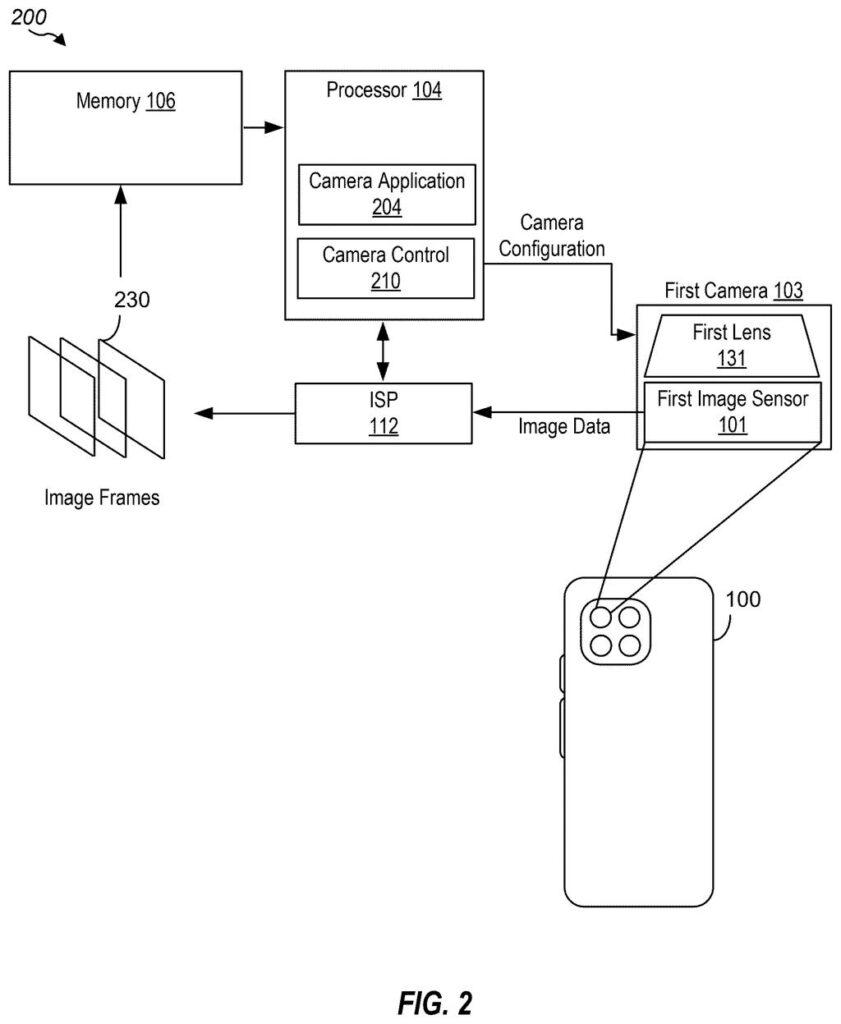
What Qualcomm's noise-recovery trick actually does
Imagine you take a photo in a dim restaurant and your phone automatically cleans it up. The result looks less grainy, but the texture of the food, the fabric of the tablecloth, and fine details in faces look a little too smooth, almost plastic. That's the classic tradeoff in phone photography: remove the noise, lose some real detail too.
Qualcomm's patent tackles this by saving a record of everything the noise-removal step erased, then carefully adding some of it back. The key is that it doesn't add everything back equally. A separate guide map tells the system which areas of the photo can handle more detail and which should stay clean.
The result is an output image that's still free of the worst grain, but holds onto more of the texture and sharpness that makes a photo look natural. This kind of processing would run inside the camera chip on a phone or other device, invisibly, before you ever see the final picture.
How the residual signal and map work together
The patent describes a multi-step pipeline for camera image processors, specifically targeting low-light conditions where noise is most aggressive.
- The system takes one or more raw image frames and produces a first image (a composite or base frame).
- It runs standard noise reduction on that image to create a second, cleaner image.
- It calculates a residual signal, which is simply the pixel-by-pixel difference between the noisy first image and the cleaned second image. That difference captures everything the denoiser removed, both actual noise and real detail.
- A map derived from the original frames is used to selectively scale that residual. In bright or smooth areas, the map dials the residual down. In textured or edge-rich areas, it lets more of the residual back through.
- The adjusted residual is then added back to the denoised image to produce the output image.
An optional scaling factor gives the system a global dial to control how aggressively detail is restored across the whole image. The map and the scaling factor work together, giving the pipeline both spatial control (where to restore) and overall intensity control (how much to restore).
What this means for low-light phone photography
Noise reduction has been a core feature of smartphone cameras for years, but the detail-destroying side effect is a real and persistent complaint, especially in restaurant shots, concert photos, or anything taken without good lighting. A chip-level solution that reintroduces texture in a spatially aware way could make a meaningful difference in the photos you get back without any extra steps on your end.
Qualcomm supplies camera image signal processors (ISPs) to a wide range of Android phone makers through its Snapdragon chips. A technique like this, baked into the ISP firmware, would affect a large share of Android flagship phones. It also fits squarely into the ongoing competition with Apple's own camera processing pipeline.
This is a focused, practical patent solving a real problem that anyone who shoots in low light has noticed. It's not a flashy AI camera feature, but the detail-recovery approach is genuinely useful and the spatial map mechanic is a clean solution. Worth watching for Snapdragon camera changelog notes.
There are more where this came from
We read every patent application Big Tech publishes and send you the ones worth knowing. Plain English, free, every week.
The drawings
4 drawing sheets from US 2026/0220746 A1 · click any drawing to enlarge


Want this weekly breakdown for a company we don't cover? Patentlyze Pro →