
Disney Patents an AI That Stands In for Slow Resort Planning Simulations
Running a full simulation every time you want to test a scenario is expensive and slow. Disney's new patent describes a way to train an AI to produce the same answers much faster — by teaching it to mimic the simulation itself.
How Disney's AI learns to fake a full simulation
Imagine Disney's planners want to know: if we add 500 more FastPass slots on a Tuesday in March, how many guests will actually use them by each day leading up to their visit? The traditional answer involves running a detailed computer simulation — a process that can take significant time and computing power, especially when you need to test dozens of scenarios.
Disney's patent describes training an AI model to impersonate that simulation. The AI studies thousands of examples of what the simulation produces — given inputs like service capacity, product type, and how many days out from the visit — and learns to predict the same outputs almost instantly, without running the full simulation at all.
The result is a kind of shortcut model (called a "metamodel") that gives planners fast, simulation-quality answers. It's a practical idea that shows up a lot in industries where simulations are expensive to run — aerospace, logistics, and now, apparently, theme park operations.
How the neural network learns engagement curves
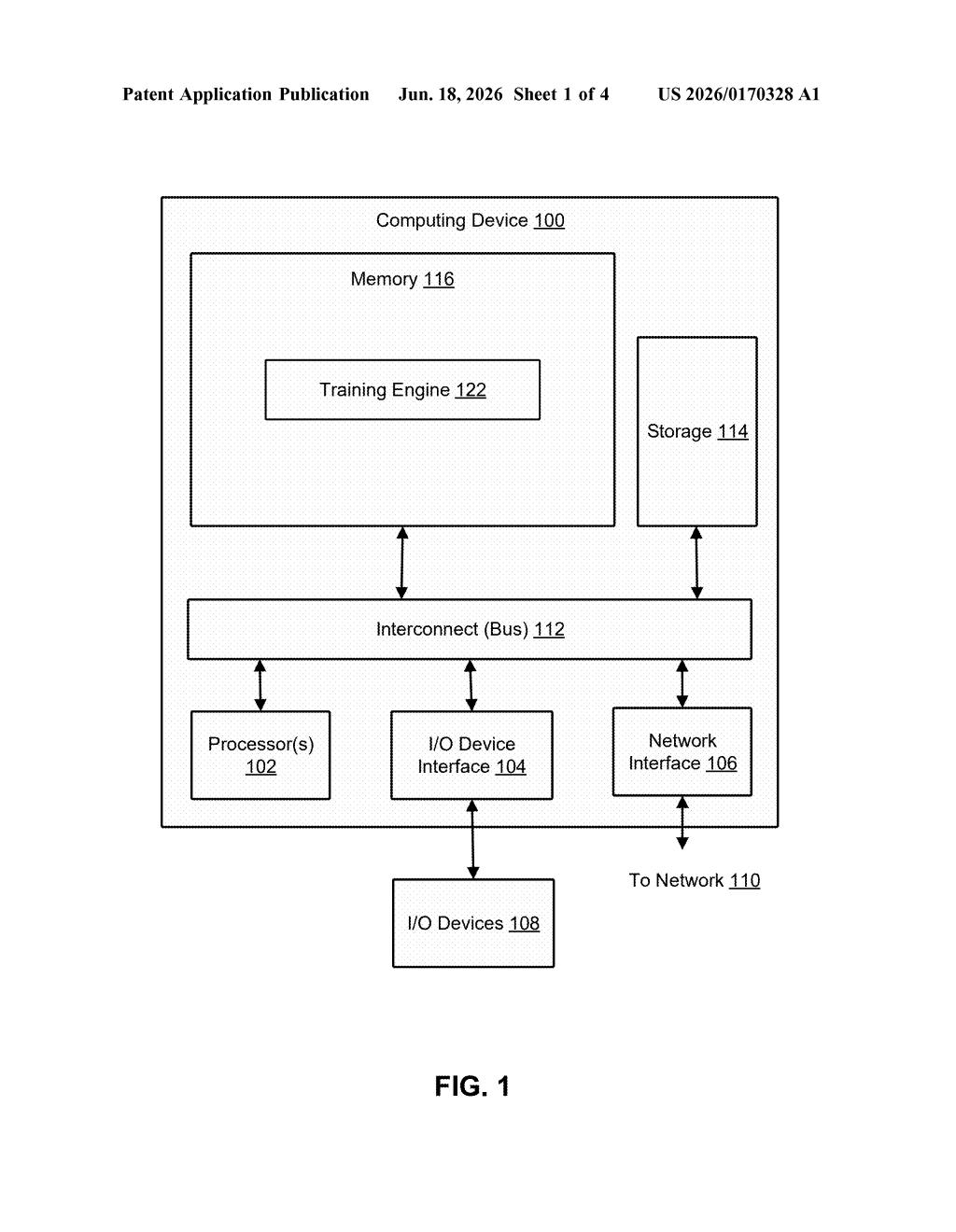
The patent describes a system for training a neural network (an AI that learns from examples) to replicate the outputs of an existing, more expensive simulation.
The underlying simulation takes four inputs and produces a curve of predicted values over time:
- Capacity metric — how many units of a service are available (think: rides, restaurant seats, hotel rooms)
- Product type — what kind of guest or ticket is consuming that service
- Service date — the specific day the service will be used
- Time horizon — a window of days leading up to that date
For each day in that window, the simulation calculates an engagement value — essentially, what percentage of the available capacity has been booked or allocated so far. Strung together, these values form an "engagement curve" showing how demand builds over time.
The neural network is trained by comparing its own predicted curves against the simulation's output. The difference between the two (called a loss) is used to adjust the network's internal settings, repeating until the AI's predictions closely match the simulation's. Once trained, the metamodel can answer the same questions the simulation would — but far more quickly and with much less computing overhead.
What this means for Disney's capacity planning operation
Disney operates one of the most logistically complex entertainment businesses on Earth. Theme parks, hotels, cruise lines, and ticketed experiences all involve capacity planning across thousands of variables. If planners need to run hundreds of "what if" scenarios — adjusting prices, capacity, or booking windows — waiting on full simulations for each one is a real bottleneck.
This patent points to Disney building infrastructure for faster, AI-assisted operations planning. For guests, better capacity modeling could mean shorter waits and more available bookings. For Disney's business, it means faster decisions with lower computing costs. The approach — training a lightweight model to replace a heavy simulation — is well-established in engineering; the interesting part is seeing Disney apply it to the guest-experience layer of its business.
This is a sensible, practical patent — not flashy, but the kind of operational AI work that actually moves the needle inside a large company. Disney is clearly investing in AI tools that make its back-office planning faster, and training a neural network to replace an expensive simulation is a legitimate strategy. Whether this ends up touching the guest experience directly depends on how deeply it's woven into their booking and capacity systems.
There are more where this came from
We read every patent application Big Tech publishes and send you the ones worth knowing. Plain English, free, every week.
Want this weekly breakdown for a company we don't cover? Patentlyze Pro →