
Apple Patents a Two-Layer Glass Treatment to Make iPhone Screens Tougher
Apple is working on a new way to toughen the glass cover on its devices by stacking two different chemical treatments into the same sheet of glass, each targeting a different kind of damage.
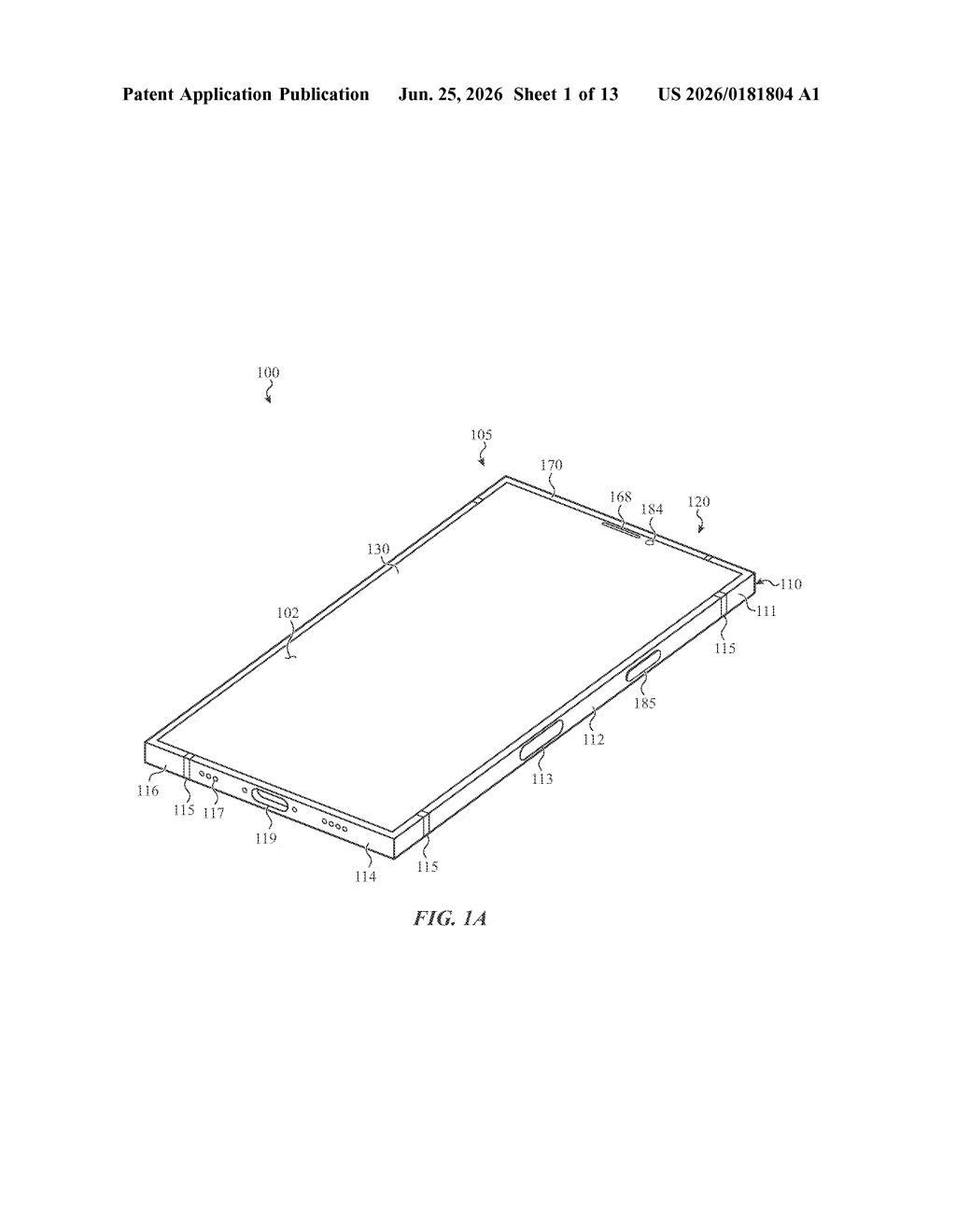
What Apple's dual-treatment screen glass actually does
Imagine dropping your phone face-down. The glass can crack two ways: a sharp impact at the exact point of contact, or a bending stress that ripples across the whole panel. Most phone glass today is pretty good at one but not both at the same time.
Apple's patent describes a glass cover that's chemically treated in two distinct layers. The outer layer is designed to absorb sudden, localized hits (think keys in your pocket or a corner drop). The inner layer is tuned to resist the kind of flexing that happens when the whole phone bends under pressure.
The technique combines ion exchange, a standard glass-hardening process already used in Corning Gorilla Glass, with a second step called ion implantation, which fires heavier atoms directly into the glass surface. Together, they create a tougher cover without simply making the glass thicker.
How the two ion layers create different stress zones
The patent describes a cover glass made from a lithium-containing silicate material, which is a type of engineered glass already common in high-end phone screens. Apple's approach adds two chemically distinct stress zones on top of that base material.
- First compressive stress region (outer layer): Sodium ions are swapped into the surface via ion exchange (a process where smaller atoms are replaced by bigger ones, squeezing the glass surface into compression). Critically, this layer also contains a concentration of alkali metal ions larger than potassium, which are physically shot into the glass via ion implantation rather than diffused in. Those oversized atoms create especially strong compressive forces near the very surface.
- Second compressive stress region (inner layer): Deeper in the glass, a second zone contains sodium ions from exchange but is free of the larger implanted ions. This zone provides broader, more distributed resistance to bending stress.
The key insight is that each zone does a different job. The outer layer punches back against sharp, localized impact. The inner layer spreads out bending loads across the panel. Standard ion exchange alone produces one gradient; Apple's filing claims the combination produces two tunable ones.
What this means for future iPhone drop resistance
Drop protection and crack resistance are among the most persistent complaints about smartphones, and they're a real selling point when Apple refreshes its lineup. If this treatment can be manufactured at scale, it could mean a meaningfully tougher screen without adding weight or thickness to the device.
The broader significance is competitive. Corning has dominated phone glass hardening for over a decade, and Apple has used Corning's Ceramic Shield branding as a marketing point. A proprietary Apple glass treatment process, if it reaches production, could give the company more control over both the supply chain and the spec sheet. For you as a user, the practical promise is simple: your screen holds up better when you drop it.
This is a genuinely interesting materials patent, not a software feature dressed up as engineering. The two-zone ion treatment is a real technical distinction from standard ion exchange, and the focus on separating impact resistance from bending resistance shows Apple is thinking carefully about where glass actually fails. Whether it reaches production is another question, but it's worth tracking.
There are more where this came from
We read every patent application Big Tech publishes and send you the ones worth knowing. Plain English, free, every week.
Want this weekly breakdown for a company we don't cover? Patentlyze Pro →