
Apple Patents a System Where AirPods Announce Themselves From Their Charging Case
Apple's latest patent describes a surprisingly simple idea: when you put your wireless earbuds into their charging case, the case tells them to start broadcasting who they are. It's a small tweak, but it could reshape how Apple devices find and connect to each other.
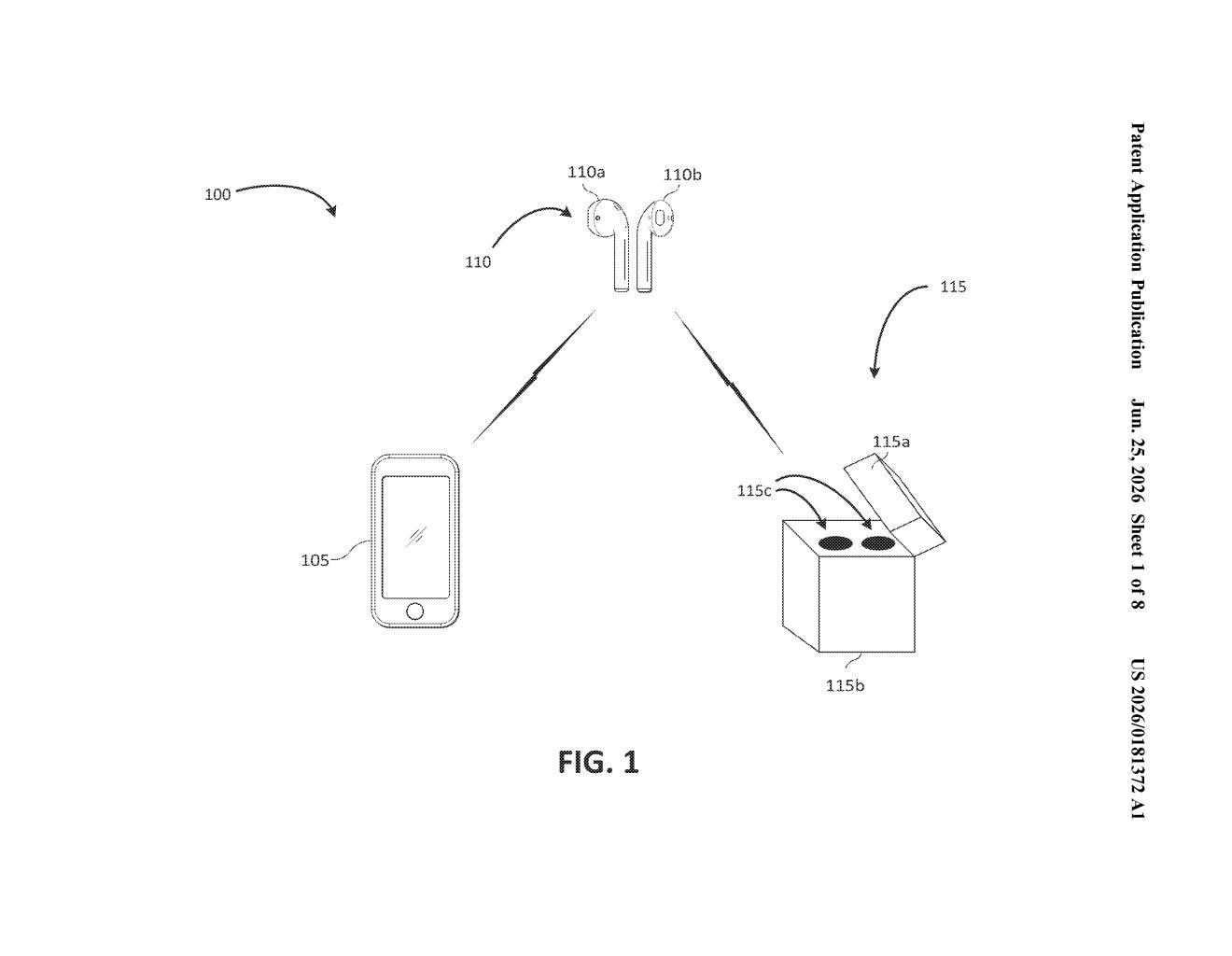
What Apple's charging-case broadcast signal actually does
Imagine you drop your AirPods into their case and, without pressing anything, your iPhone immediately knows they're ready to pair. That's the core of what this patent is about.
Apple's filing describes a system where the charging case sends a command to the earbuds (or another wireless accessory) telling them to start broadcasting an advertisement signal, a short wireless broadcast that announces the device's identity to nearby phones and other gadgets.
The key detail is that the case itself triggers the broadcast, not the earbud acting on its own. That means the earbud only starts advertising when it's actually in a known, controlled situation, which could help reduce unnecessary wireless noise and battery drain when you're just walking around with the case in your pocket.
How the charging case triggers the advertisement signal
The patent covers a method where a wireless accessory (like a pair of earbuds) is paired with a charging case. When the accessory is placed inside, the case sends an enable command to a processor inside the accessory.
Once that command is received, the accessory's processor triggers an advertisement signal, which is a short Bluetooth-style broadcast packet that includes identifying information about the device. This is the same kind of signal any Bluetooth device uses to say "I'm here, come find me."
The notable part of the design is the gating mechanism: the accessory doesn't broadcast on its own initiative. The case acts as a controller, deciding when broadcasting should happen. This means:
- The accessory is only discoverable when the case decides to allow it
- Battery use for broadcasting can be tied to charging events, not random moments
- The system could support more precise pairing flows, since the case knows the device's charge state and physical location
All claims in this publication are listed as canceled, which is common during patent prosecution and does not necessarily mean the underlying application has been abandoned.
What this means for AirPods pairing and device handoff
For everyday users, this kind of system could make pairing feel more instant and intentional. If your earbuds only announce themselves when they're in the case, your phone knows exactly when to expect a connection request rather than hunting for a signal at random intervals.
From a strategy standpoint, Apple has long used proprietary chip-level features (like the H-series chips in AirPods) to make its accessories pair faster and more reliably than generic Bluetooth devices. A case-triggered advertisement system fits that pattern: it gives Apple tighter control over the connection handshake, which could improve the experience on multi-device switching across iPhone, iPad, and Mac.
This is infrastructure-level work, not a headline feature. The canceled claims make it hard to know exactly where this application ends up, but the underlying idea of giving the charging case a supervisory role over wireless broadcasting is a clean engineering approach. It's the kind of quiet refinement that makes Apple accessories feel polished without anyone being able to explain exactly why.
There are more where this came from
We read every patent application Big Tech publishes and send you the ones worth knowing. Plain English, free, every week.
Want this weekly breakdown for a company we don't cover? Patentlyze Pro →