
Samsung Patents a Sub-Second Battery Health Check That Skips Long Test Cycles
Most battery health tests take minutes or longer to run. Samsung is patenting a method that gets a key health measurement done in under a second, without waiting for the battery to go through a full charge cycle.
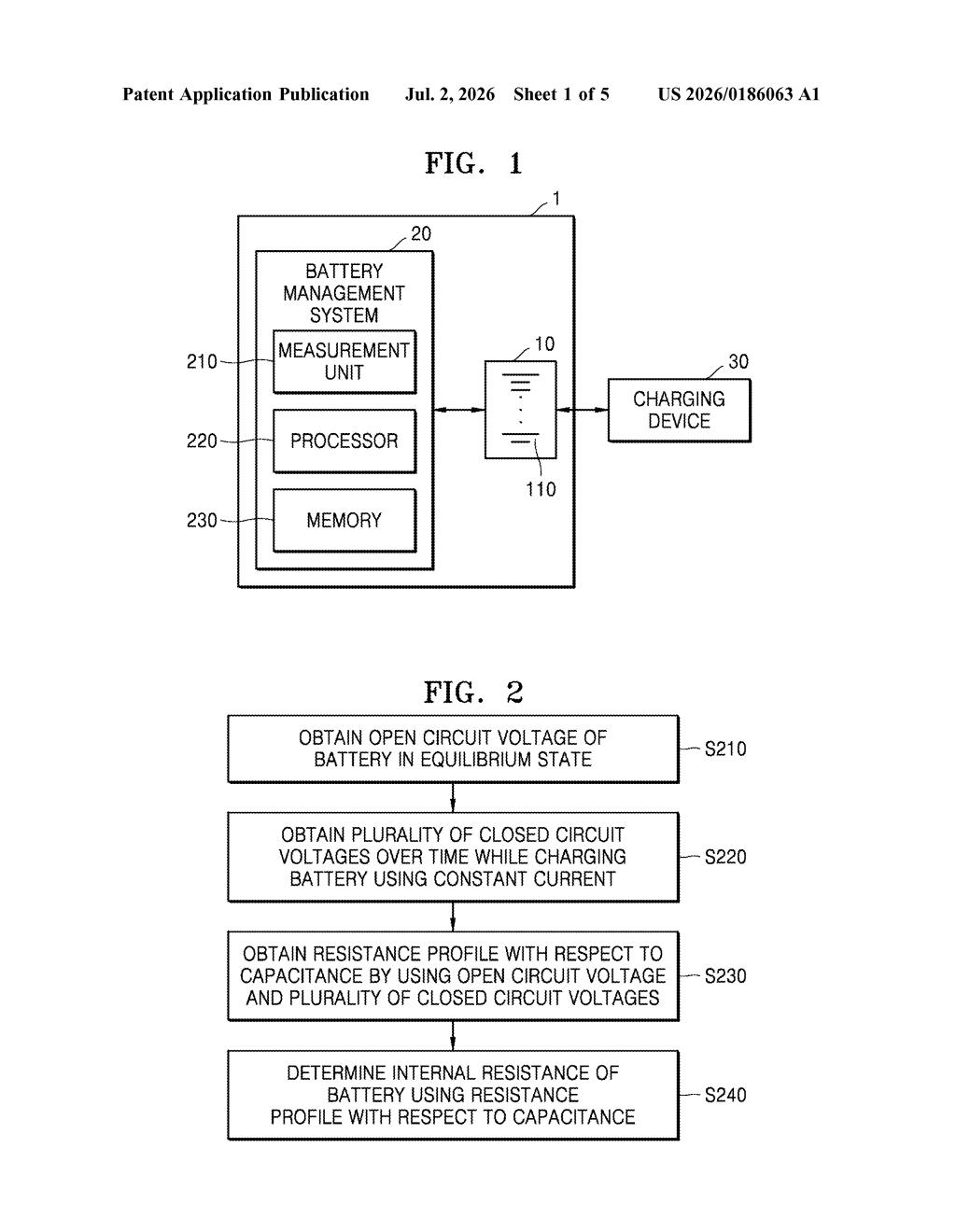
What Samsung's quick battery resistance test actually does
Imagine your doctor could tell you your blood pressure with a single instant reading instead of making you sit for several minutes. Samsung is trying to do something similar for batteries.
Every rechargeable battery has what engineers call internal resistance, basically how hard it is for electricity to flow through the battery itself. As a battery ages, that resistance creeps up, and the battery starts holding less charge and dying faster. Measuring it accurately is a reliable way to know how healthy your battery actually is.
The traditional way to measure it is slow and often requires the battery to sit idle for a while. Samsung's patent describes a method that takes a quick voltage snapshot before charging starts, then takes several more snapshots during just one second of charging or discharging, and uses those readings together to calculate the internal resistance. Fast, simple, and non-disruptive to normal battery use.
How the OCV-to-CCV voltage gap reveals resistance
The patent describes a three-step measurement process built around two types of voltage readings.
First, the system records the battery's open circuit voltage (OCV), which is the voltage when no current is flowing and the battery is in a stable, resting state (think of it as the battery's baseline reading when nothing is happening).
Next, the system applies a constant current to charge or discharge the battery and records multiple closed circuit voltages (CCVs) over time, all within a window of one second or less. A CCV is simply the voltage measured while current is actively flowing.
Finally, the system calculates the battery's internal resistance by comparing the OCV to the pattern of CCVs. The gap between what the battery's voltage should be at rest and what it actually reads under load reveals how much resistance the battery is putting up. Key aspects of the approach include:
- Using multiple CCV readings (not just one) to improve accuracy
- Limiting the current pulse to one second to avoid disturbing the battery's state
- Working during either charging or discharging, making it flexible for real-world use
What faster battery diagnostics could mean for your devices
Battery health diagnostics today are often either slow, requiring long rest periods, or imprecise. A method that produces reliable internal resistance readings in under a second could be embedded in phones, laptops, wearables, or electric vehicles without the user ever noticing it running. That means more frequent, more accurate health checks happening in the background.
For Samsung specifically, this has obvious relevance across its Galaxy phones, tablets, and the growing Galaxy Ring and smartwatch lineup, where battery life is a top user concern. More accurate resistance measurements also feed into better battery management systems, which can extend overall battery lifespan and give users more trustworthy charge estimates.
This is unglamorous but genuinely useful work. Faster, more accurate battery health measurement is one of those background improvements that makes every device better over time. It's not a flashy AI feature, but it's the kind of patent that could show up in firmware updates across Samsung's entire hardware lineup within a few years.
Get our take in your Top Stories
Liked this breakdown? Add Patentlyze as a preferred source on Google, and our plain-English take shows up more often in your Top Stories the next time Samsung patent news breaks.
There are more where this came from
We read every patent application Big Tech publishes and send you the ones worth knowing. Plain English, free, every week.
Want this weekly breakdown for a company we don't cover? Patentlyze Pro →