
New Patent Keeps Your Account ID Hidden From Apps
Every time an app asks Google who you are, your real account identity gets passed around. Google's new patent describes a system that hands apps a throwaway stand-in code instead, keeping your actual account hidden behind Google's servers.
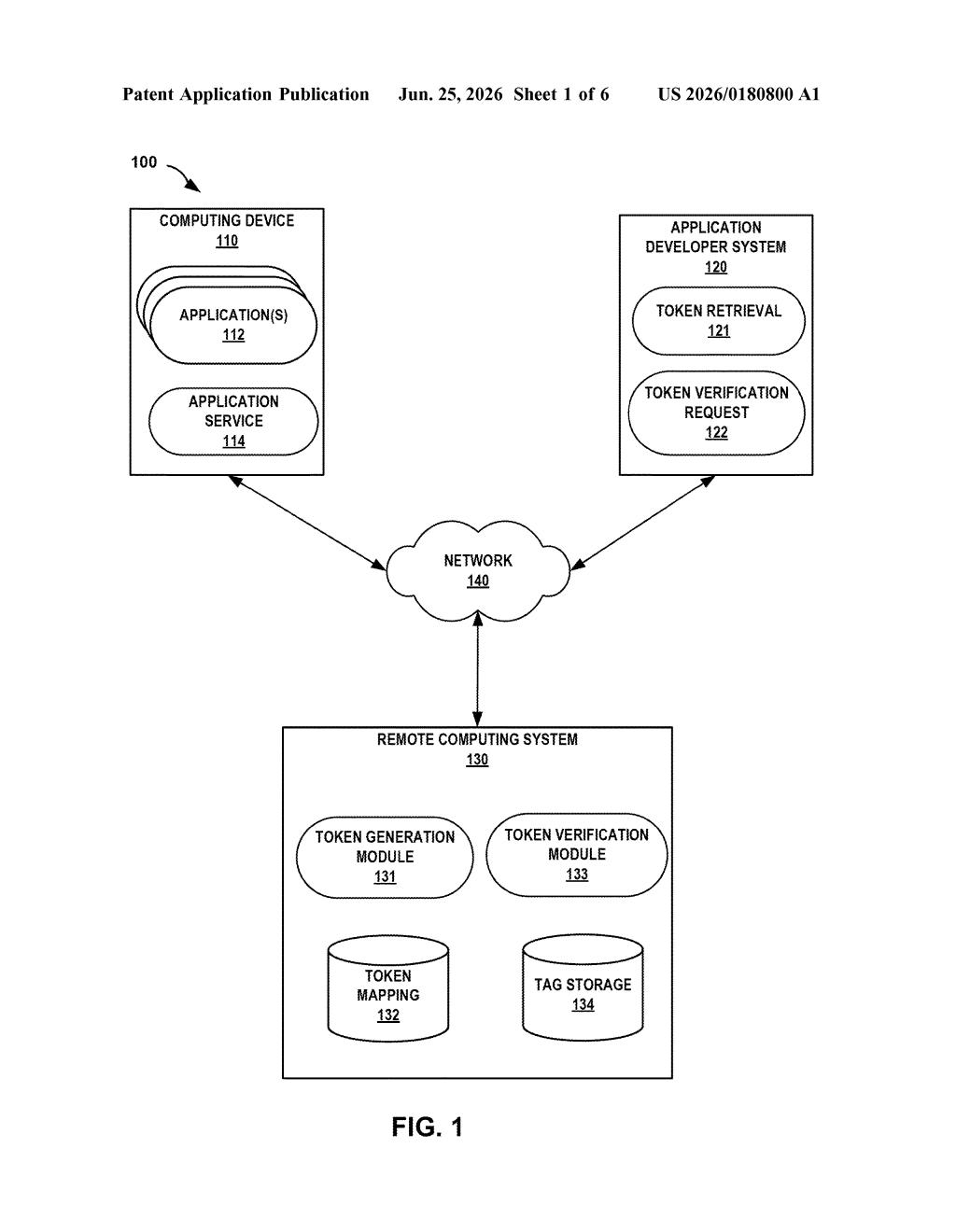
What Google's opaque token system actually does for you
Imagine handing a coat-check your jacket and getting a numbered ticket in return. The ticket is useful, but it doesn't tell anyone your name, your address, or anything about you. That's the core idea here.
Right now, when an app on your phone needs to verify who you are through Google, it often receives information tied directly to your account. Google's patent describes a different approach: the app gets a user token, a random stand-in code that means nothing on its own. Only Google's servers hold the key that connects that code to your real account.
The result is that the app can do what it needs to do (confirm you're logged in, remember your preferences, and so on) without ever learning which Google account you actually are. If the app is later compromised or shares data it shouldn't, your real account identifier stays protected.
How Google generates and maps tokens without exposing accounts
The system works as a three-way handshake. An app on a device sends Google a token generation request along with an authentication token (a standard proof that you've already logged in) and a context identifier (a label describing which app or session is asking).
Google's servers take that authentication token, look up which account it belongs to, and then generate a fresh user token, essentially a random, meaningless string. Critically, the servers store a private mapping table that links the new token back to the real account. The app never sees that table.
- The app receives only the opaque token.
- Google holds the token-to-account mapping internally.
- The context identifier lets Google issue different tokens for different apps, so the same user looks like a different entity to each one.
The word opaque in the patent title is deliberate: the token reveals nothing about its contents to anyone who intercepts or receives it. Only Google's backend can decode it.
What this means for app privacy and account tracking
This kind of token design is already common in payment systems (think the card numbers Apple Pay substitutes for your real credit card number), but applying it systematically to account identity across apps is a meaningful privacy layer. If an app leaks its token database or sells it to a data broker, the tokens are useless without Google's private mapping table.
For you as a user, the practical benefit is reduced cross-app tracking. Because each app can receive a different token for the same account, it becomes much harder for apps to compare notes and build a profile of your activity across services. That's the real teeth of this design, and it fits neatly alongside Google's broader stated push to reduce third-party access to persistent identifiers.
This is genuinely useful privacy infrastructure, not a flashy headline feature. The pattern borrows from payment-tokenization playbooks that have been proven at scale, and applying it to account identity has real protective value. The interesting question is how widely Google would deploy it: a system like this only helps users if it becomes the default path, not an opt-in edge case.
There are more where this came from
We read every patent application Big Tech publishes and send you the ones worth knowing. Plain English, free, every week.
Want this weekly breakdown for a company we don't cover? Patentlyze Pro →