
New Patent Breaks Search Queries Into Specialized Mini-Searches
Instead of treating your search as one big question, Google's latest patent describes a system that automatically slices your query into several subtopics and fires each one at a different specialized search service before assembling the results into a single page.
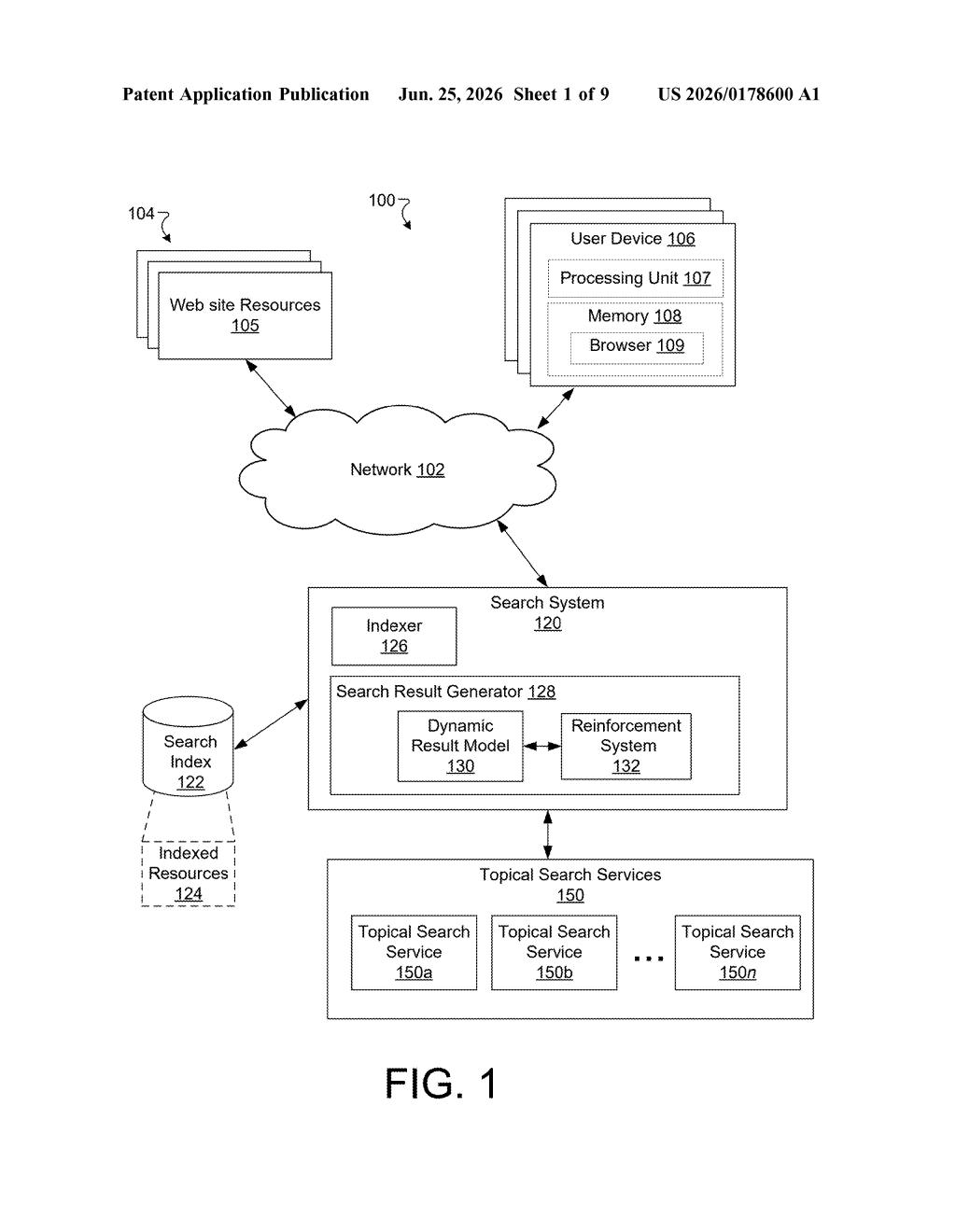
How Google's topic-splitting search would work for you
Imagine you type 'best trip to Kyoto in spring' into Google. Right now, Google returns a single ranked list of links. This patent describes a different approach: an AI reads your query, identifies the distinct topics inside it (hotels, cherry blossom timing, flights, local restaurants), then sends each subtopic to a specialized search tool designed for that type of content.
Each of those specialized searches comes back with its own set of results, and Google assembles them into a single page with distinct, visually rich sections rather than one flat list of links. Think of it like a search page that already did the follow-up searches you were about to do yourself.
The AI model at the center of this is trained specifically to pair a rewritten version of your question with the right specialist service. You never see any of that routing happen. You just get a richer, more organized answer page.
How the generative model maps queries to topical search services
The patent describes a pipeline with three main stages.
First, when a user submits a query, Google feeds both the query text and contextual attributes about it (things like location, device type, or search history signals) into a generative model (an AI similar in spirit to the large language models that power tools like Gemini). The model is trained to output a list of topic objects, each of which bundles two things together: a rewritten version of the query focused on that subtopic, and a pointer to a specific topical search service suited to that subtopic.
Second, Google picks a subset of those topic objects and issues each rewritten query to its matched topical search service. These topical services could be specialized indexes for things like maps, shopping, flights, images, or news.
- Each topical service returns its own set of results.
- The results are formatted as rich result listings, meaning structured cards or panels rather than plain blue links.
- Only the subset Google selects gets surfaced; the rest are discarded.
Third, all the rich result listings are assembled into a single search result page, organized by topic. The user sees one coherent page that already covers the distinct angles of their original question.
What this means for how Google's results page could look
For everyday searches, this would mean fewer follow-up searches. If your query has an obvious shopping angle, a local angle, and an informational angle, you would get structured panels for each rather than a mixed-up ranked list where you have to dig. The page becomes less of a directory and more of a pre-organized briefing on your topic.
For Google's business, this matters because it keeps users on Google's results page longer and lets Google route queries toward its own specialized verticals (Shopping, Maps, Flights) in a more automated and AI-driven way. It also gives Google a framework to slot new specialized search services in by just training the generative model to recognize when to use them.
This is a direct architectural response to the 'answer engine' pressure Google is feeling from AI chatbots. Rather than returning a single list of links, this system tries to make the results page itself feel like a curated answer. Whether it actually works better for users depends entirely on how well the AI identifies the right subtopics, but the ambition here is real and this represents a meaningful change to how Google could structure search.
There are more where this came from
We read every patent application Big Tech publishes and send you the ones worth knowing. Plain English, free, every week.
Want this weekly breakdown for a company we don't cover? Patentlyze Pro →