
Nvidia Patents a Multi-Layer Traffic Sign Reader for Self-Driving Cars
A stop sign covered in graffiti, a speed limit sign half-blocked by a tree branch, a warning sign you've never seen before in a foreign country. These are exactly the kinds of edge cases that trip up self-driving cars, and Nvidia's latest patent is a direct attempt to fix that.
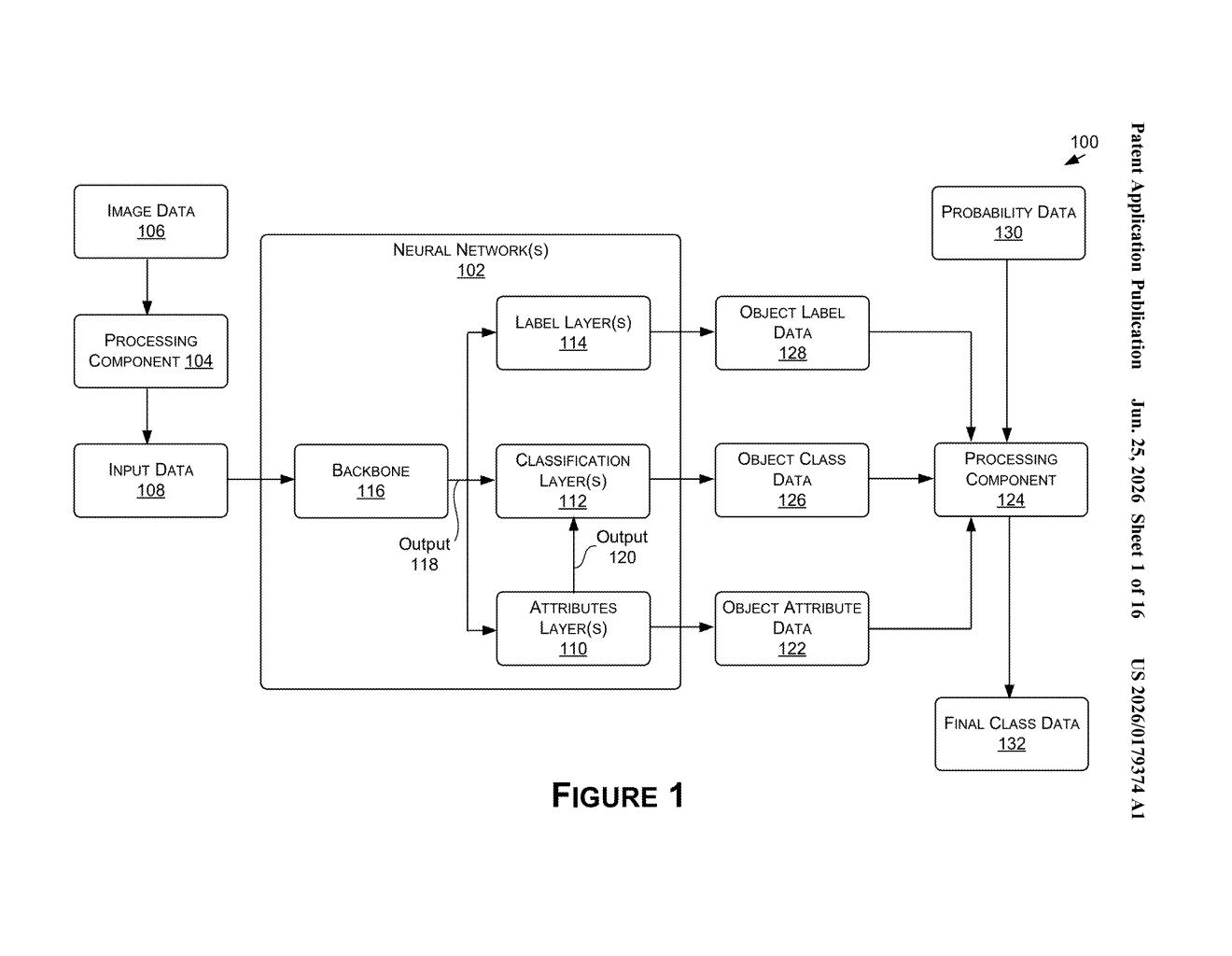
How Nvidia's sign-reading AI works in a self-driving car
Imagine a self-driving car rolling up to an intersection. There's a speed limit sign, but it's partially obscured by a branch, and someone has stuck a sticker on it. Most AI systems would either misread it or skip it entirely. Nvidia's patent describes a system that doesn't just ask "what sign is this?" but also "what does it look like, and what family of signs does it belong to?"
The system uses two cooperating neural networks working together. One looks at the sign's attributes (color, shape, text style), while the other places it into a category hierarchy ("this is a regulatory sign, specifically a speed limit, specifically 45 mph"). The car then uses both answers together to make a more confident, final decision.
The goal is fewer misreadings on real-world roads, where signs are dirty, damaged, unusual, or just ambiguous. That final classification feeds directly into how the vehicle navigates, plans its route, and controls its speed.
How the two subnetworks classify and cross-check each sign
The patent describes an object classification system built for autonomous or semi-autonomous machines (primarily vehicles). At its core are two specialized neural network components that work in parallel.
The first is a multilabel subnetwork, which reads an object (say, a traffic sign) and outputs both a classification ("this is a speed limit sign") and one or more attribute classifications ("it is circular, red-bordered, and displays the number 45"). Multilabel classification means the system can assign several descriptors at once, rather than forcing a single best-guess label.
The second is a hierarchical subnetwork, which places the object into a structured class tree. Think of it like a filing system: the sign belongs to the "regulatory" group, within that to "speed control," and within that to "numeric speed limit." Each level of the hierarchy narrows the answer.
- Sensor data (camera, lidar, radar) feeds both subnetworks simultaneously
- Both outputs are combined into a final classification
- That final classification drives planning, navigation, and vehicle control decisions
The patent explicitly covers CPUs, GPUs, and dedicated hardware accelerators on the vehicle, suggesting this is designed to run in real time on Nvidia's own in-car compute platforms.
What this means for autonomous vehicle reliability on real roads
Self-driving vehicles fail most visibly not on highways but at intersections and in complex urban environments where signs are ambiguous, unusual, or partially obscured. A system that cross-references what a sign looks like with what category it belongs to has a natural error-checking mechanism: if the attributes and the hierarchy disagree, the system can flag uncertainty before acting on it.
For Nvidia, which sells the Drive platform powering many autonomous vehicle programs, this is core infrastructure. Better sign classification means safer navigation decisions, which in turn means fewer edge-case failures that have historically made regulators and the public nervous about self-driving technology.
This is unglamorous but genuinely important work. Traffic sign misclassification is a documented, real-world problem for autonomous systems, and a two-pronged approach that checks both attributes and category hierarchy is a sensible engineering response. It's not a headline feature, but it's exactly the kind of foundational improvement that determines whether self-driving cars work reliably in the messy real world.
There are more where this came from
We read every patent application Big Tech publishes and send you the ones worth knowing. Plain English, free, every week.
Want this weekly breakdown for a company we don't cover? Patentlyze Pro →