
Samsung Patent Reveals Companion Robots That Could Remember Everything About You
Most home robots respond to what you're doing right now. Samsung's new patent describes a companion robot that builds a running memory of who you are, updating its understanding of you every time you interact.
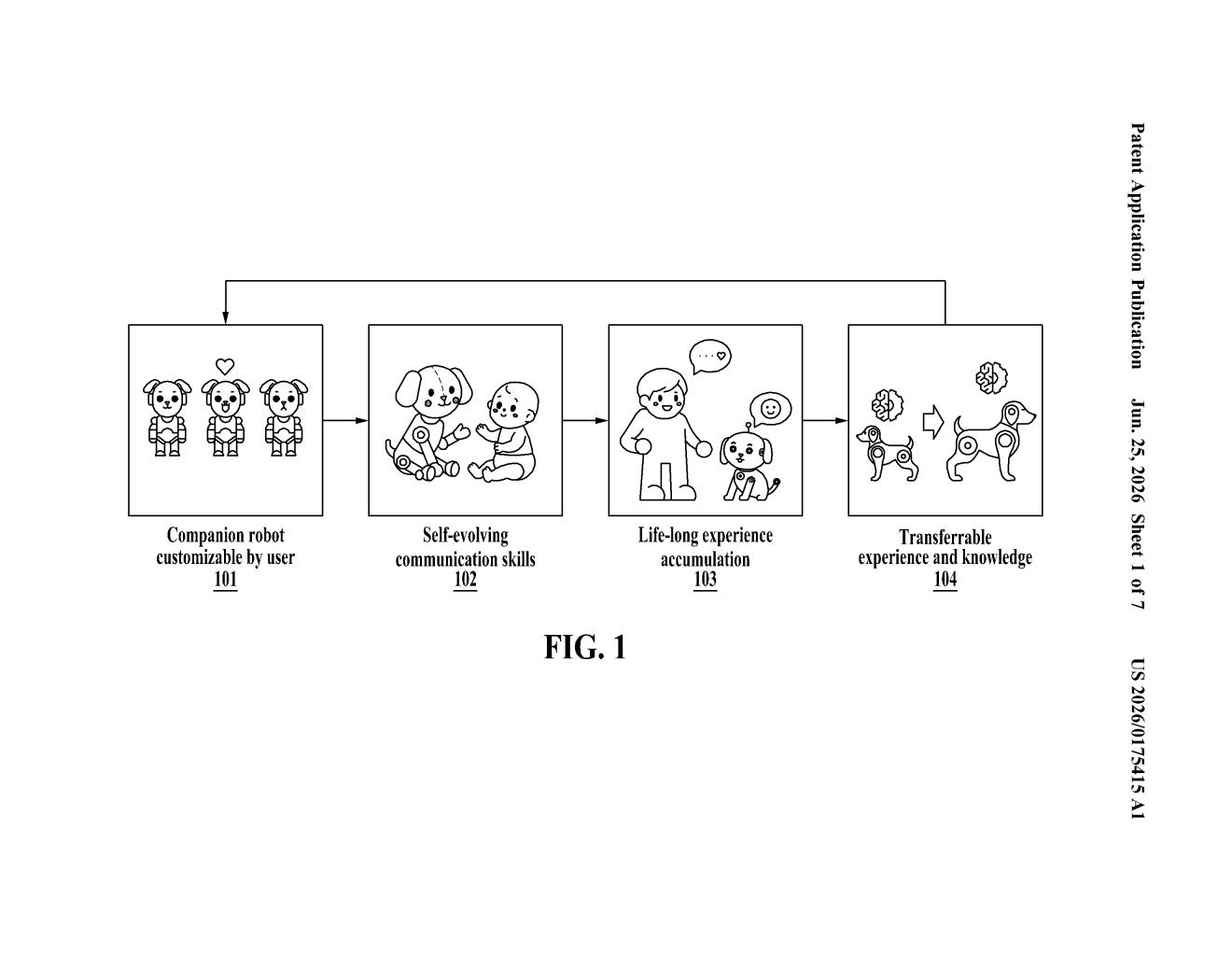
How Samsung's robot learns and remembers you over time
Imagine a robot at home that doesn't just hear what you say, but also notices how you look and sound when you say it. Over weeks and months, it starts to connect the dots: you always seem tired on Monday mornings, you prefer quieter music when you're working, and you get frustrated when it interrupts. That's the kind of robot Samsung is describing here.
The system takes in information from multiple sources at once, like your voice, your facial expressions, and possibly your gestures, and combines them into a single picture of what you need in that moment. It then checks that against a personal database it's been building about you specifically, not just people in general.
Every interaction updates that database. So the robot isn't just reacting to you, it's gradually learning your patterns. The goal, as Samsung describes it, is a companion robot that gets more attuned to its owner over time rather than staying stuck on its factory settings.
Inside Samsung's knowledge-graph memory update loop
The patent describes a control system for a companion robot that processes what Samsung calls a multi-modal input signal (a fancy term for combining several types of input at once, such as audio, video, and motion data) into a unified representation the system can reason about.
A component called a universal encoder translates those different types of input into a common format, so the robot can treat them together rather than handling voice separately from video. From there, the system queries a knowledge database made up of multiple knowledge graphs (structured maps of relationships between facts and events) that have been built up from past interactions with that specific user.
The system then generates what the patent calls a causality vector, essentially a computed reason for taking a particular action, by combining what it just perceived with what it already knows about the user. That vector is used to create a sub-graph, a small update to the existing knowledge graph, which gets folded back into the database. Key components include:
- Multi-modal input processing (voice, face, gesture, etc.)
- A universal encoder that normalizes all inputs into one format
- A personal knowledge database that grows with each interaction
- A causality inference step that connects perception to action
- Continuous knowledge-graph updates after every session
What a robot that knows your habits could mean at home
Most home robots and voice assistants treat every interaction as a fresh start, or at best, remember a short history of commands. A robot that continuously updates a structured model of your behavior and preferences could respond in ways that feel genuinely personalized rather than scripted. For elderly users or people who need daily assistance, that distinction matters a great deal.
Samsung has been public about its ambitions in home robotics, including the Ballie robot concept shown at CES. This patent suggests the company is thinking carefully about how a home robot gets better at serving a specific person over time, not just how it functions on day one. Whether that leads to a real product or stays on paper remains to be seen, but the architecture described here is more sophisticated than what most current consumer robots use.
This is a genuinely interesting patent because it addresses the biggest practical problem with companion robots: they don't actually know you. The knowledge-graph approach is a well-established idea in AI research, but applying it to continuous personal learning in a home robot is a real engineering challenge. Samsung is clearly thinking about this seriously, and the architecture is detailed enough to suggest this isn't just a paper exercise.
There are more where this came from
We read every patent application Big Tech publishes and send you the ones worth knowing. Plain English, free, every week.
Want this weekly breakdown for a company we don't cover? Patentlyze Pro →