
Samsung Patents a Tighter Hinge Mechanism for Its Foldable Phones
Folding phones live and die by their hinges, and Samsung is filing patents to make sure its version holds up. This one covers a specific rail-and-groove locking system designed to keep the two halves of a foldable phone aligned as they open and close.
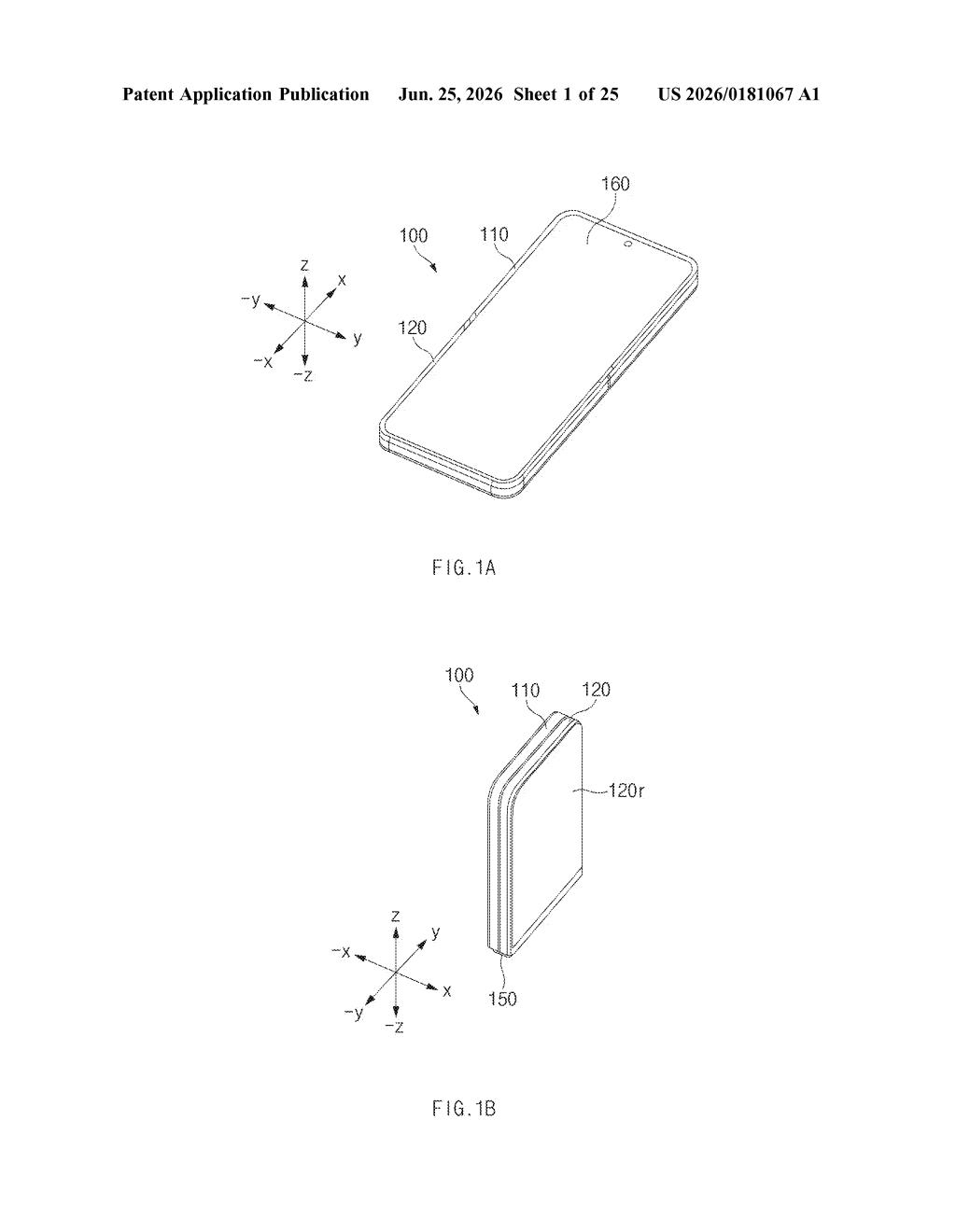
What Samsung's new foldable hinge actually does
Imagine a foldable phone's hinge as a tiny, very precise door hinge. Every time you open or close the phone, that hinge has to move in exactly the right way or the flexible screen above it gets stressed unevenly, which leads to creases and cracks over time.
Samsung's patent describes a hinge built from several interlocking pieces: a link that's fixed to one half of the phone, a rotating piece that slides along that link on a rail, and an arm that moves in sync with the rotation. The clever part is that the rotating piece grips the link from both sides at once, using a raised rail on one face and a matching groove on the other. That two-sided grip keeps everything from wobbling as the hinge moves.
The goal is a fold that stays tight and aligned through thousands of open-close cycles, rather than loosening up over time the way a simpler single-sided connection might.
How it works
The patent describes a hinge structure made up of three main parts working together inside a foldable device:
- First link member: A rigid piece bolted to one housing half. It acts as the anchor rail that everything else slides along.
- First rotation member: A piece that both rotates (around a fixed axis) and slides along the link. It has a rail protrusion (a raised ridge) on one face and a rail groove (a matching channel) on the opposite face, so it's captured by the link on both sides simultaneously.
- First arm member: An arm that sits next to the rotation member along the link and moves in sync with it, helping translate the rotation into the smooth arc the screen needs to follow.
The two-sided rail engagement is the core idea here. A protrusion on one face and a groove on the opposite face mean the rotation member can't tilt or rattle loose along the axis perpendicular to the sliding direction. The hinge effectively self-aligns under load.
This matters because foldable screens require the hinge to trace a very specific curved path, not just pivot at a single point. The sliding-plus-rotating motion lets the hinge approximate that curve mechanically.
What this means for Galaxy Z Fold durability
For anyone who owns or is considering a Galaxy Z Fold or Z Flip, hinge quality is the single biggest long-term durability question. A hinge that stays precisely aligned means the flexible display above it bends along the same path every time, reducing fatigue at the crease. One that develops play over time applies uneven stress to the screen.
Samsung has been iterating on foldable hinge designs across every generation of its Z-series phones. This patent suggests the company is still working on the mechanical fundamentals, tightening up the tolerances on how the rotating and sliding pieces connect. That's not flashy, but it's exactly the kind of incremental engineering that separates a phone that looks great at year three from one that develops a permanent crease by year one.
This is unglamorous but genuinely important engineering. Hinge failures are the primary reason foldable phones still carry a reputation for fragility, and Samsung's continued patent activity in this area shows it hasn't declared the problem solved. The two-sided rail engagement is a specific, testable improvement over simpler single-face sliding connections, which makes this more than just a defensive filing.
There are more where this came from
We read every patent application Big Tech publishes and send you the ones worth knowing. Plain English, free, every week.
Want this weekly breakdown for a company we don't cover? Patentlyze Pro →