
Samsung Patents a Dual-Fold Display Window That Varies Thickness at Each Crease
Samsung's latest display patent tackles one of the trickiest problems in foldable phones: when you have two separate fold points on a single screen, those folds don't behave the same way — so the cover glass probably shouldn't be the same thickness either.
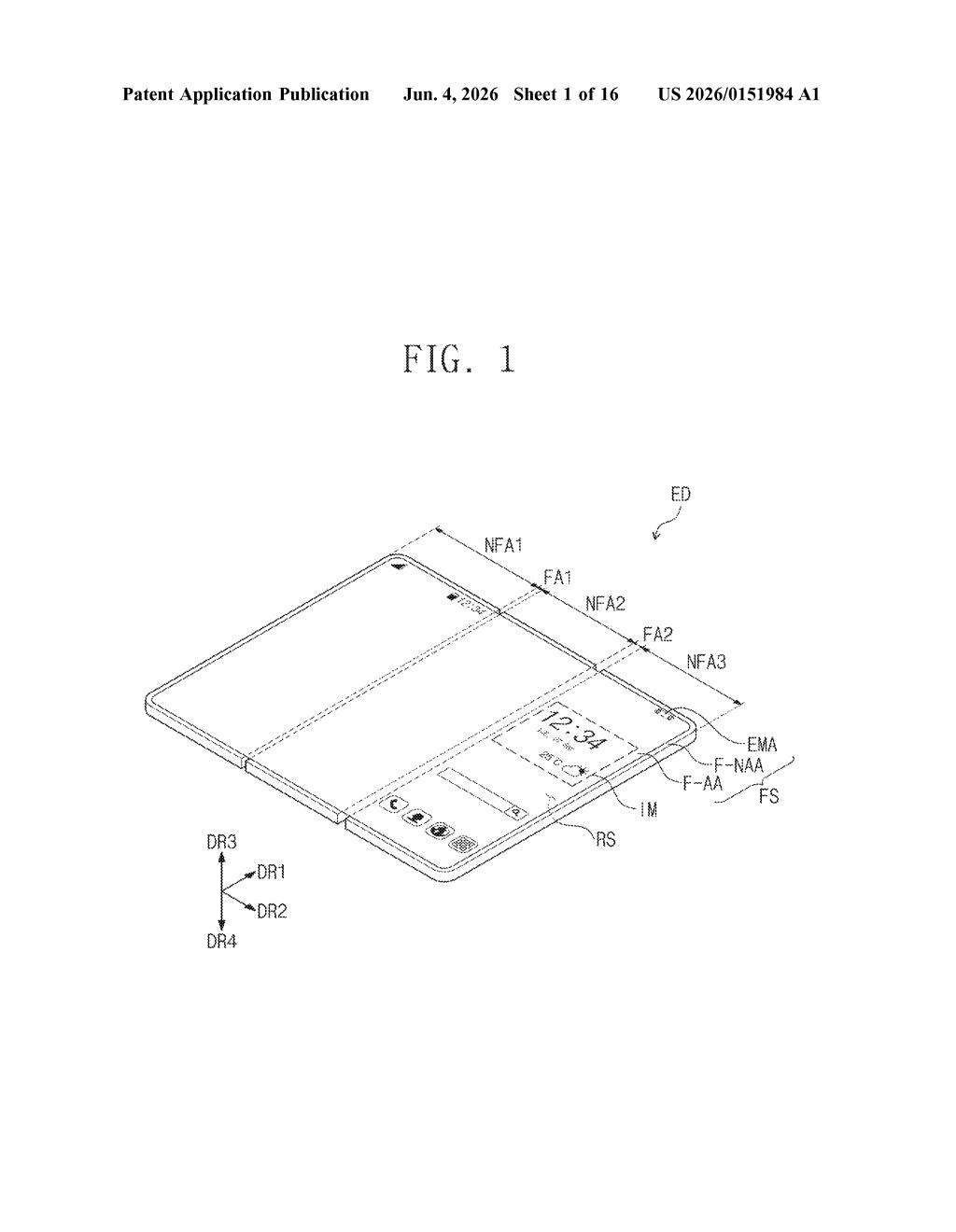
What Samsung's variable-thickness fold window actually does
Imagine a phone that folds twice — once tightly, like a traditional clamshell, and once with a gentler, wider arc. The cover glass protecting that screen has to survive both kinds of bending, but a one-size-fits-all thickness won't cut it. A tighter fold puts more stress on the glass, while a wider fold can afford to be a bit beefier.
Samsung's patent describes a cover window — the hard, protective layer on the outside of a foldable display — that is deliberately thinner at the tighter fold and thicker at the wider fold. The idea is that a tighter bend radius demands more flexibility from the material, so the glass (or glass-like layer) needs to be shaved down there to avoid cracking.
The result is a single cover window with three flat sections and two fold zones, each engineered to the specific mechanical demands of its bend. You'd never see the difference from the outside, but your display would be less likely to crack over thousands of folds.
How each fold zone gets its own thickness and curvature
The patent describes a cover window for a device with two distinct folding axes — think of a tri-panel phone that folds in two places, like a Z or S shape.
The window is divided into five zones: three non-folding portions (the flat panels you actually look at) and two folding portions (the hinged creases). The key engineering insight is that the two folds are not geometrically identical:
- The first folding portion bends to a tighter radius of curvature — a sharper, more compact fold.
- The second folding portion bends to a larger radius of curvature — a gentler, wider arc.
Because a tighter bend stresses the cover material more, the patent specifies that the first (tighter) fold zone must be thinner than the second (wider) fold zone. Thinner material at a tight bend is more flexible and less prone to cracking or delamination under repeated folding cycles.
The display module underneath mirrors this same zoned structure, with each display sub-region corresponding to its matching window zone. This suggests the entire display stack — not just the outer glass — is engineered zone-by-zone to match the mechanical reality of each fold.
What this means for tri-fold phone durability and feel
As Samsung and other OEMs push toward tri-fold devices — phones or tablets that fold in two places to collapse into a compact form — the cover window becomes significantly harder to engineer than on a single-fold phone. A flat uniform layer simply can't handle two mechanically different bends without compromising at least one of them.
For you as a user, this kind of tuned construction is what stands between a display that lasts years of daily folding and one that develops cracks at the crease after a few months. It also hints at the engineering complexity hiding inside a seemingly simple form factor — and explains why tri-fold devices, if and when they ship broadly, will likely carry a premium price tag.
This is solid, unglamorous engineering work that solves a real problem. Dual-fold devices exist — Samsung has shown tri-fold prototypes and competitors like Huawei have shipped them — so the mechanical challenge this patent addresses is genuine, not hypothetical. It's not a flashy AI patent, but it's the kind of materials-and-geometry detail that separates durable foldables from fragile ones.
There are more where this came from
We read every patent application Big Tech publishes and send you the ones worth knowing. Plain English, free, every week.
Want this weekly breakdown for a company we don't cover? Patentlyze Pro →