
Samsung Patents an AI System That Reads Battery Health From the Inside
Your phone's battery percentage tells you how much charge is left, but it says almost nothing about how worn out the battery actually is. Samsung is patenting an AI approach that digs deeper, reading internal stress signals from each electrode to estimate true battery health.
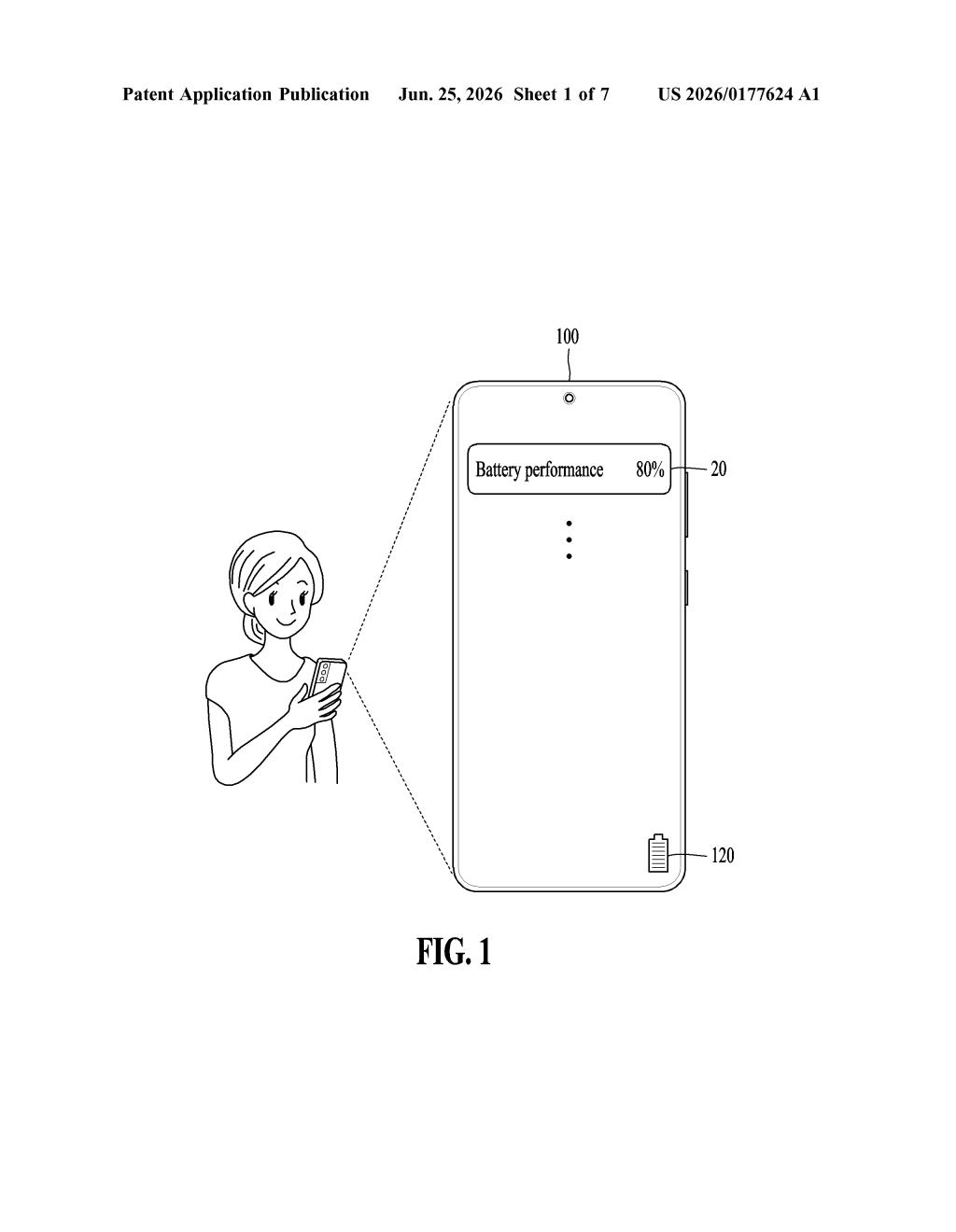
What Samsung's electrode-reading battery health check actually does
Imagine your car's fuel gauge versus its engine-wear indicator. The fuel gauge tells you what's left in the tank right now, but a separate system tells you how much life the engine has left overall. Your phone has the equivalent of a fuel gauge, but a reliable engine-wear indicator for the battery has always been harder to build.
Samsung's patent describes an AI model that estimates battery degradation by measuring something called overpotential on each of the battery's two electrodes, the positive side (cathode) and the negative side (anode). Think of overpotential as the extra voltage the battery has to push to keep up with demand, a signal that rises as the battery ages and its chemistry wears down.
By feeding those two electrode-level readings into a trained AI model, the device can estimate the battery's current degradation state, basically a health score rooted in what's actually happening inside the battery, not just a rough calculation based on charge cycles.
How the AI uses electrode overpotentials to gauge battery wear
The patent describes a method where an electronic device's processor runs a trained AI model to produce degradation state information for the battery at a given moment in time.
The key inputs to that model are two measurements:
- Cathode overpotential: the excess voltage the positive electrode experiences during charging or discharging. As a battery ages, internal resistance and chemical changes cause this value to grow.
- Anode overpotential: the same concept applied to the negative electrode, which degrades through its own mechanisms, including lithium plating, a process where lithium metal deposits on the electrode surface and permanently reduces capacity.
Using both signals together gives the AI model a more complete picture of battery wear than a single measurement alone would provide. The model has been trained ahead of time (on Samsung's end, not on your device) to recognize patterns that correspond to specific levels of degradation.
The output is described as first degradation state information, a structured estimate of how worn the battery is at that point in time. The patent implies this can be tracked over time to show how battery health is progressing.
What this means for Galaxy device battery life reporting
Battery health estimates on phones today are notoriously imprecise. Most devices calculate a rough percentage based on charge cycles and voltage curves, which can mask significant degradation until a battery suddenly starts shutting down unexpectedly. A more granular, electrode-level AI estimate could give Samsung Galaxy devices a more honest and earlier view of battery wear, which matters both for users deciding whether to replace a battery and for the device itself making power-management decisions.
This also fits into a broader push by regulators, particularly in the EU, requiring manufacturers to provide clearer battery health data on consumer electronics. If Samsung can deliver more accurate degradation scores baked into the device's own processor, that's a practical answer to those requirements.
This is a real, useful improvement on a problem that affects every smartphone owner. The idea of using electrode-specific overpotential readings as AI model inputs is technically sound and more informative than cycle-counting approaches. It won't make headlines the way a flashy feature does, but accurate battery health tracking is something millions of people actually need.
There are more where this came from
We read every patent application Big Tech publishes and send you the ones worth knowing. Plain English, free, every week.
Want this weekly breakdown for a company we don't cover? Patentlyze Pro →