
Qualcomm Patents Technology That Creates Missing Video Frames From Surrounding Footage
When your camera misses a moment between two shots, Qualcomm wants an AI to invent the frame that should have been there and drop it right into the sequence.
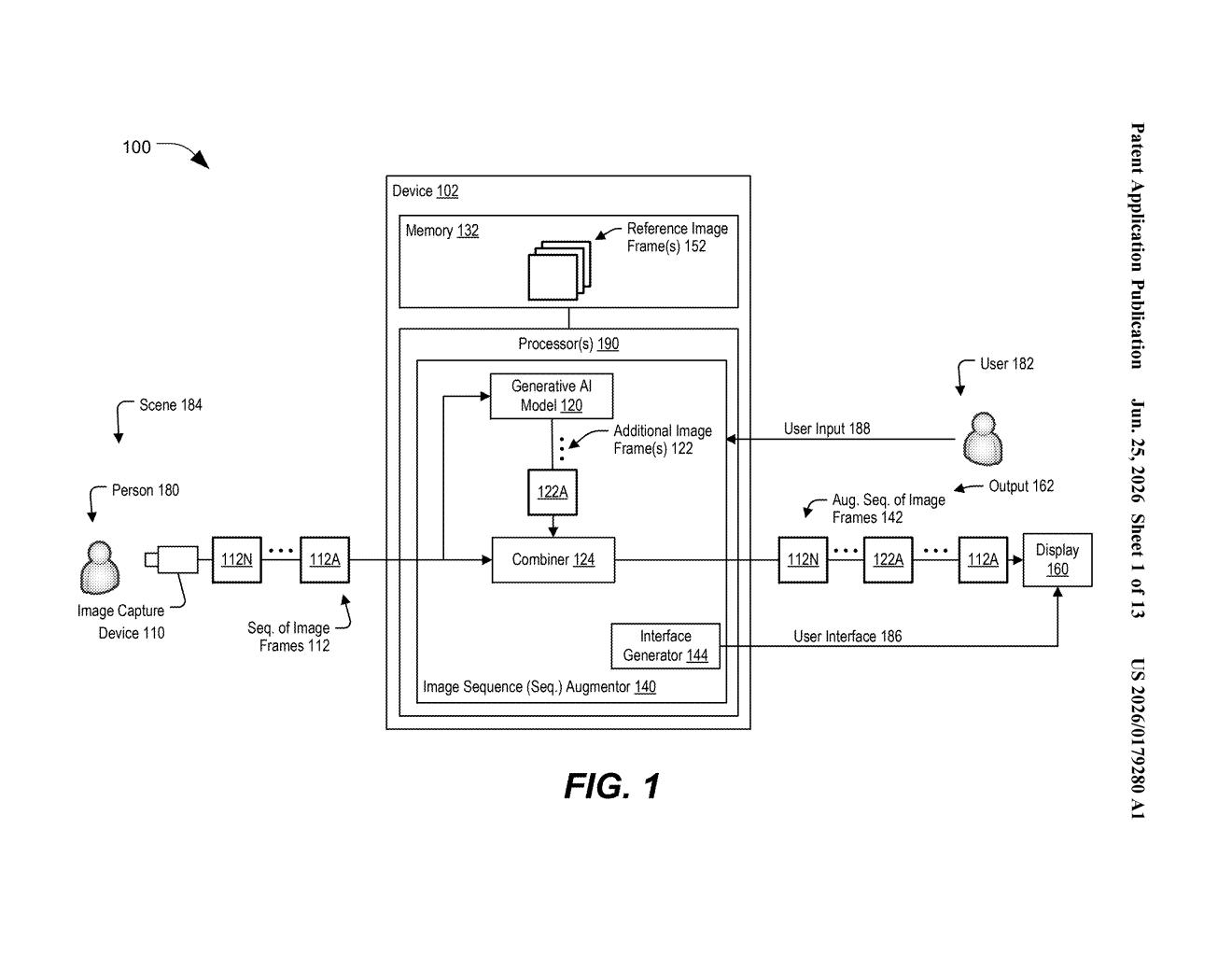
What Qualcomm's AI frame-insertion actually does
Imagine you record a quick video of your kid blowing out birthday candles, but the camera only captured 24 photos per second and the exact moment the flames went out fell between two frames. Qualcomm's patent describes a system that uses a generative AI model to create a synthetic image for that missing gap and slip it into the video as if it were always there.
The result is a longer, denser sequence of frames than the camera actually captured. The AI looks at the real frames around the gap, figures out what the scene probably looked like at that in-between moment, and generates a new image to fill it. The final video contains both the original captured frames and the AI-made ones.
This kind of technique is often called frame interpolation, and it's already used in high-end TVs to make movies look smoother. Qualcomm appears to be exploring bringing it directly to the chips that power phones and other devices.
How the generative model builds and places new frames
The patent describes a device, likely a phone or camera-equipped chip, that stores a sequence of captured image frames from a scene. A generative AI model then takes one or more of those real frames as input and produces a new, synthetic image frame that fits coherently into the timeline.
The output is what the patent calls an augmented sequence: a combined reel of real captured frames plus the AI-generated ones. The claim doesn't restrict where in the sequence the new frame goes, meaning it could be inserted between existing frames (interpolation) or potentially added before or after the captured footage (extrapolation).
Key elements the patent covers:
- A memory unit that holds the original captured frames
- One or more processors that run the generative AI model
- A generative AI model that synthesizes new frames from real ones
- An output pipeline that delivers the combined, augmented sequence
The claim is written broadly, covering any generative AI model used for this purpose, which means it could apply to diffusion models, generative adversarial networks (GANs), or other architectures. The patent doesn't specify a particular AI approach, keeping the scope wide.
What this means for video on Snapdragon devices
Qualcomm makes the Snapdragon chips that power most Android flagships, so a patent like this signals the company is thinking about putting on-device generative AI directly into the camera and video pipeline. If this technology ships in a future Snapdragon, your phone could automatically smooth out slow-motion video, repair choppy recordings, or produce higher-frame-rate clips without any extra hardware.
For you as a user, the practical upside is smoother video that your phone generates on the fly, without uploading anything to a cloud server. The risk, which the patent doesn't address, is that AI-generated frames are not real photographs, which raises questions for journalism, legal evidence, and anyone who cares about the authenticity of their footage.
This is a solid, pragmatic patent that puts generative AI to work on a specific and well-understood problem: video doesn't capture every moment, and AI can fill the gaps. The broad claim language gives Qualcomm wide coverage, but the underlying idea of AI-based frame interpolation is already commercially established in TVs and gaming monitors. The real story is whether Qualcomm bakes this into Snapdragon's image signal processor, which would make it invisible and automatic on the next wave of Android phones.
There are more where this came from
We read every patent application Big Tech publishes and send you the ones worth knowing. Plain English, free, every week.
Want this weekly breakdown for a company we don't cover? Patentlyze Pro →