
Microsoft Files Patent Letting Gamers Swap Out Any In-Game Sound With AI
Hate the sound of gunshots in games but love everything else? Microsoft has filed a patent for a system that lets you point at any sound, show the AI a few examples, and have it replaced across every game you play.
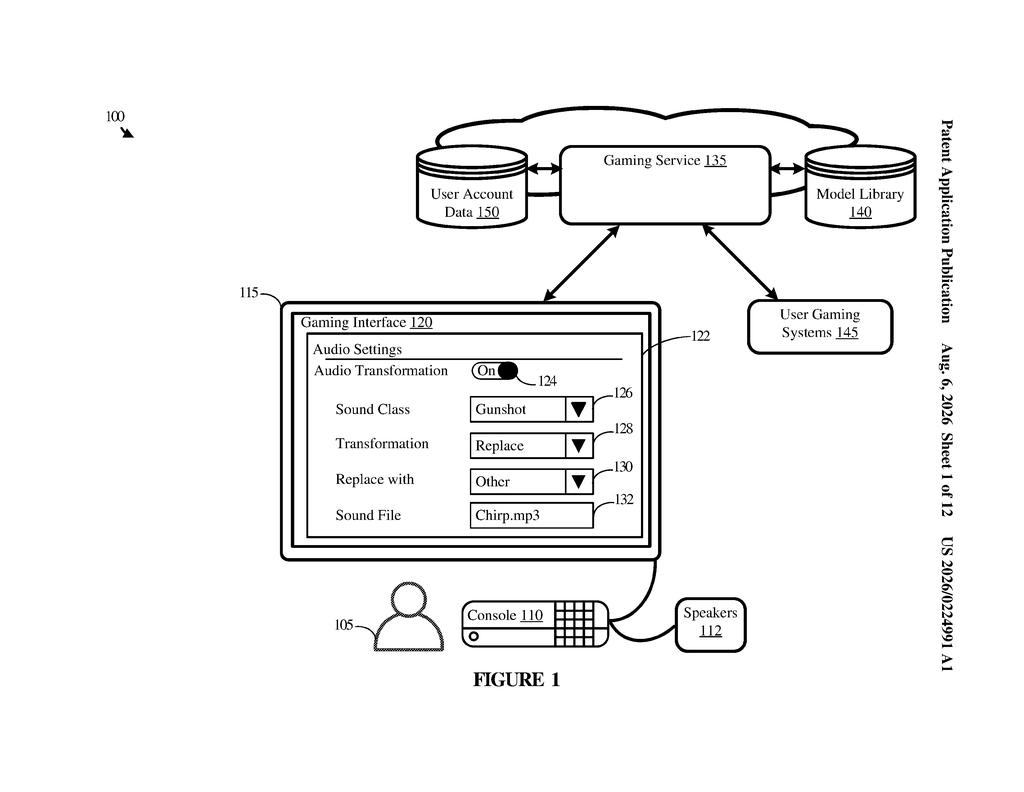
How Microsoft's per-sound game audio filter would work
Imagine you're playing a game and one particular sound drives you up the wall, maybe it's the shriek of a specific enemy, the crack of a gun, or a sound effect that triggers a headache. Right now, your only options are to lower the overall volume or live with it. Microsoft's newly filed patent describes a system that would let you fix that with pinpoint accuracy.
Here's how it would work for you: you'd open a settings panel and give the system a few examples of the sound you want to change. You could also tell it how to change it, whether that means replacing it with something softer, removing it entirely, or swapping it for a completely different sound. An AI model then learns what that sound category looks like and automatically intercepts it in any game you launch.
The system is designed to keep learning. If the AI misses an instance or catches something it shouldn't, you can flag it, and the model adjusts. The idea is a personal audio profile that gets better the more you use it, without touching the game's code at all.
receiving, at a gaming device, a user request to transform a sound class with a transformation type, wherein the user request includes the transformation type, and at least one sample instance of the sound class, and wherein the user request applies to all gaming instances instantiated by the gaming device; …
Translation: Players can submit an audio sample and pick how they want it changed across every game they play.
How the generative AI model learns and replaces sounds live
The patent describes a generative AI audio pipeline that sits between the game's raw audio output and your speakers or headset. Instead of modifying the game itself, it operates on the live audio stream, intercepting and rewriting specific sounds on the fly.
The user interaction works in a few steps:
- You provide one or more audio samples of the sound category you want to change (for example, clips of gunfire across different games).
- You specify a transformation type, which could mean silencing the sound, replacing it with an alternative, or altering its character.
- The gaming device trains a generative AI model on those samples so it can recognize that sound class wherever it appears in a dynamic audio stream.
- When a game starts, the system generates a prompt (an instruction packet) for the AI, telling it exactly what to listen for and what to do with it.
- The AI's modified output becomes the actual audio you hear, replacing the original stream entirely.
The patent also describes a feedback loop: as you hear the transformed audio, you can flag errors, which refine the model over time. The setting applies globally, meaning every game the device runs gets filtered without any per-game configuration.
As the user hears other instances of the sound class in the output audio stream, the user can provide feedback to tune the generative AI model for the user-specific instances.
Translation: Gamers can continuously correct the AI while playing to get better audio results.
What this means for accessibility and game audio control
For players with auditory sensitivities, PTSD triggers, or hearing impairments, this is a meaningful accessibility tool. Today, most games offer volume sliders and a handful of presets. A system that can surgically remove or replace a specific sound class, across all games, without needing developer support, would fill a gap that game studios rarely prioritize.
Beyond accessibility, this kind of system has obvious appeal for content creators who stream games and want to avoid copyright-flagged sound effects, or for parents who want to soften the audio violence of a game without switching the game off entirely. Because the technology works at the device level rather than inside the game, it could apply to any title, including older games that will never receive an accessibility patch.
This is a genuinely practical idea. Audio accessibility in gaming has been neglected for years, and a device-level AI filter would help people that studio-side settings menus consistently ignore. The feedback-tuning loop is the detail that makes it credible rather than just clever: without that, the model would make too many mistakes to be usable.
There are more where this came from
We read every patent application Big Tech publishes and send you the ones worth knowing. Plain English, free, every week.
The drawings
12 drawing sheets from US 2026/0224991 A1 · click any drawing to enlarge


Want this weekly breakdown for a company we don't cover? Patentlyze Pro →
Be the first to weigh in