
Intel Patents a Wi-Fi Scanner That Slows Down When You Walk Away
Your laptop is constantly scanning for nearby Wi-Fi networks and Bluetooth devices, even when you're not in the room. Intel wants to make that process smart enough to know when to take a break.
What Intel's proximity-aware wireless scanning actually does
Imagine leaving your laptop on your desk while you grab lunch. The whole time you're gone, it's burning battery searching for wireless networks and Bluetooth accessories you won't connect to until you're back. That wasted effort adds up over a workday.
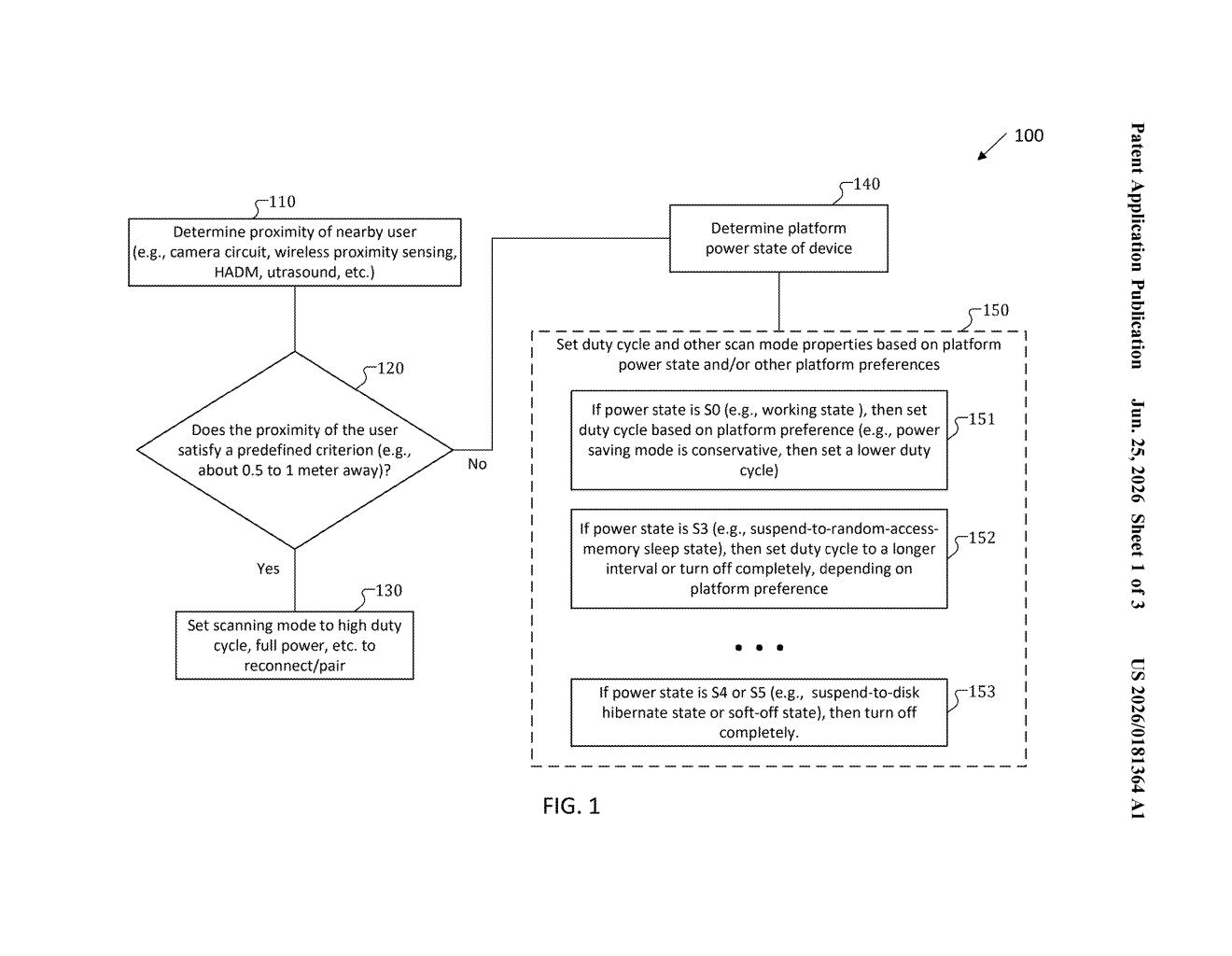
Intel's patent describes a system that detects whether you are close to your device. If you're nearby, it scans for wireless connections at full speed so your Wi-Fi or Bluetooth connects quickly. If you've walked away, it dials those scans back significantly.
When you come back and the device senses you're within range again, it ramps the scanning frequency back up so everything is ready when you sit down. The result is the same fast connection experience you expect, but with less wasted work happening in your absence.
How the device detects your distance and adjusts scan rate
The patent describes a proximity-aware scanning procedure built into a device's wireless communication circuitry. The core idea is straightforward: wireless chips constantly poll for nearby networks and devices, and this polling burns power. Intel's approach ties the polling rate to whether a user is actually present.
The system uses a detection step to determine whether a user is within a predefined proximity (a set physical distance threshold) of the device. The patent doesn't lock down a specific sensing method, leaving room for approaches like camera-based presence detection, infrared sensors, or signals from a user's other paired devices.
Based on that detection, the device does one of two things:
- User beyond the threshold: reduce scan frequency (scan less often, saving power)
- User within the threshold: increase scan frequency (scan more often, ready to connect fast)
The patent covers the underlying processor and memory instructions that implement this logic, meaning it's targeting the firmware or driver layer of a wireless chip rather than any specific hardware sensor. That makes it potentially applicable across a wide range of Intel-powered devices.
What this means for laptop and tablet battery life
Battery life on laptops and tablets is a constant balancing act, and wireless radios are a non-trivial drain. A chip that wastes scanning cycles when a device is sitting idle in an empty room is doing work that doesn't benefit anyone. Cutting that back during unattended periods is a low-risk way to recover battery capacity without changing the experience when you're actually using the device.
For Intel, whose chips power a huge share of business laptops, even a modest improvement in idle wireless efficiency could be a real selling point for enterprise buyers who care about all-day battery life. It also fits neatly into the broader push toward presence-aware computing, where devices adapt their behavior based on whether a person is physically in the room.
This is a sensible, incremental power-saving idea rather than a big technical leap. The interesting part is less the concept itself and more the fact that Intel is patenting the logic at the firmware level, which suggests it could show up across a wide range of chipsets rather than as a named feature on a single product.
There are more where this came from
We read every patent application Big Tech publishes and send you the ones worth knowing. Plain English, free, every week.
Want this weekly breakdown for a company we don't cover? Patentlyze Pro →