
Intel Patent Lets Users Set a Custom Lifespan for Their Chips
What if you could tell your processor to last exactly five years, and it would adjust itself to do just that? That's the idea behind Intel's latest patent filing.
What Intel's user-set chip lifespan system actually does
Imagine buying a server for a data center and knowing you'll replace it in three years. Right now, the chip inside runs at whatever settings the manufacturer baked in, whether that's ideal for your plans or not. You have no direct way to say: 'I only need this to last 36 months, so push it a little harder.'
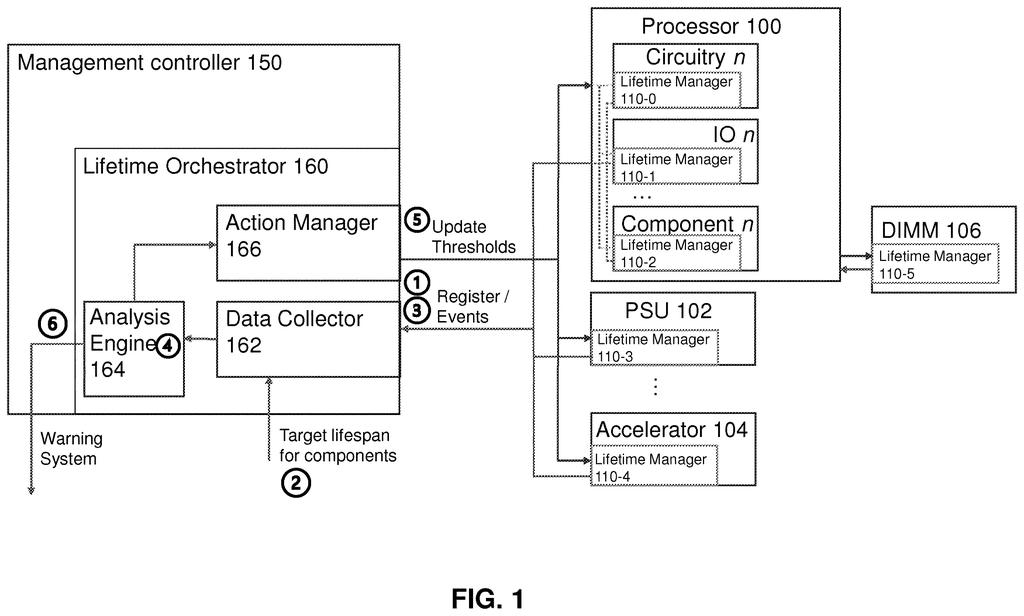
Intel's patent describes a system where you (or your software) can specify a target lifetime for a chip, and a separate piece of control hardware then figures out the right operating settings to match that goal. Run it harder for a shorter life, or dial it back to stretch longevity. The chip adjusts accordingly.
The system works with processors, memory, network cards, and accelerators (the chips that handle tasks like AI workloads). It's squarely aimed at the kind of large-scale computing environments where hardware lifetime planning is a real financial and operational decision.
How the control circuit translates a lifetime target into chip settings
The patent describes an apparatus made up of two main pieces of circuitry connected by an interface. The first circuit acts as the controller; the second circuit is the actual computing hardware you want to manage.
Here's the flow:
- A user (or an automated management system) provides a target lifetime for a piece of hardware.
- The first circuit uses that target to calculate the right operating parameters, things like voltage, clock speed, or workload ceilings, that would make the hardware hit that lifespan.
- It then pushes those parameters to the second circuit, which reconfigures itself accordingly.
The second circuitry covered by the patent is broad: it includes processors, memory devices, network interface cards, and accelerators (specialized chips used for AI inference, graphics, or data processing). That broad scope means the system could apply to nearly any component in a modern server rack or computing platform.
The filing doesn't detail the underlying wear model, meaning it doesn't spell out exactly how the controller calculates the right settings for a given lifespan target, which is where most of the real engineering complexity would live.
What this means for data centers and device refresh cycles
For data center operators, hardware refresh cycles are a major cost. Being able to match a chip's performance envelope to a planned replacement date could reduce over-provisioning and give finance teams a more predictable depreciation curve. A chip running a three-year workload doesn't need to be babied for ten years.
For end users or device makers, the same logic applies in reverse: if you need a device to outlast its warranty period, you could deliberately run it conservatively from day one. Intel's patent is narrow enough that it reads more like infrastructure plumbing than a consumer feature, but the underlying idea, giving operators real control over hardware aging, is one that the industry has been inching toward for years.
This is a practical, unglamorous idea that data center teams would actually find useful. The concept of trading performance headroom for a predictable hardware lifespan is well understood in theory; the patent is Intel's attempt to formalize and automate it in silicon. Don't expect this to show up in a laptop, but in large-scale fleet management, it could meaningfully reduce waste.
There are more where this came from
We read every patent application Big Tech publishes and send you the ones worth knowing. Plain English, free, every week.
The drawings
5 drawing sheets from US 2026/0219714 A1 · click any drawing to enlarge


Want this weekly breakdown for a company we don't cover? Patentlyze Pro →