
AMD Patents Software That Reads Your Messages and Automatically Handles Business Tasks
AMD has filed a patent for an AI agent that sits between incoming messages and your company's back-end systems, reading each message and deciding which automated process to kick off in response.
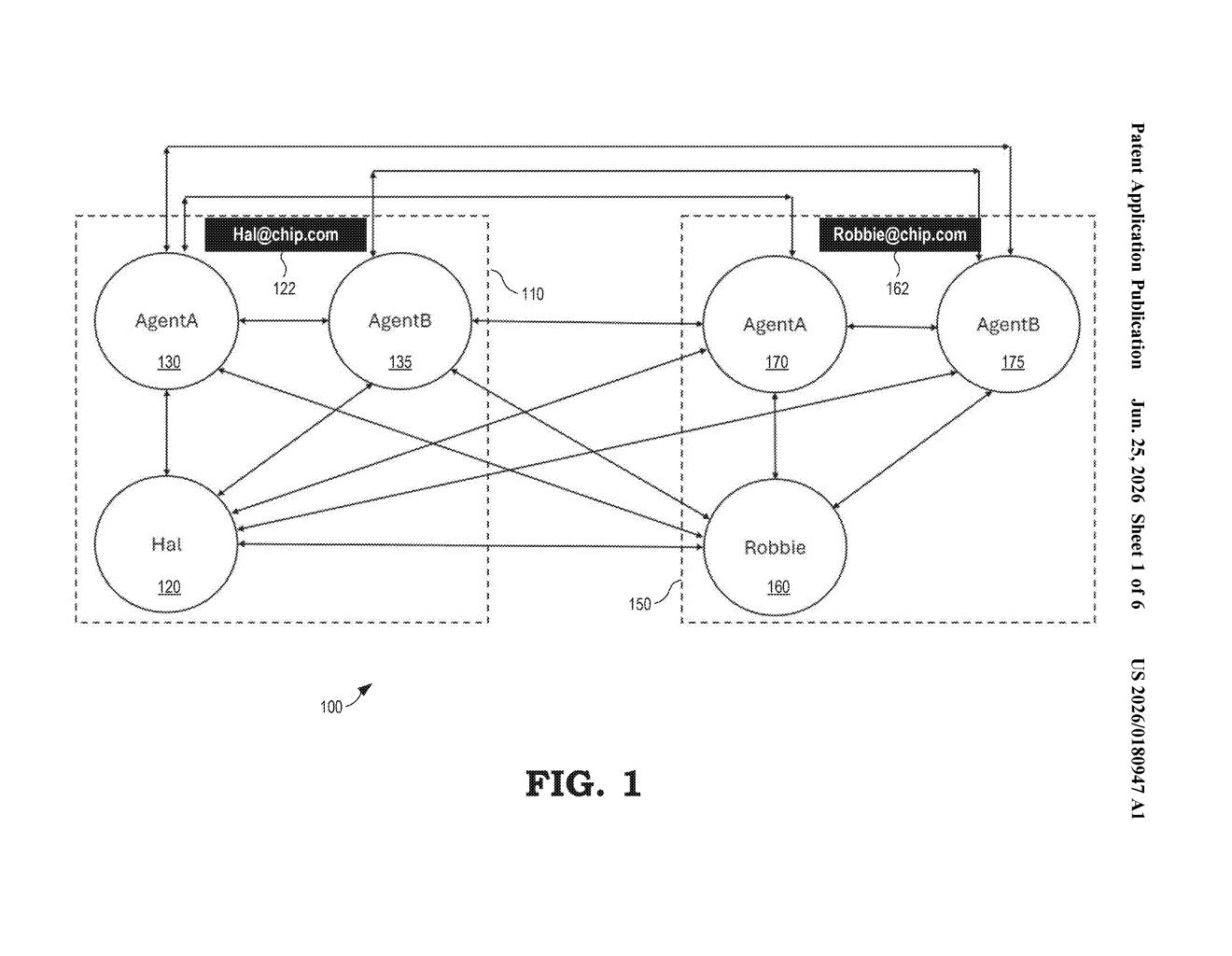
What AMD's message-to-workflow AI agent actually does
Imagine you send a message to your company's internal system saying 'please generate a Q3 sales report.' Instead of a human reading that and manually starting the report process, an AI agent reads it, recognizes what you want, and triggers the right automated steps on its own.
That's the idea behind AMD's patent. The system, called a Workflow Communications Agent (WCA), scans incoming messages for known trigger phrases. If it spots one, it runs the matching set of instructions immediately. If the message is phrased in an unfamiliar way, it passes the text to a large language model (think ChatGPT-style AI) to figure out the intent.
If no existing workflow fits, the agent can actually create a new one on the fly based on what the message is asking. The goal is to get business tasks done automatically, from a plain-text message, without a human middleman routing everything.
How the WCA matches messages to instruction sets
The Workflow Communications Agent (WCA) operates in three modes depending on what it finds in an incoming message.
- Exact match: If the message contains a predefined segment (a specific phrase or pattern the system already knows about), the WCA immediately runs the associated instruction set (a scripted sequence of automated tasks).
- LLM-assisted match: If no exact pattern is found, the message text is sent to one or more large language models, which act as a semantic interpreter, trying to map the meaning of the message to an existing workflow even if the wording is different.
- On-the-fly generation: If neither approach finds a match, the agent can generate a brand-new instruction set based on the message content and execute it.
The patent describes this running on one or more servers, positioning it as a server-side enterprise tool rather than something living on a single device. The hybrid approach (hardcoded pattern matching first, AI second) is designed to keep common tasks fast and cheap while reserving AI inference for ambiguous or novel requests.
What this means for enterprise AI automation tools
For companies building internal automation tools, this kind of architecture addresses a real problem: business workflows are often triggered by messages in Slack, email, or ticketing systems, but wiring those messages to actual back-end processes today requires brittle, hand-coded rules. An AI layer that can bridge the gap between natural-language requests and structured automation is genuinely useful.
For AMD specifically, this is interesting because it positions the company not just as a chip supplier but as a player in the enterprise AI software layer. AMD's GPUs compete directly with Nvidia's in AI workloads, and patents like this suggest AMD is thinking about full-stack AI solutions, not just the hardware underneath them.
This is a solid, if unsurprising, enterprise AI automation patent. The hybrid pattern-matching-plus-LLM design is sensible engineering, and the 'generate a new workflow if none fits' feature is the genuinely interesting bit. It's not a flashy consumer product, but it points to AMD trying to plant a flag in the AI agent software space alongside its GPU ambitions.
There are more where this came from
We read every patent application Big Tech publishes and send you the ones worth knowing. Plain English, free, every week.
Want this weekly breakdown for a company we don't cover? Patentlyze Pro →