
Apple Patents a Flexible Display That Wraps Around Your iPhone's Edges
Apple is filing patents for iPhones — or other devices — where the display doesn't stop at the front glass. A flexible screen bends around the sides, turning the edges into interactive surfaces.
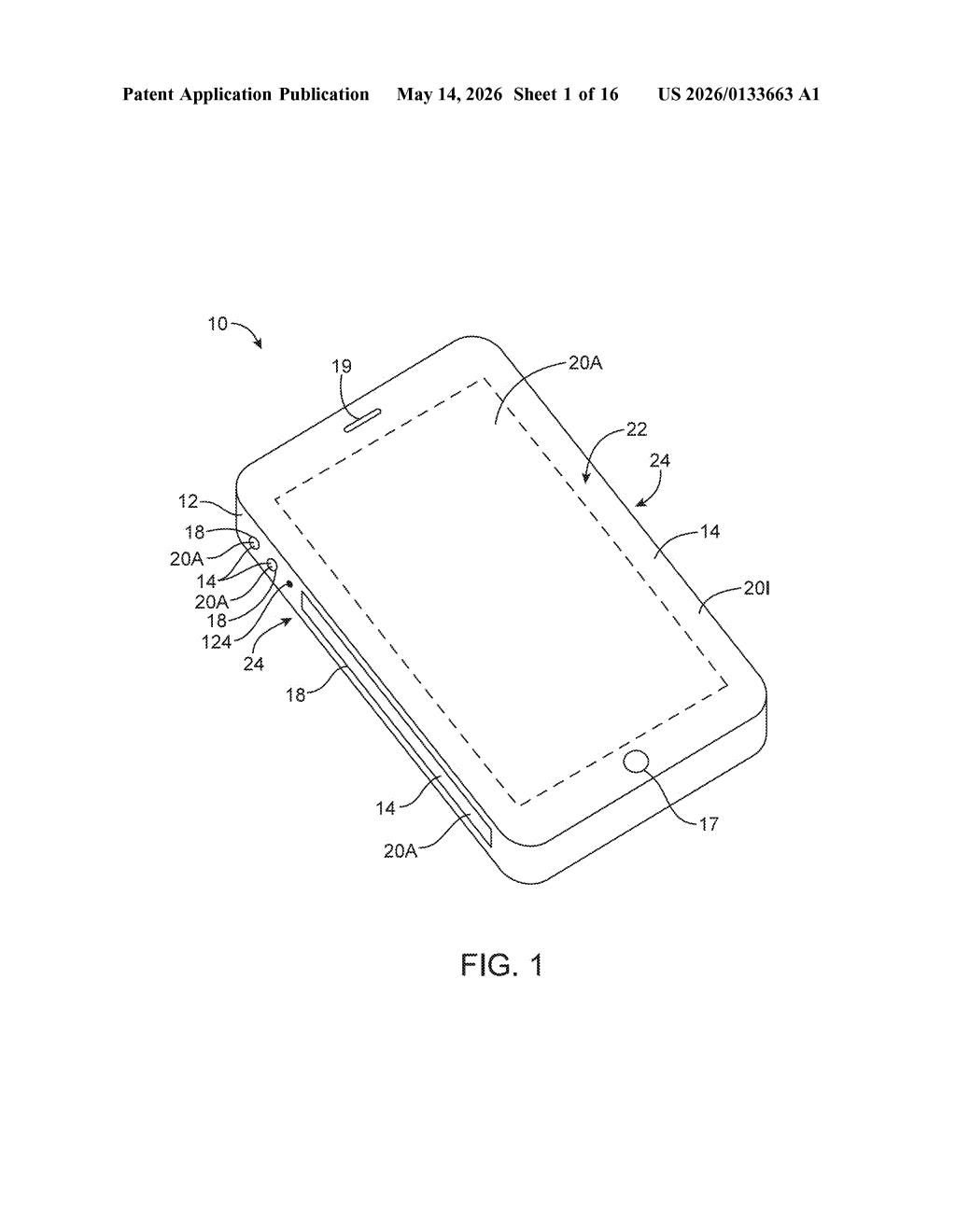
What Apple's sidewall display concept actually does
Imagine pressing the side of your iPhone to adjust volume, but instead of a physical button clicking under your finger, a small screen on the edge lights up, shows an icon, and responds with a little buzz. That's the core idea here.
Apple's patent describes a flexible display that bends from the front face of a device around to its edges, so the sidewalls themselves become a second screen. The edge zone could show notifications, act as a virtual mute switch, or display battery status — all without taking space from your main screen.
To keep things clean, Apple proposes using an opaque housing strip (basically a physical divider built into the frame) to visually separate the side display from the front display. You'd see two distinct zones, even though it's one continuous panel underneath.
How Apple separates edge zones from the main screen
The patent describes a single flexible OLED-style display that is physically bent during manufacturing so that one portion faces forward (the main display you stare at all day) and another portion faces sideways (the edge display on the device's rim).
The two regions — what the patent calls the first display region and the second display region — emit light in different directions. An opaque housing structure sits between them, acting as a bezel or divider that visually isolates each zone so they don't bleed into each other.
Apple describes several ways the edge display could work:
- Virtual buttons — touch-sensitive areas on the side that replace physical hardware buttons, optionally with haptic or audio feedback so you still feel a click
- Virtual switches — toggle controls (think mute, flashlight) rendered on the curved side panel
- Informational displays — always-on strips showing time, notifications, or status without waking the main screen
The patent also mentions pixel-level activation as an alternative to physical dividers — the device could simply turn off pixels in the boundary zone to create a visual gap, rather than relying on a hardware separator.
What this means for iPhone's physical button future
Apple has spent years trying to remove physical buttons from iPhone. The Action Button and USB-C port are recent steps, but the side buttons (volume, power) are still mechanical hardware. A sidewall display would let Apple replace those entirely with software-defined controls — meaning the same physical edge could become a shutter button in the camera app, a game controller in a game, or a brightness slider in the browser.
For you as a user, this could mean a more seamless, waterproof device body with fewer moving parts. It also opens up persistent glanceable info — like a Fitbit-style always-on strip — on a device you already carry everywhere. The trade-off is that virtual buttons without good haptic feedback tend to feel worse than real ones, which is why Apple specifically calls out haptic and audio components in the patent.
This is one of Apple's more credible 'wrap-around display' filings because it stays grounded — it's not pitching a phone that's entirely screen, just a practical extension of the existing display onto the sidewall. The inclusion of opaque housing dividers as a core design element suggests Apple is thinking carefully about how to make this readable, not just possible. Worth tracking as a signal for where iPhone hardware is heading in the next few product cycles.
Get our take in your Top Stories
Liked this breakdown? Add Patentlyze as a preferred source on Google, and our plain-English take shows up more often in your Top Stories the next time Apple patent news breaks.
There are more where this came from
We read every patent application Big Tech publishes and send you the ones worth knowing. Plain English, free, every week.
Want this weekly breakdown for a company we don't cover? Patentlyze Pro →