
Samsung Patents a Strain-Gradient Memory Cell to Boost DRAM Performance
Samsung is trying to squeeze more performance out of DRAM by using physical stress — literally bending the crystal structure of a material — to generate an electric field that helps control memory cells.
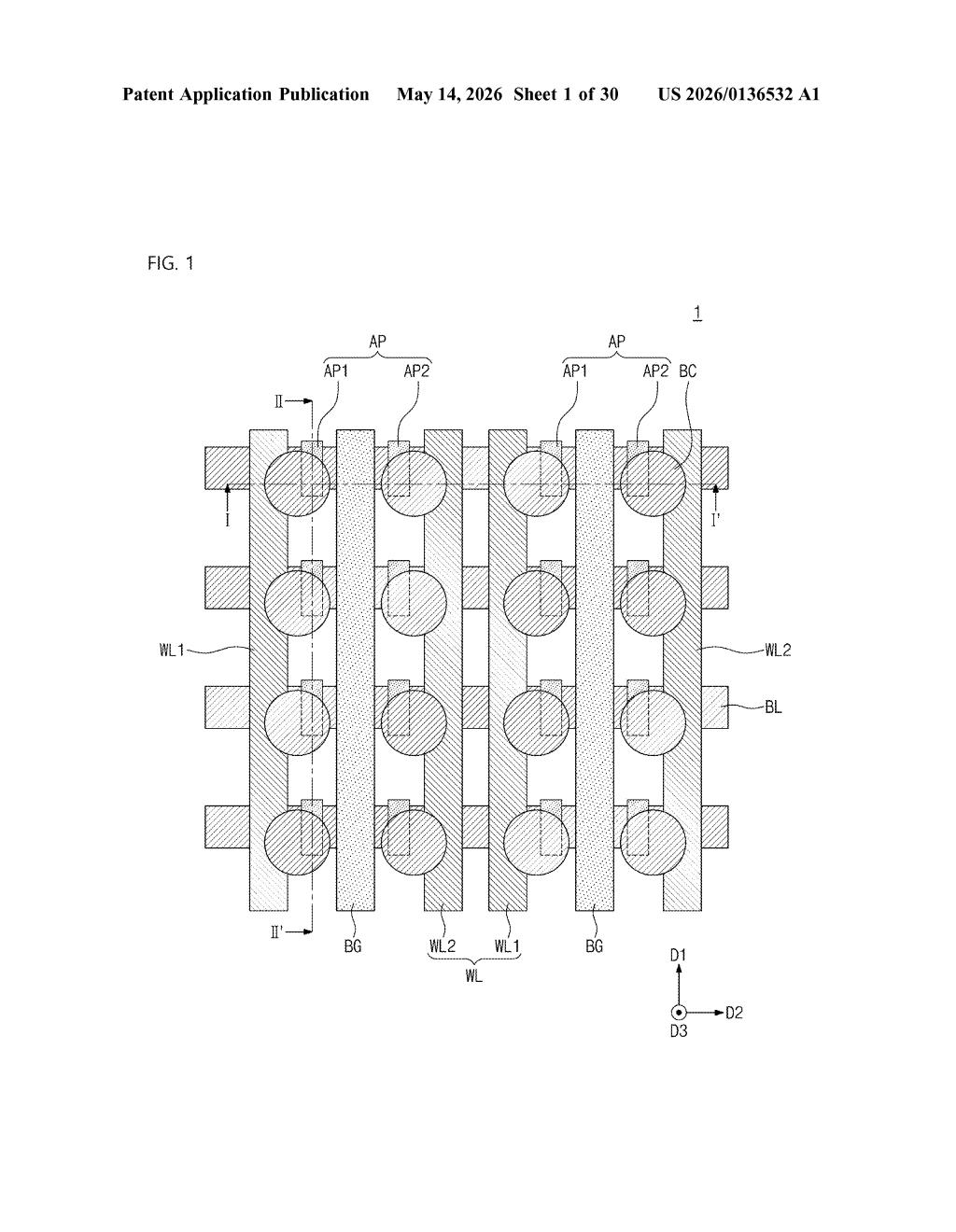
What Samsung's strain-polarized memory cell actually does
Imagine a tiny spring coiled just a little too tight. That tension doesn't just sit there — it pushes on everything around it. Samsung's patent applies the same idea to memory chips: by engineering a material that's under varying degrees of physical stress, you can coax it into producing a useful electric field, without needing extra wiring or power to create that field.
In a DRAM memory cell, transistors need precise electric fields to switch on and off reliably. Traditionally, you'd use additional layers or voltages to supply that field. Samsung's approach instead uses a strain gradient — a gradual change in internal mechanical stress across a special material layer called the "electric field generating pattern" — to create a built-in electric polarization. A thin buffer layer sits between the main semiconductor pillar and this special material, and it's that interface that kick-starts the strain.
The upshot is that the memory cell can potentially be controlled more efficiently, which matters a lot when you're cramming billions of these cells onto a chip the size of a fingernail.
How the buffer layer creates Samsung's strain gradient
The patent describes a vertical DRAM-style memory cell — the kind used in modern high-density chips where transistors stand upright like skyscrapers rather than lying flat. The core structure includes:
- A bit line at the base (the wire that reads and writes data)
- A vertical active pattern — the semiconductor pillar that forms the transistor body
- A word line running horizontally to switch the transistor on or off
- A gate insulating pattern between the word line and the pillar (standard transistor insulation)
- An electric field generating pattern placed beside the pillar in both horizontal directions
- A buffer layer sandwiched between the pillar and that electric field material
The clever part is the strain gradient inside the electric field generating pattern. A strain gradient means the material is compressed or stretched by different amounts at different depths — tight near the buffer layer interface, relaxing further inside. This uneven stress triggers a phenomenon called flexoelectricity (electric polarization caused by mechanical strain variation, rather than uniform stress), producing a built-in electric field without any extra applied voltage.
The buffer layer isn't just structural filler — its lattice mismatch with the electric field generating material is likely what seeds that gradient in the first place, giving Samsung fine-grained control over the polarization strength.
What this means for next-gen DRAM density and speed
For DRAM scaling, every extra voltage source or structural layer you can eliminate is a win. As cell dimensions shrink below 10nm, fitting in the components needed to reliably switch a transistor gets brutally hard. A self-polarizing material that provides its own internal field — powered by strain rather than a dedicated circuit — could let Samsung pack cells tighter while maintaining the electric field strength needed for reliable reads and writes.
This also fits into a broader industry push toward ferroelectric and flexoelectric materials in memory. Competitors like Micron and SK Hynix are pursuing similar physics-bending tricks. Samsung staking out this specific vertical-cell architecture with a buffer-layer-seeded strain gradient is a way of carving out IP space in what's shaping up to be a key battleground for next-generation DRAM and storage-class memory.
This is deep-in-the-stack semiconductor physics work — not a product announcement, not AI software. But Samsung's memory division lives or dies on exactly these kinds of incremental structural innovations, and a built-in electric field that requires no extra power draw is genuinely useful at sub-10nm geometries. It's worth watching as a signal of where vertical DRAM cell design is heading.
There are more where this came from
We read every patent application Big Tech publishes and send you the ones worth knowing. Plain English, free, every week.
Want this weekly breakdown for a company we don't cover? Patentlyze Pro →