
Google Patents a System That Combines Multiple Live Streams Into One Screen
Picture-in-picture, but for live video, and handled entirely by Google's servers before the stream even reaches your screen. That's the core idea behind this Google patent for a mosaic video feed.
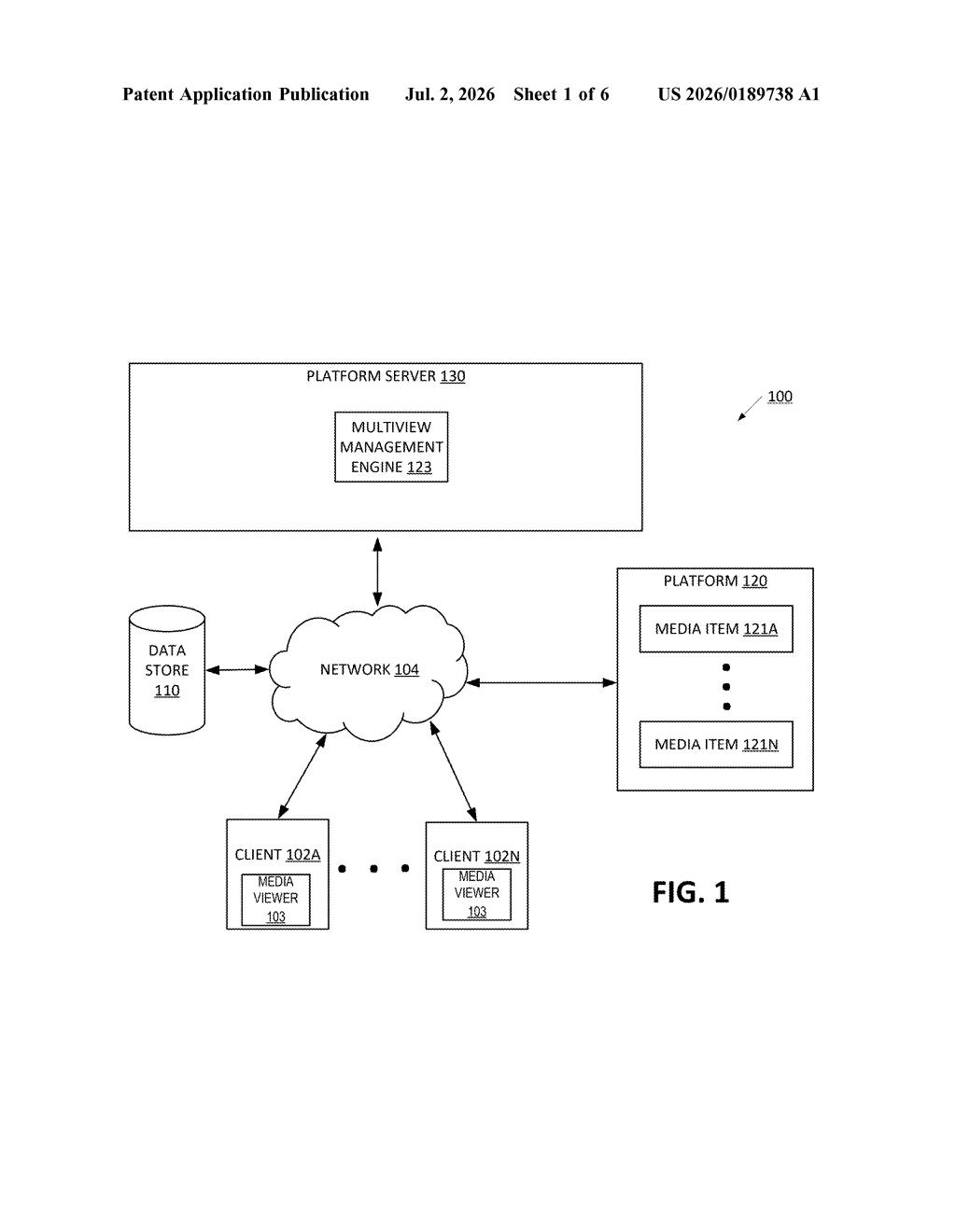
What Google's mosaic live-stream system actually does
Imagine watching a live sports event where four camera angles are all playing at once, each in its own tile on your screen, like a security camera grid. Right now, doing that usually means opening multiple browser tabs or relying on your device to juggle the work. Google's patent describes doing all of that combining on their servers, before the video even arrives on your phone or TV.
The system stitches several live streams into one single mosaic feed and sends that one combined stream to you. You can pick which stream's audio you want to hear, and a visual cue (think a highlight or border) shows you which tile's sound is currently playing.
Because the heavy lifting happens on Google's end rather than your device, even a lower-powered phone or smart TV could theoretically display a multi-stream view without struggling.
How the server tiles streams and routes audio to your screen
The patent describes a server-side pipeline with a few distinct steps:
- Stream identification: The server pulls together multiple source video streams, each with its own audio track, from a live event or broadcast.
- Mosaic assembly: Those streams are combined into a single video output where each original stream occupies a defined spatial region (a tile or fragment) within the frame. Think of it like a grid stitched into one video file.
- Audio selection: A user (or an automated input) picks which stream's audio should play. Only that one audio track accompanies the mosaic video.
- Visual cue: To avoid confusion about which tile's audio is active, the mosaic includes a visual indicator, such as a border or highlight, on the corresponding tile.
The finished mosaic stream is then delivered to a client device (phone, tablet, TV, browser) as a single stream. The client doesn't need to manage multiple connections or do any compositing itself. That's the architecturally distinct part: the server owns the composition entirely.
What this means for live sports and multi-cam viewing
For live sports, esports, and multi-camera broadcasts, this kind of server-side mosaic could make multi-view experiences much more accessible. Today, YouTube TV's multiview feature already exists in limited form, but the underlying engineering of where the combining happens matters a lot for which devices can support it and how much bandwidth it consumes.
If Google builds this approach into YouTube or YouTube TV, it could extend multi-stream viewing to devices that currently can't handle it, like older smart TVs or entry-level phones. It also gives Google more control over the viewing layout and audio switching experience, rather than depending on each device's hardware to do the work.
This is a practical infrastructure patent, not a flashy AI announcement. But for anyone who has tried to watch two live streams simultaneously on a budget TV and watched it choke, the idea of offloading that work to Google's servers is genuinely useful. The visual audio-cue detail suggests Google has thought through the actual user experience, not just the plumbing.
There are more where this came from
We read every patent application Big Tech publishes and send you the ones worth knowing. Plain English, free, every week.
Want this weekly breakdown for a company we don't cover? Patentlyze Pro →
Be the first to weigh in