
Google Patents a Three-Way Accuracy Check Before Serving You a Video Ad
Before an ad runs next to a video, Google wants to run that video through three separate tests to make sure the ad audience actually makes sense. This patent lays out exactly how that quality-control pipeline would work.
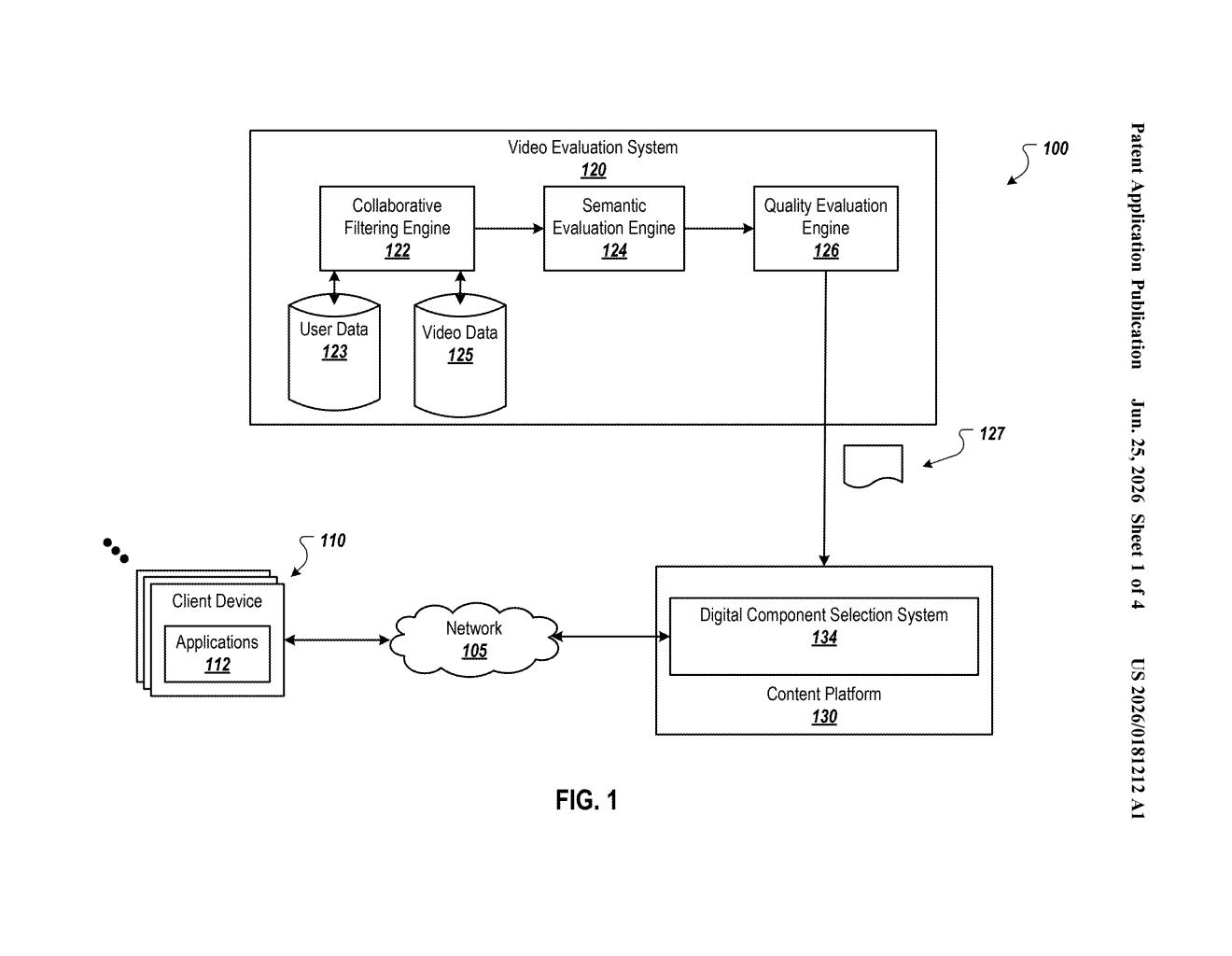
How Google decides which ads fit a video
Imagine YouTube knows you're interested in home cooking. When you watch a video titled "Best Cast Iron Skillets," that's a pretty clean match. But what if you watched it because your friend sent it to you and you don't cook at all? A system that only looks at who watched a video can end up with noisy, misleading audience labels, and advertisers end up paying to reach the wrong people.
Google's patent describes a system that applies three checks before assigning an audience category to a video. First, it looks at how many viewers of the video actually belong to a given interest group. Then it checks whether the video's own content is genuinely about that topic. Finally, it runs a quality test to make sure the match isn't just technically plausible but actually precise.
Only audience categories that pass all three filters get attached to the video. Ads are then served based on those verified categories. The goal is fewer misfires: ads that reach people who are actually interested, and videos that don't get saddled with irrelevant audience tags.
How the three scoring signals work together
The system starts by looking at a video and pulling together all the user interest segments (think: audience buckets like "home cooks" or "fitness enthusiasts") that people who watched the video belong to. Then it scores each of those segments three ways:
- Segment view score: What fraction of the video's viewers actually belong to this interest group? If only 2% of viewers are tagged "home cooks," that segment probably doesn't represent this video well.
- Semantic similarity score: Does the video's content actually match the topic of the interest group? This uses text and meaning analysis (comparing words, topics, and concepts) to check whether, say, a video about "sourdough starter" is genuinely related to the "baking" segment.
- Quality scores: How precise and reliable is the assignment overall? This is a catch-all accuracy check designed to filter out segments that technically overlap with a video but don't cleanly describe it.
Segments that score well across all three dimensions are selected. Digital components (the patent's term for ads and sponsored content) are then distributed to viewers' devices based on those approved segment topics. The whole pipeline runs as a quality-control gate, not just a lookup table.
What this means for advertisers and YouTube viewers
For advertisers, this is about reducing wasted spend. Buying ads against an audience category that only loosely fits the video content means paying to reach people who probably aren't interested. A system that cross-validates audience fit using both viewer behavior and content analysis should, in theory, produce tighter targeting.
For viewers, the practical effect would be ads that feel less random. If Google can more reliably tie a cooking video to a cooking audience, you're less likely to see an ad for something completely unrelated to why you clicked. This kind of infrastructure work is unglamorous but it sits directly under YouTube's ad revenue engine, which makes it one of Google's most commercially sensitive areas.
This is backend ad-plumbing, not a flashy product feature, but it sits at the center of how Google makes money from YouTube. A more accurate segment-assignment system means higher-quality inventory for advertisers, which means Google can charge more for it. Worth paying attention to if you follow ad-tech or YouTube's monetization strategy.
There are more where this came from
We read every patent application Big Tech publishes and send you the ones worth knowing. Plain English, free, every week.
Want this weekly breakdown for a company we don't cover? Patentlyze Pro →