
Waymo Patents a Way for Remote Operators to Inch Robotaxis Past Blocked Views
When a self-driving car can't see around a corner, it doesn't have to just sit there anymore. Waymo's newest patent describes a system where a human operator, watching from a control center, can authorize the car to nudge forward a few inches at a time until the cameras get a clear view.
What Waymo's blocked-sensor workaround actually does
Imagine you're in a Waymo robotaxi and it stops at an intersection where a delivery truck is blocking the view. The car can't see oncoming traffic, so it refuses to move. Right now, that can mean a long, awkward wait.
This patent describes a fix: the car sends a help request to a remote operator, who sees a live dashboard of what the car's sensors can detect. The operator can then press a button authorizing the car to creep forward a short, predefined distance, just enough to peek around the obstruction.
Here's the important part: the car doesn't blindly follow that instruction. Even after the operator gives the go-ahead, the car keeps watching its surroundings and will brake on its own the moment it detects anything unexpected, like a pedestrian stepping off the curb. The human gives permission; the car still does the safety work.
How the remote creep-forward instruction loop works
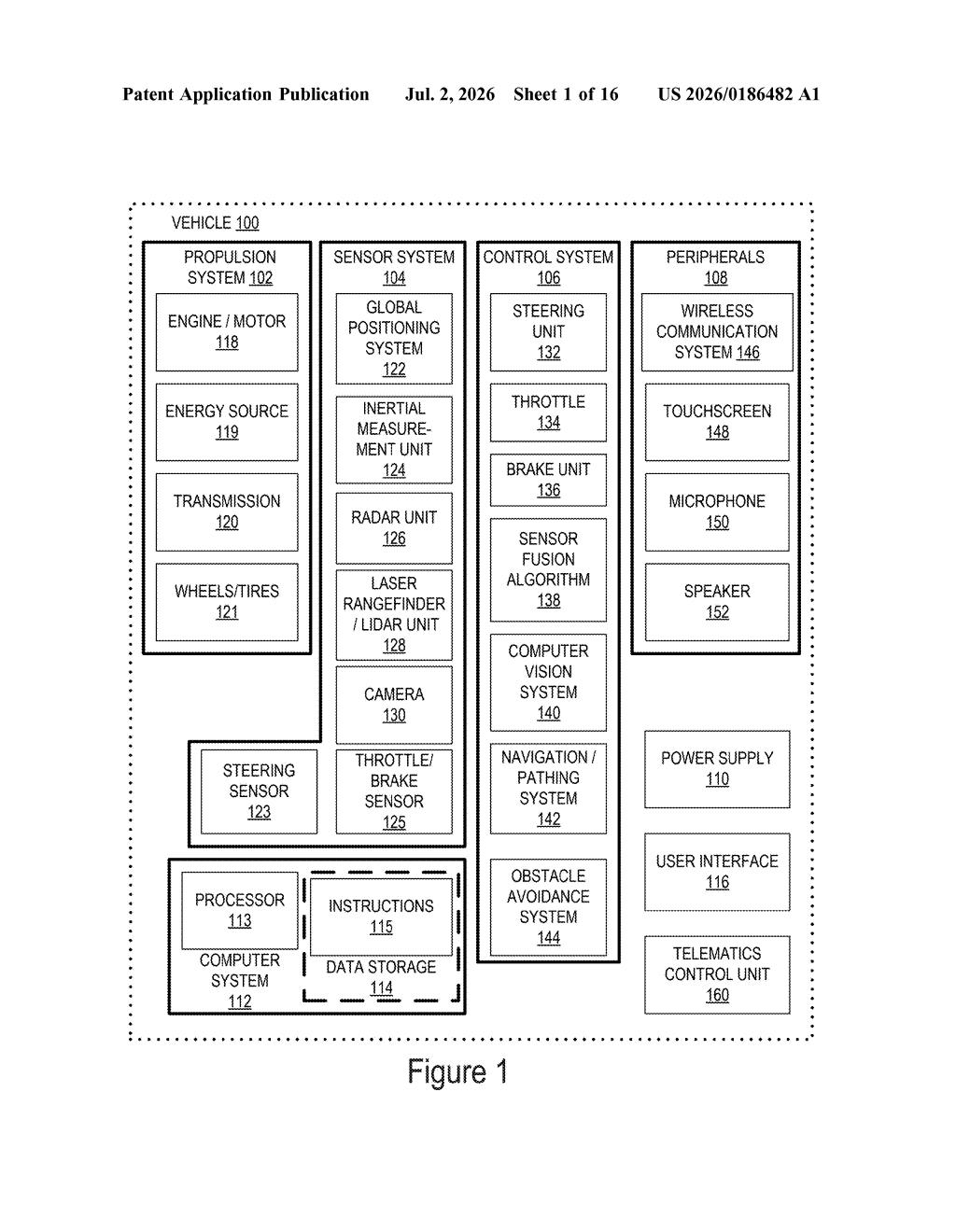
The patent describes a two-part system: an onboard decision layer inside the car, and a remote operator interface.
On the car's side, the system maintains a predetermined list of navigation situations that trigger a help request. A partially occluded sensor view (meaning the cameras or lidar can't see clearly because something is physically in the way) is one of those triggers. When the car identifies a match, it packages up its current sensor data and transmits it to a remote operator.
On the operator's side, a graphical user interface (GUI) shows the car's current state, including what the sensors can and cannot see. A selectable button lets the operator authorize a creep-forward maneuver, moving the car a small, fixed distance at a speed below a set threshold.
Once that instruction reaches the car, the vehicle executes it while autonomously monitoring for environmental changes (new objects, people, or vehicles entering the scene). If the car detects any change that warrants stopping, it halts before completing the full authorized distance. The key design choice is that the human approves the move, but the car retains full authority to abort it.
What this means for robotaxi reliability in real cities
Blocked sensor views are one of the most common reasons self-driving cars stall in dense urban environments. Trucks double-parked, construction scaffolding, overgrown hedges at intersections: all of these create situations where a fully autonomous system has no safe way to proceed without more information. A remote-assist system that lets a human authorize a controlled micro-movement could meaningfully cut the number of times a robotaxi needs a physical rescue vehicle.
For Waymo, which is actively expanding its commercial service in cities like San Francisco and Phoenix, the practical ceiling on scale is partly determined by how often cars need hands-on human help. A patent like this is less about flashy autonomy and more about the operational plumbing that makes a large robotaxi fleet actually run.
This is a genuinely practical piece of engineering that addresses a real, recurring problem in robotaxi operations. It's not autonomous driving getting more autonomous, it's autonomous driving getting better at knowing when to ask for help and how to act on that help safely. That distinction matters, and Waymo is one of the few companies with enough real-world fleet data to know exactly which situations need this kind of fix.
Get our take in your Top Stories
Liked this breakdown? Add Patentlyze as a preferred source on Google, and our plain-English take shows up more often in your Top Stories the next time Google patent news breaks.
There are more where this came from
We read every patent application Big Tech publishes and send you the ones worth knowing. Plain English, free, every week.
Want this weekly breakdown for a company we don't cover? Patentlyze Pro →