
Google's X Lab Patents a Way to Read Power Grid Data From Aerial Photos
Alphabet's X lab wants to figure out whether a transformer on a utility pole is rated for 25 kilovolt-amps or 50, without anyone ever climbing the pole. Their new patent does it with photos.
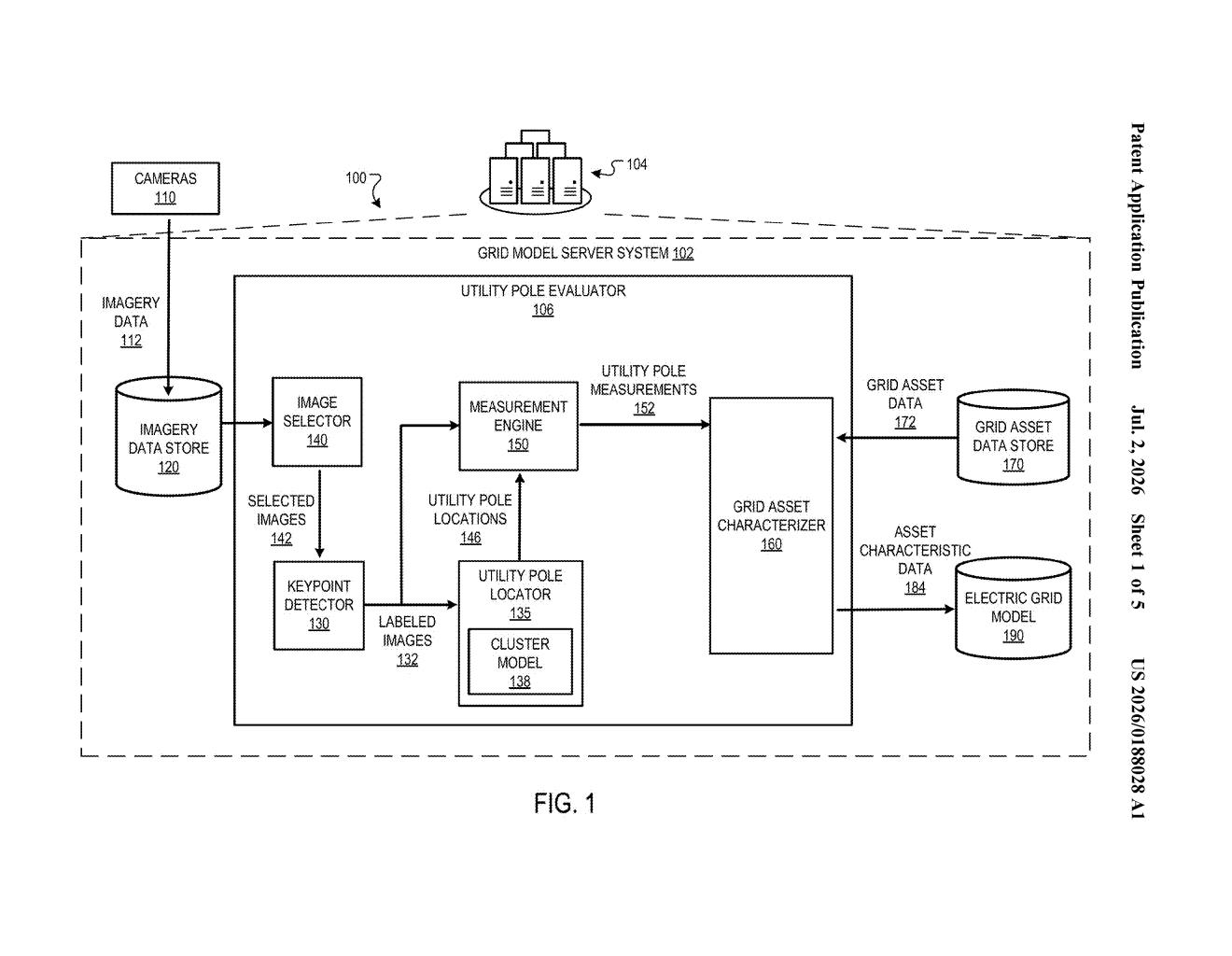
What X Development's power-pole photo analysis actually does
Imagine trying to build a map of every electrical component on every utility pole in a city, without sending a crew out to inspect each one. That's a genuinely expensive, slow problem, and it's one reason electric utilities often have incomplete records of their own equipment.
X Development's patent describes a system that takes multiple photos of a utility pole from different angles, finds key reference points on the pole (like the crossbar width or the mounting hardware), and uses those measurements to estimate the electrical specs of whatever equipment is attached. Think of it like how a detective estimates a person's height from a photo by measuring them against a known object in the frame.
The system can reportedly identify characteristics of transformers, capacitors, switches, and power lines. The output would be a structured data record about each piece of equipment, all generated without a field visit.
How keypoints and multi-angle images produce electrical specs
The patent describes a photogrammetry-based pipeline (photogrammetry means extracting real-world measurements from photographs) for cataloging electric grid equipment.
Here's how the process works:
- A set of images is collected showing utility poles, likely from drones, street-level vehicles, or aerial surveys.
- The system detects keypoints (specific, identifiable anchor spots on the pole structure, like bolt locations or crossarm ends) in each image.
- Using those keypoints across at least two images taken from different camera angles, the system triangulates real-world dimensions of the pole and its hardware.
- Those physical measurements are then used to infer electrical characteristics of attached assets, such as a transformer's voltage rating or a capacitor bank's capacity.
The key insight is that physical size often correlates strongly with electrical rating for grid equipment. A larger cylindrical canister on a pole is almost certainly a higher-capacity transformer than a smaller one. The system turns that engineering relationship into an automated inference engine.
The patent covers outputs for capacitors, transformers, switches, and power lines, and explicitly requires images from multiple different camera perspectives to make accurate 3D measurements from 2D images.
What this means for grid mapping and utility infrastructure
Electric utilities frequently operate with outdated or incomplete asset records. When a storm knocks out power, crews need to know exactly what equipment is on each pole to bring the right replacement parts. A system that can automatically populate those records from drone or satellite imagery could meaningfully speed up outage response and grid planning.
For X Development, which sits inside Alphabet alongside Google, this fits a broader pattern of applying computer vision to physical infrastructure. Grid modernization is a significant policy and investment priority right now, and tools that reduce the cost of auditing aging infrastructure have a clear commercial path through utility contracts or grid management software platforms.
This is a genuinely practical piece of computer vision work, not a moonshot. The problem it addresses (utilities not knowing what's actually on their poles) is real, well-documented, and expensive. Whether X Development plans to productize this or license it to utilities is unclear, but the underlying approach is sound and the market need is there.
Get our take in your Top Stories
Liked this breakdown? Add Patentlyze as a preferred source on Google, and our plain-English take shows up more often in your Top Stories the next time Google patent news breaks.
There are more where this came from
We read every patent application Big Tech publishes and send you the ones worth knowing. Plain English, free, every week.
Want this weekly breakdown for a company we don't cover? Patentlyze Pro →