
Google Patents an Ad-Generation AI That Improves Itself on Ads People Actually Accept
Google is patenting an AI that watches which ads get approved, then uses those results to make itself better at writing ads. It's a feedback loop built directly into the ad creation engine.
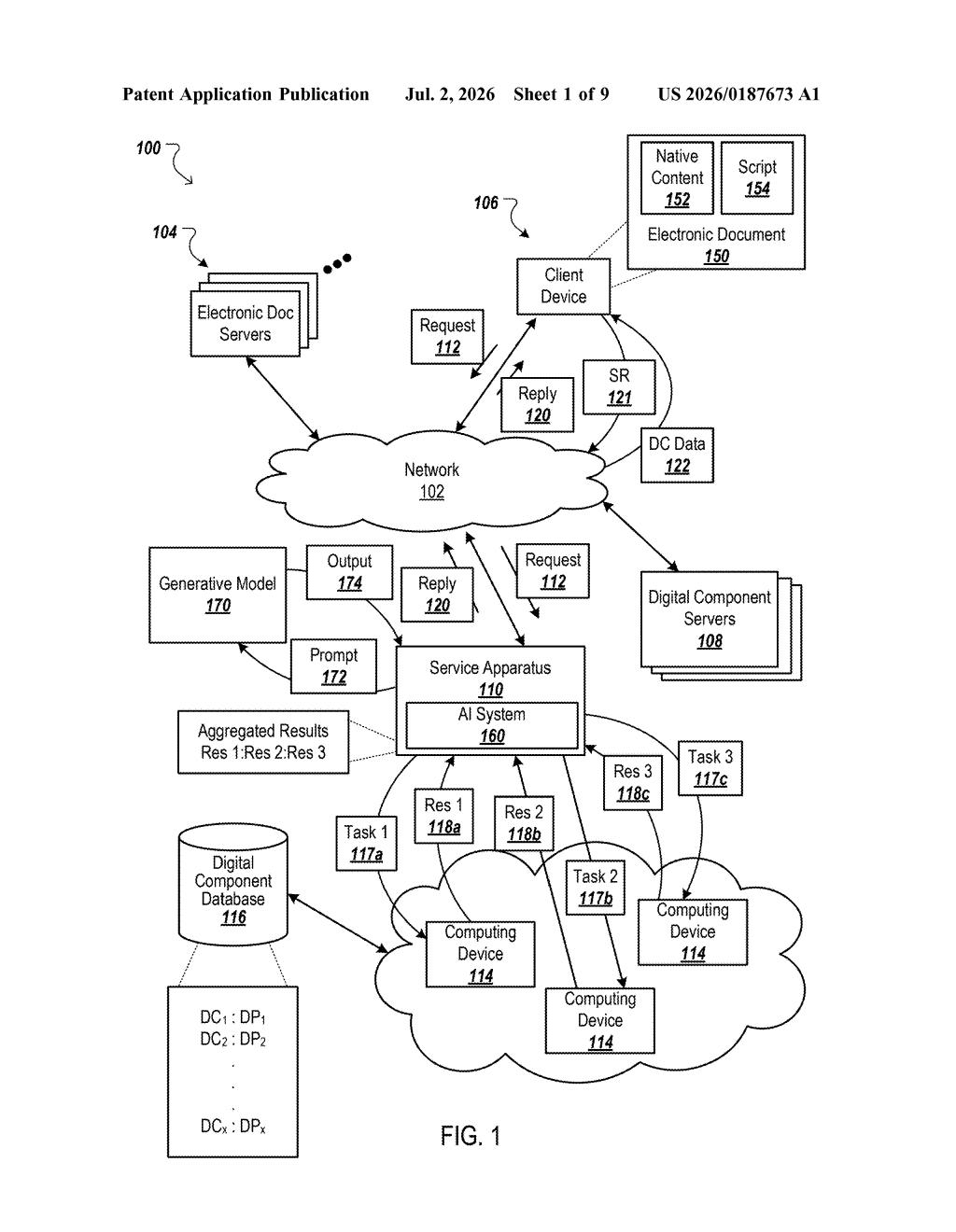
What Google's self-improving ad AI actually does
Imagine a copywriter who, after every pitch meeting, studies which of their ideas the client picked, then uses those notes to get better at writing pitches. That's essentially what Google is describing here.
Google's AI system generates a batch of candidate ads in response to a query (say, an advertiser asking for creative for a new sneaker line). It then watches which of those ads get accepted, and the one with the highest acceptance rate becomes the seed for new training data. The model then retrains itself using that data.
The result is an ad-generation system that doesn't stay static. Every round of accepted ads feeds back into the model, nudging it toward the kinds of outputs that humans (or automated systems) actually approve. You end up with an AI that improves on the job, shaped directly by real-world acceptance signals rather than just one-time training data.
How the model picks winners and rewrites its own training data
The patent describes a closed-loop AI system for generating and refining digital components, which in this context almost certainly means ads or ad creatives. Here's how the loop works:
- The system receives a query, which could be an advertiser brief or a targeting request.
- A machine learning model generates multiple candidate digital components in response to that query.
- The system collects performance data indicating the "acceptance level" of each candidate. Acceptance level is likely a proxy for human review approval, click-through rates, or automated policy compliance scores.
- The best-performing candidate is identified, and new training data is generated based on it.
- The underlying machine learning model is then retrained using that new data, completing the feedback loop.
This is a form of reinforcement learning from human feedback (RLHF), the same class of technique used to tune large language models like ChatGPT. The key difference here is that it's applied narrowly to ad generation and uses real-world acceptance signals, not human preference ratings from a separate annotation team. The model is, in effect, shaped by what actually ships.
What this means for advertisers and Google's ad business
For Google's advertising business, this kind of self-improving loop could mean ad creative that gets better at passing review and matching advertiser intent over time, without requiring Google engineers to manually retune the model. The system learns from the market itself.
For advertisers, the implications cut both ways. A model that improves on accepted outputs could produce more usable creative faster. But it also means the AI is optimizing for whatever "acceptance" measures, which may not always align with what makes an ad genuinely effective for the advertiser. If acceptance is defined narrowly (policy compliance, say), the model could become very good at something that isn't quite what advertisers actually want.
This is a genuine piece of infrastructure-level thinking from Google, not a flashy AI demo. A self-improving ad model that trains on real acceptance data is a meaningful engineering bet, and the USPC classification (705/14.43, which covers targeted digital advertising) confirms this is squarely aimed at Google's core revenue engine. The interesting question isn't whether this works technically but what "acceptance" actually measures in practice.
Get our take in your Top Stories
Liked this breakdown? Add Patentlyze as a preferred source on Google, and our plain-English take shows up more often in your Top Stories the next time Google patent news breaks.
There are more where this came from
We read every patent application Big Tech publishes and send you the ones worth knowing. Plain English, free, every week.
Want this weekly breakdown for a company we don't cover? Patentlyze Pro →