
Google Patents a Neural Network That Blends Image and Text Understanding
Google has filed a patent for a system that teaches an AI to look at a picture and read accompanying text simultaneously, then answer questions that require understanding both at once. It's a building block for the kind of AI that can look at a photo of a broken appliance and instantly know what you're asking.
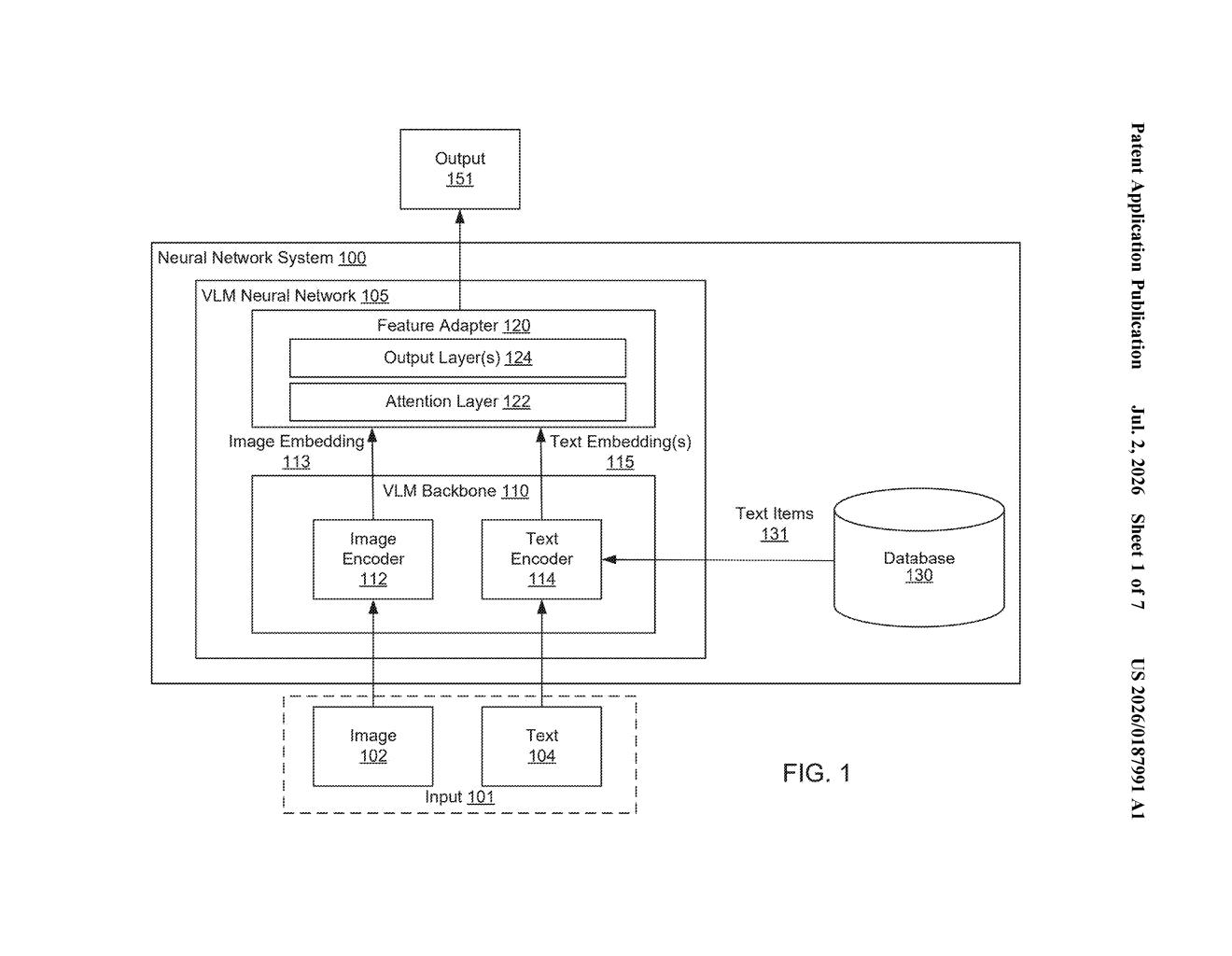
What Google's image-plus-text AI adapter actually does
Imagine you snap a photo of a plant and type 'Is this safe for cats?' Most AI tools handle the photo and the question separately before trying to combine their answers. Google's patent describes a different approach: a layer inside the AI that actively weaves the visual information and the text together before drawing any conclusions.
This component, called a feature adapter, takes what the AI sees in the image and what it reads in the text, then uses a technique called attention (think of it as the AI deciding which parts of the image are most relevant to your specific question) to produce a richer, combined understanding.
The result is an AI that is less likely to miss the connection between what you typed and what's in the picture. Google is essentially filing paperwork on a modular upgrade that could slot into existing AI systems to make that image-plus-text reasoning more accurate.
How the attention adapter blends image and text signals
The patent describes a vision-language model (VLM), a class of AI designed to handle inputs that mix images and text. The specific innovation is an attention-based feature adapter that sits inside the larger model.
Here's how the pieces fit together:
- A backbone image encoder converts the input image into a numerical summary called an image embedding (a dense list of numbers representing the visual content).
- A backbone text encoder does the same for any input text, producing text embeddings.
- The adapter then combines both embeddings along with positional embeddings (extra numbers that tell the AI where things appear spatially) into a single combined representation.
- An attention mechanism (a process that scores which parts of the combined data are most relevant to each other) refines the image embedding based on the text context.
The system also has access to an external dataset of text items, which is where the 'knowledge-augmented' part of the title comes in. The adapter can pull in outside knowledge rather than relying solely on what was baked into the model during training, making it more adaptable without full retraining.
What this means for Google's AI search and vision tools
For Google, this kind of architecture is directly relevant to products like Google Lens, Search with images, and Gemini's multimodal features. A modular adapter that improves image-text reasoning without retraining the entire underlying model is a practical engineering win: you can upgrade one part of the system without touching the rest.
For you as a user, better image-text fusion means fewer frustrating moments where an AI clearly didn't connect your question to what's actually in your photo. It also hints at a direction where AI assistants can draw on external knowledge bases in real time, giving answers that are more grounded in current or specialized information rather than just what was memorized during training.
This is solid, incremental AI infrastructure work rather than a flashy consumer feature. The attention-based adapter pattern is well-established in research, so the novelty here is in the specific combination with an external knowledge dataset and the modular design. It matters because it's the kind of quiet plumbing work that eventually makes Google's AI products measurably better at real-world image-and-text tasks.
Get our take in your Top Stories
Liked this breakdown? Add Patentlyze as a preferred source on Google, and our plain-English take shows up more often in your Top Stories the next time Google patent news breaks.
There are more where this came from
We read every patent application Big Tech publishes and send you the ones worth knowing. Plain English, free, every week.
Want this weekly breakdown for a company we don't cover? Patentlyze Pro →