
Google Patents a Way to Link Digital Content to Printed Images via Camera
Point your phone's camera at something, and Google's system could decide which digital information to float on top of it, based not just on what you're looking at but on who you are and where you are.
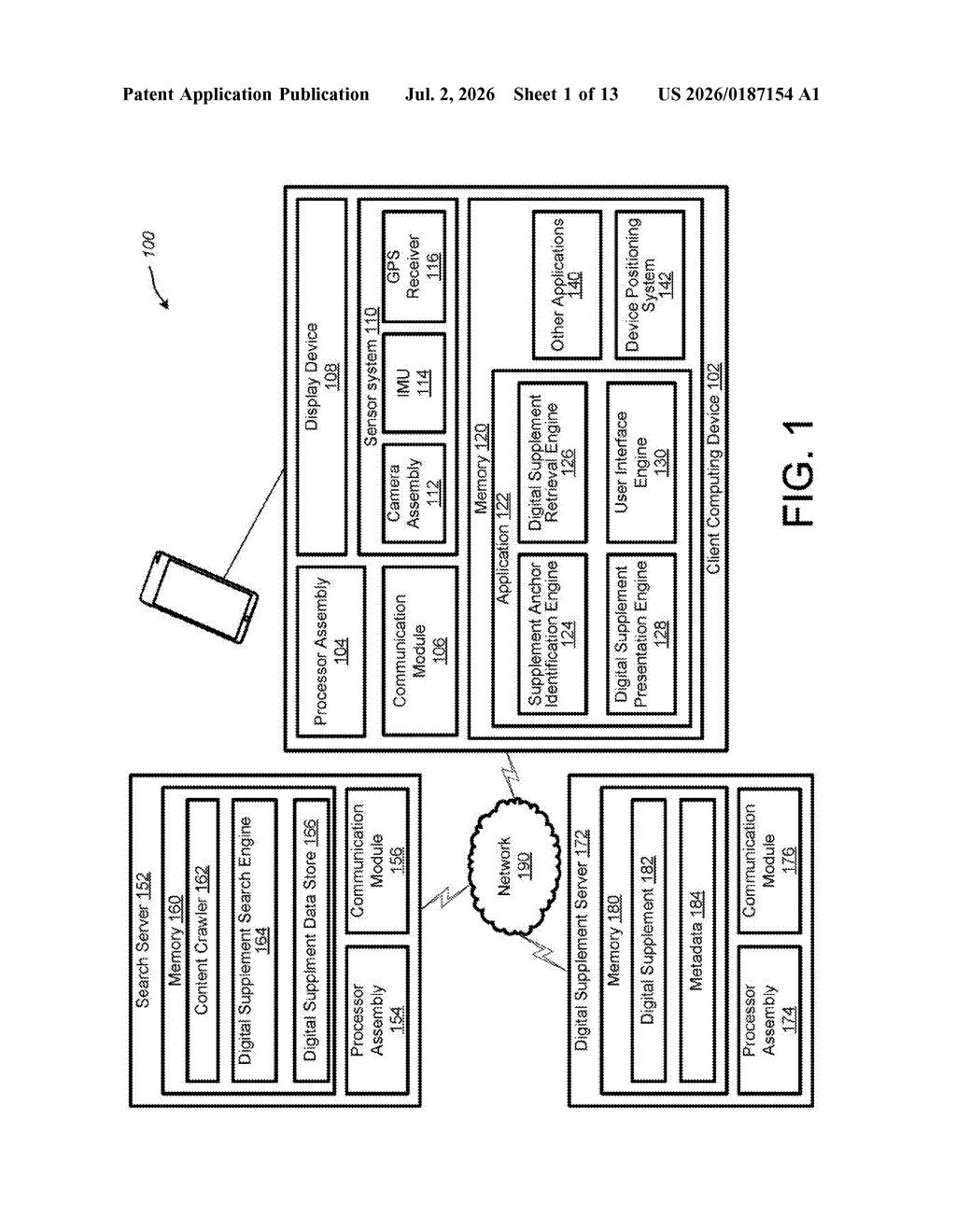
What Google's camera-triggered AR overlay system actually does
Imagine walking past a restaurant and holding up your phone. Instead of just identifying the building, your camera view fills up with reviews, a menu, or a special offer, all floating right over the front door. That's the basic idea here.
Google's patent describes a system for linking pre-loaded digital content to real-world objects. When your camera captures an image, the system searches a database to find content associated with what it sees, then picks the most relevant pieces based on context like your location, your device, or what time it is.
The key word is context-aware. You and a friend could point your cameras at the exact same storefront and see different overlays depending on your individual situations. The system isn't just matching objects to labels; it's filtering a whole menu of possible content down to what makes sense for you specifically.
How Google matches image data to stored digital supplements
The patent describes a pipeline that starts the moment a camera captures an image. The image data becomes a visual query, which the system processes to pull up a set of candidate digital supplements (the patent's term for any piece of digital content tied to a real-world visual anchor).
Those supplements are stored in a database as structured records called data structure instances, each linking a piece of content to one or more supplement anchors (visual markers or object identifiers that act as triggers). When the visual query matches an anchor, the corresponding supplement becomes a candidate for display.
From that candidate pool, the system then applies context filtering. Context can include:
- The device making the request
- Location or environmental data
- Other signals associated with the image or the user
Only the supplements that pass the context filter get rendered as augmented reality overlays, positioned on top of the physical objects in the live camera view. This two-stage process (match first, then filter by context) is the core architectural idea the patent is protecting.
What this means for Google Lens and AR search
Google Lens already identifies objects in photos, but this patent describes a layer on top of that: a structured, database-driven system for attaching arbitrary digital content to real-world objects and deciding, in real time, which content you specifically should see. That's a meaningful step toward making AR overlays feel relevant rather than generic.
For advertisers and publishers, this is essentially a new ad format tied to physical space. A brand could register a digital supplement anchored to its product packaging, and anyone who points a phone at it gets a targeted experience. For users, it could make Google Lens feel a lot more like a live information layer than a reverse image search tool.
This is a clear signal that Google is building the infrastructure for location-and-object-aware AR advertising, with Google Lens as the obvious delivery vehicle. The context-filtering piece is what makes it commercially interesting, since it's the mechanism that lets the same physical object serve different experiences to different viewers. Whether that sounds useful or invasive probably depends on how much you trust Google's definition of 'relevant.'
Get our take in your Top Stories
Liked this breakdown? Add Patentlyze as a preferred source on Google, and our plain-English take shows up more often in your Top Stories the next time Google patent news breaks.
There are more where this came from
We read every patent application Big Tech publishes and send you the ones worth knowing. Plain English, free, every week.
Want this weekly breakdown for a company we don't cover? Patentlyze Pro →