
Google Patent Targets Faster AI Replies by Pre-Loading Document Content
Instead of making an AI re-read a whole document every time you ask a question, Google's patent describes a system that reads the document once, saves what it learned, and answers follow-up questions almost instantly.
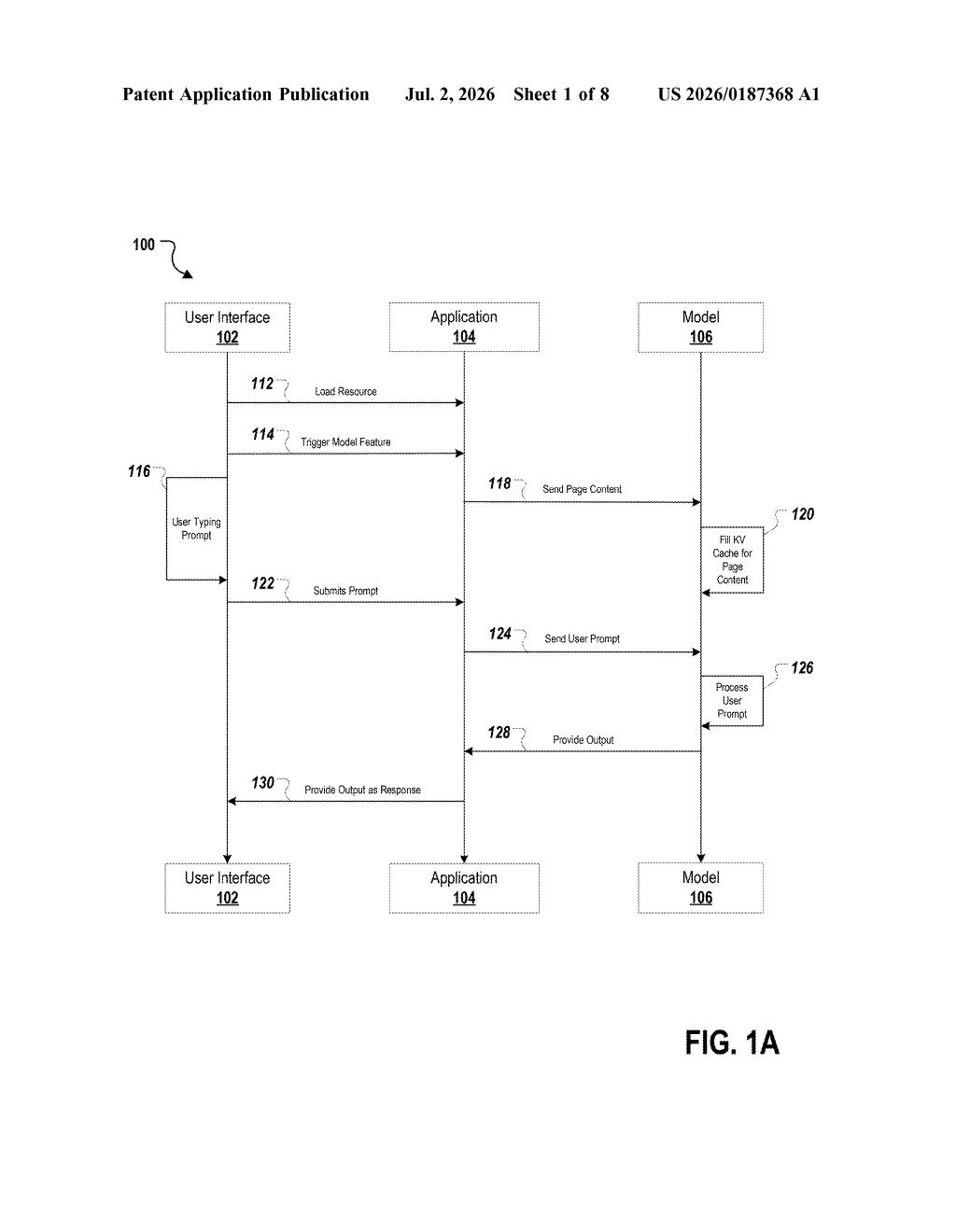
How Google's AI reads first, answers later
Imagine asking a friend to help you review a long contract. Every time you ask them a question, they have to re-read the whole thing from the beginning before answering. That would be exhausting and slow. Google's patent describes a fix for exactly this problem in AI systems.
The idea is to have the AI read a document once and store a kind of compressed understanding of it. That stored understanding is called a "state." When you type a question, the AI skips the re-reading step entirely and answers directly from that saved state.
This is about speed. Right now, every time you ask an AI a question about a document, there's a delay while the model processes all that text again. Pre-loading the document into a saved state means your questions get answered faster, without sacrificing the context the AI needs.
How the model caches a document state before your question
The patent describes a pipeline with three main stages.
- Tokenization: The document's text is broken into small chunks called tokens (think of them as word fragments the model can process mathematically).
- State generation: Those tokens are run through a generative model, which produces an internal state, essentially a compressed numerical snapshot of everything the model understood from the document.
- Prompt processing: When a user submits a question, only the question itself needs to be processed. The model combines the incoming question with the pre-built state to generate a response, skipping the document re-processing entirely.
The core technical insight is separating the document-processing step from the question-answering step. In most current systems these happen together in one pass, which means latency scales with document length. Here, the heavy lifting is done once upfront, and subsequent queries are much cheaper computationally.
The patent is written broadly enough to apply to many types of resources, not just text documents, and many types of generative models, not just large language models.
What this means for AI assistants and document tools
For anyone who uses AI to summarize reports, answer questions about legal documents, or dig through research papers, response time is a real friction point. A system that pre-processes a document and holds its understanding in memory could make those interactions feel much more like talking to someone who already did the reading.
For Google, this pattern fits naturally into products like NotebookLM, Gemini, and any workspace tool that lets you "chat" with a document. The patent's claim is broad enough that it could cover a lot of ground across Google's product line. Whether the approach is genuinely novel or simply a formal description of something AI systems already do informally is a legitimate question, which is probably why the grant likelihood here is not a sure thing.
This patent describes a real and useful optimization: separating document ingestion from query answering to cut response time. The concept itself is well understood in the AI engineering world under names like KV-cache prefilling and prompt caching. The claim language is broad enough that Google may face prior art challenges, but as a signal of where Google is focusing its latency work for AI assistants.
Get our take in your Top Stories
Liked this breakdown? Add Patentlyze as a preferred source on Google, and our plain-English take shows up more often in your Top Stories the next time Google patent news breaks.
There are more where this came from
We read every patent application Big Tech publishes and send you the ones worth knowing. Plain English, free, every week.
Want this weekly breakdown for a company we don't cover? Patentlyze Pro →