
Microsoft Patents Technology That Lets AI Pick Up Conversations Where They Left Off
Every time you close a chat with an AI assistant, it forgets everything. Microsoft is patenting a way to fix that, not just by saving the conversation, but by preserving the entire working state of the AI system itself.
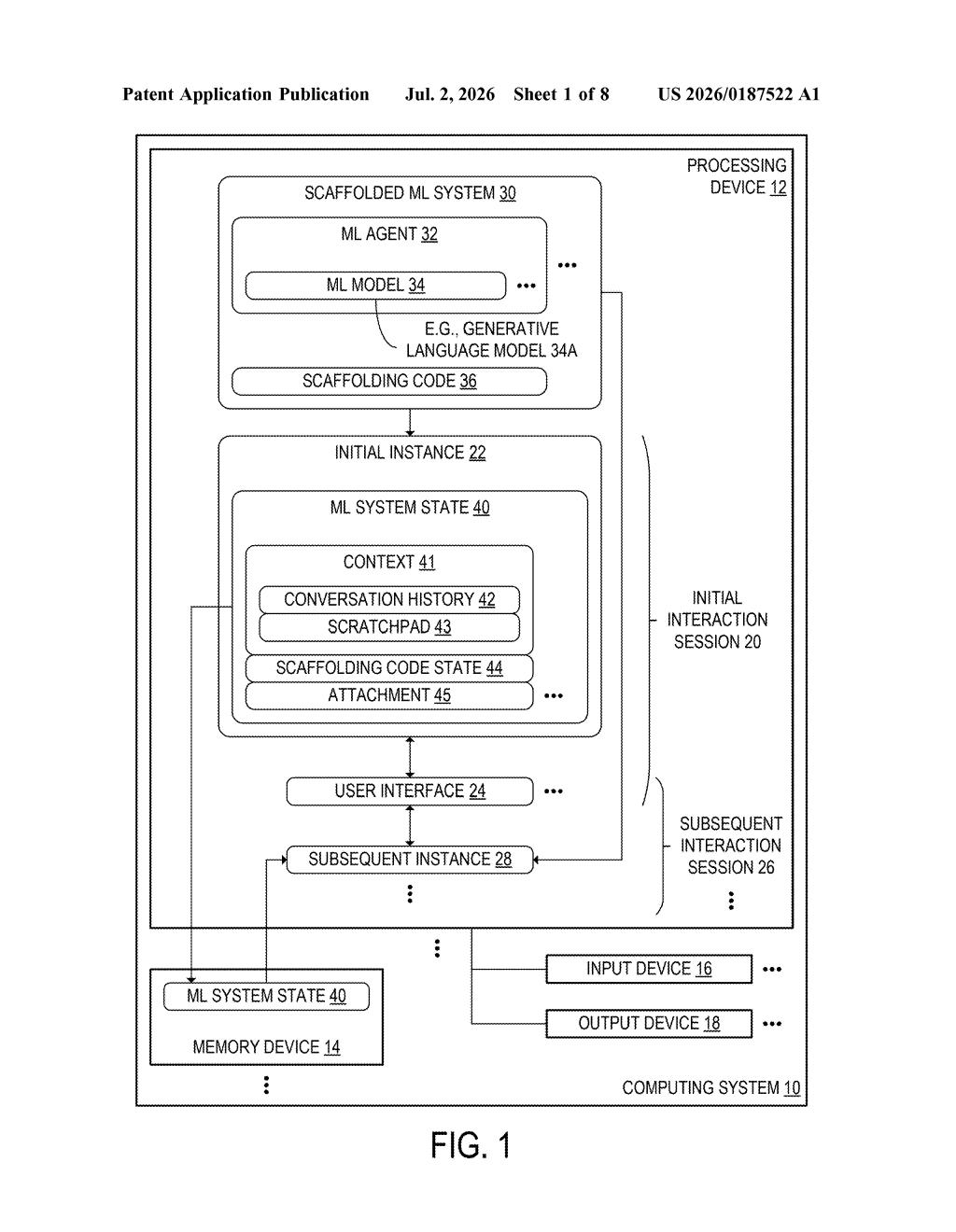
What Microsoft's AI session-memory patent actually does
Imagine you spend an afternoon working with an AI assistant to plan a project, set up a workflow, and fine-tune how it responds to you. Then you close the app. The next time you open it, the AI remembers nothing. You're starting from scratch.
Microsoft's patent describes a system where the AI doesn't just log your conversation history; it saves a snapshot of its own internal working state, including how the underlying code and AI models were configured at that moment. When you come back, the system picks up from that exact snapshot.
Think of it like the difference between a coworker who reads the meeting notes before your next call versus one who simply stayed in the room. The notes give context; the saved state gives continuity. This could make AI assistants feel far less amnesiac between work sessions.
How the scaffolded ML state is saved and restored
The patent describes a scaffolded ML system, which means an AI setup where a layer of conventional code (the "scaffolding") wraps around and coordinates one or more AI models. The scaffolding handles things like when to call which model, how to route inputs, and how to manage the overall flow of a task.
During a first interaction session, the system runs normally. At the end, it stores an ML system state: a saved snapshot of the scaffolded system's condition at that point in time. This is different from saving a chat transcript; it captures the state of the scaffolding code and the AI configuration, not just the words exchanged.
In every later session, the system:
- Retrieves that saved state from memory
- Initializes a fresh instance of the scaffolded ML system using that state
- Runs the new instance as if it had never been shut down
The claim is broad enough to cover multiple users picking up the same AI system state, which hints at possible collaborative or enterprise use cases where a configured AI workflow is shared across a team.
What persistent AI state means for Copilot and enterprise tools
For anyone using AI tools for ongoing work, like drafting documents, managing projects, or running automated workflows, this kind of memory is the difference between a tool that learns your setup and one you have to re-explain every single time. Microsoft's Copilot products are the obvious home for something like this.
The broader implication is for agentic AI, where an AI system runs multi-step tasks over time rather than answering a single question. Those systems need continuity to function properly. Saving full system state, not just chat history, is a foundational building block for making that work reliably.
This is an infrastructure patent, not a flashy feature announcement, but it addresses one of the most genuinely annoying things about current AI tools: they're stateless by default. The detail about 'subsequent instances' potentially being shared across users suggests Microsoft is thinking about this in an enterprise context, which fits neatly with Copilot for Microsoft 365. Worth watching.
Get our take in your Top Stories
Liked this breakdown? Add Patentlyze as a preferred source on Google, and our plain-English take shows up more often in your Top Stories the next time Microsoft patent news breaks.
There are more where this came from
We read every patent application Big Tech publishes and send you the ones worth knowing. Plain English, free, every week.
Want this weekly breakdown for a company we don't cover? Patentlyze Pro →