
Microsoft Patent Enables AI Answers Drawn Directly From Connected Business Data
Instead of fetching data from a database and then separately asking an AI what it means, Microsoft wants to collapse those two steps into one. Write a single query, get an AI-interpreted answer back.
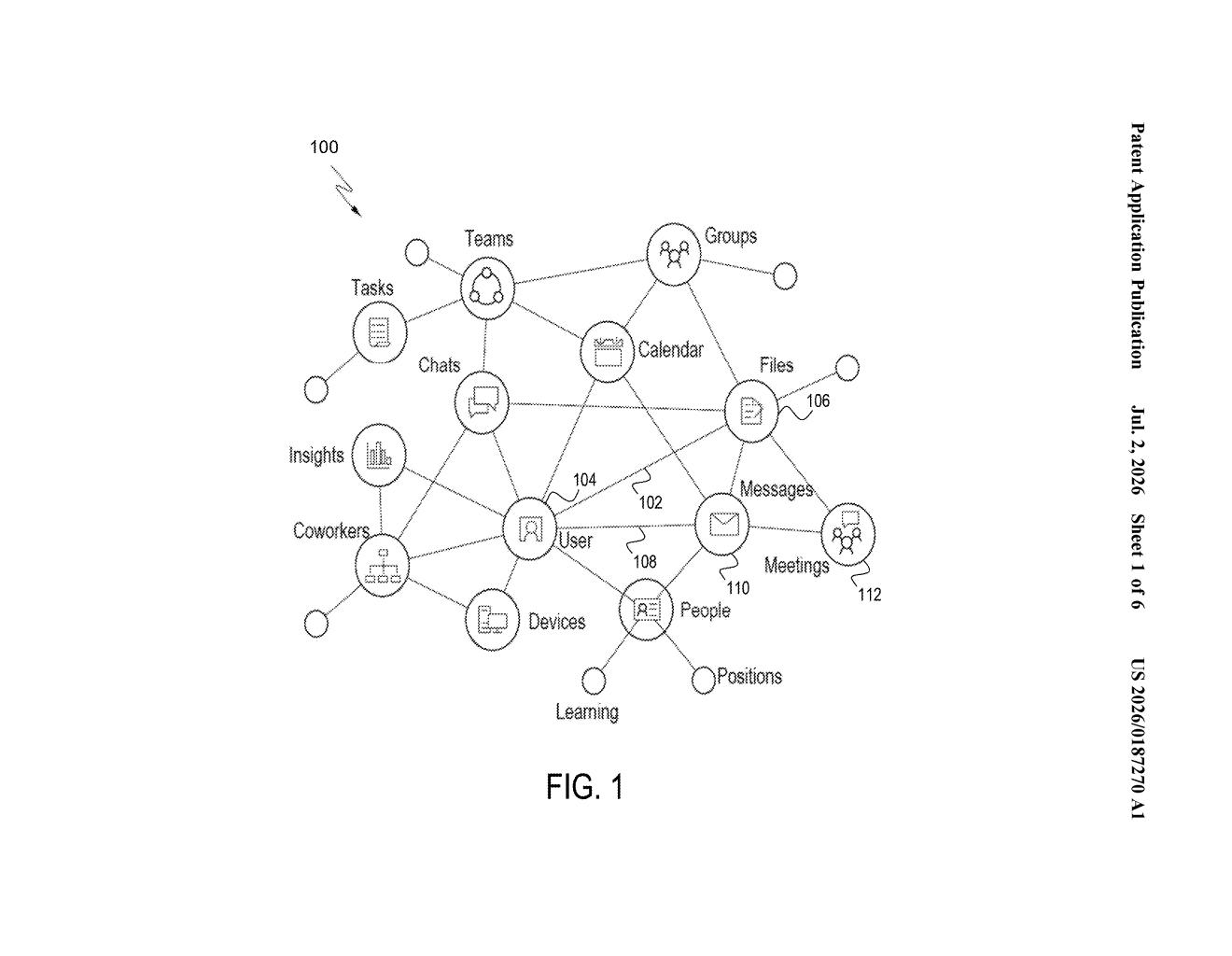
What Microsoft's AI-in-database query system actually does
Imagine you work at a large company and need to find out which employees have access to a sensitive project and whether any of them recently changed roles. Today, you'd probably run a database search, copy the results, paste them into an AI chatbot, and ask your question. That's two separate tools doing two separate jobs.
Microsoft's patent describes a way to do that in a single step. You write one query, in the style of a traditional database command, and that query includes your AI question embedded right inside it. The system pulls the relevant data from an internal company database (the kind that maps relationships between people, projects, and resources) and feeds it straight to an AI model, which then returns a plain-language answer.
The company also builds in access controls, so the AI only sees data your account is actually allowed to read. The answer shows up on your screen without you ever having to juggle two separate tools.
How the graph traversal feeds context to the AI model
The patent describes a system built around what Microsoft calls a knowledge graph (a database that stores not just data but the relationships between things, like how employees connect to projects, systems, and each other) combined with a graph query language (a specialized syntax for asking questions about those relationships).
The key innovation is that the query language is extended to support an embedded LLM prompt (a question or instruction for an AI model). That prompt has two parts: an input context (which tells the system what data to fetch from the graph) and a query (the actual question the AI should answer using that data).
When the system receives such a query, it:
- Traverses the knowledge graph to collect relevant data nodes based on the input context
- Filters that data through the enterprise's access control policies (so users only see what they're permitted to)
- Assembles a structured context table from the retrieved data
- Passes that table plus the question to a generative AI model
- Returns the AI's plain-language answer to the user's screen
The result is that a single, structured query handles both data retrieval and AI interpretation in one operation, rather than requiring separate calls to a database and then an AI service.
What this means for enterprise AI search tools
For enterprise software developers and IT teams, this patent points toward a future where internal AI assistants can answer nuanced questions about company data without requiring engineers to build custom data-pipeline glue code between their databases and their AI models. That's a meaningful reduction in complexity for the teams building those tools.
For end users, it means faster, more accurate AI answers that are grounded in real, up-to-date company data rather than a model's general training. And because the access control layer is baked in, a junior employee asking the same question as a senior executive would get an answer filtered to what they're actually allowed to know. That kind of permission-aware AI querying is something most current AI tools handle poorly, if at all.
This is a quiet but genuinely useful piece of infrastructure work. Most enterprise AI deployments today are awkward assemblies of separate data pipelines and AI API calls bolted together. Microsoft is proposing a cleaner, more unified abstraction. It won't make headlines, but if it ships in something like Microsoft Fabric or Azure Synapse, developers will notice.
Get our take in your Top Stories
Liked this breakdown? Add Patentlyze as a preferred source on Google, and our plain-English take shows up more often in your Top Stories the next time Microsoft patent news breaks.
There are more where this came from
We read every patent application Big Tech publishes and send you the ones worth knowing. Plain English, free, every week.
Want this weekly breakdown for a company we don't cover? Patentlyze Pro →