
Nvidia Patents a System for Organizing Game Objects to Speed Up Graphics
Every 3D scene you see in a game or simulation is built from millions of tiny triangles. Nvidia's latest patent is about teaching the GPU to organize those triangles more efficiently before it even starts drawing anything.
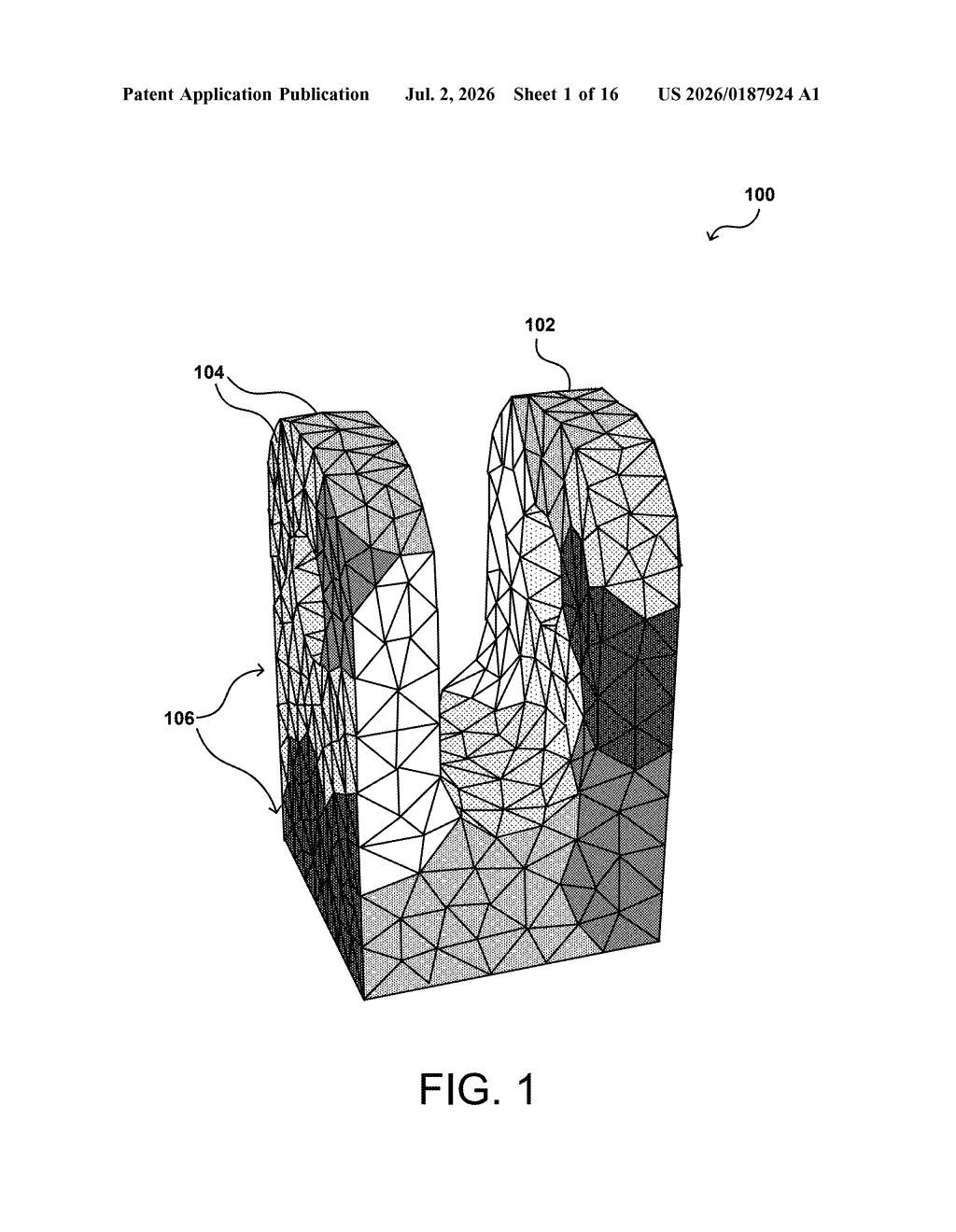
What Nvidia's triangle-clustering patent actually does
Imagine you're packing boxes for a move. If you just throw random items into each box, the movers waste time figuring out where everything goes. But if you group nearby items together, everything loads and unloads faster. That's basically what this patent does, except the 'items' are the tiny triangles that make up every 3D object your GPU renders.
Every 3D model, whether it's a car in a racing game or a character in a film, is made up of thousands of small triangular faces stitched together into a mesh. Before your GPU can draw them, it needs to decide which triangles to process together. Nvidia's system figures out the best way to group those triangles by looking at where they sit in space and trying to keep tightly packed groups as compact as possible.
The goal is to cut down on wasted work. When the GPU knows which triangles are close together, it can skip entire groups that aren't visible on screen without checking each triangle one by one. That means faster frame rates and less energy spent on rendering work that nobody ever sees.
How the surface area heuristic picks the best clusters
The patent describes a method for clustering geometric primitives (most commonly triangles in a 3D mesh) into sub-groups before the rendering pipeline processes them.
The core idea is a surface area heuristic (SAH), a well-known cost-estimation technique borrowed from ray tracing, which estimates how expensive it will be to test a group of triangles against a camera's view. The smaller the bounding box around a cluster, the less likely the GPU will waste time on triangles it doesn't need. Nvidia's method runs multiple iterations, each time evaluating candidate groupings and picking whichever arrangement produces the lowest cost score.
Key aspects of the system include:
- Spatial positioning as the primary input: the algorithm looks at where each triangle sits in 3D space.
- Bounding box minimization: it tries to shrink the invisible box that wraps each cluster, and also to reduce overlap between adjacent clusters' boxes.
- Fixed cluster sizes: groups are kept at multiples of a target size, which helps GPU hardware process them in predictable, parallel batches. Only one cluster per pass is allowed to be an odd size.
- A tunable cost function: different weights can be applied depending on what kind of rendering (rasterization, ray tracing, mesh shading) will happen downstream.
The result is a set of final clusters that are handed off to the GPU's rendering pipeline, already organized for efficient processing.
What this means for real-time graphics and GPU workloads
Modern real-time rendering relies on techniques like mesh shading and ray tracing, both of which benefit enormously from well-organized triangle clusters. When clusters are compact and don't overlap much in space, the GPU can quickly discard entire groups of geometry that fall outside the camera's view, a process called culling. That translates directly into higher frame rates or the ability to render more complex scenes at the same performance level.
For you as a player or viewer, this is the kind of low-level work that makes the difference between a game running at 60 frames per second versus 90, or between a film rendering overnight versus in a few hours. Nvidia's hardware, particularly its mesh shader and ray tracing units, is already built to take advantage of well-formed clusters, so a better clustering algorithm feeds directly into the silicon they're already shipping.
This is unglamorous but genuinely important plumbing work. Clustering algorithms like this sit at the intersection of geometry processing and GPU architecture, and getting them right is one of the quiet reasons Nvidia's rendering pipeline stays ahead of the curve. It's not a flashy consumer feature, but it's exactly the kind of incremental, hardware-aware optimization that compounds into real performance gains over time.
Get our take in your Top Stories
Liked this breakdown? Add Patentlyze as a preferred source on Google, and our plain-English take shows up more often in your Top Stories the next time Nvidia patent news breaks.
There are more where this came from
We read every patent application Big Tech publishes and send you the ones worth knowing. Plain English, free, every week.
Want this weekly breakdown for a company we don't cover? Patentlyze Pro →