
Samsung Patent Merges Curved Solar Cells and Display Pixels in Ring Device
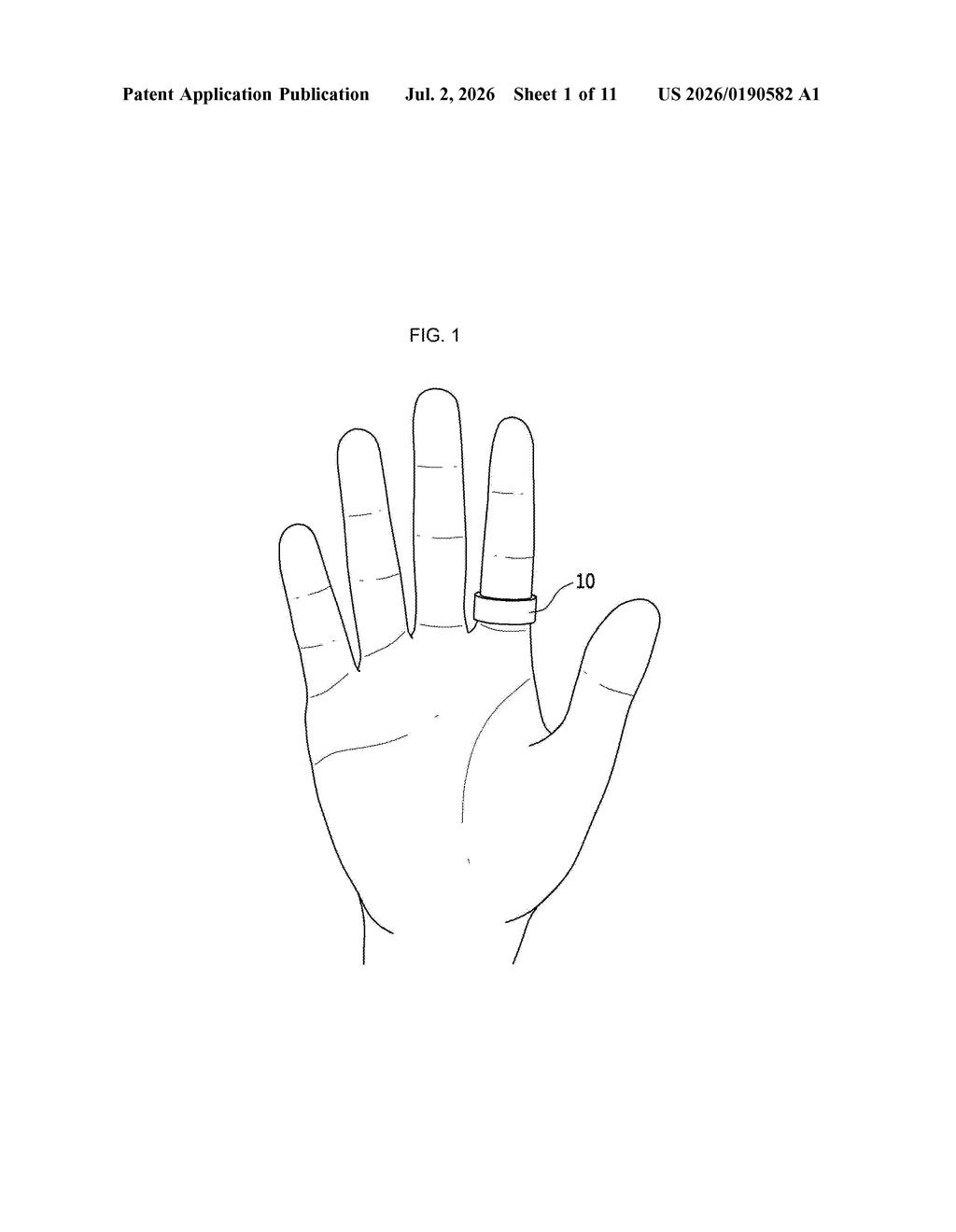
Samsung Display has patented a wearable display shaped like a ring or cylinder that charges itself using a curved solar panel tucked inside the band, right behind the screen.
What Samsung's solar-charging wearable ring actually does
Imagine a smart ring or wristband that never needs to be plugged in because it soaks up light during the day to keep itself charged. That is roughly what Samsung Display is describing here.
The device has a ring or tube-shaped outer shell. On the inside, curving to follow that shape, you get three layers stacked together: a small display made of light-emitting elements, a solar panel bent to fit the curve, and a connector layer sandwiched between them that keeps everything aligned and protected.
The connector layer includes what the patent calls "dummy elements," which are basically structural spacers. They do not produce light or generate power, but they help the curved stack hold its shape and keep the active layers from touching or shifting. It is a packaging trick as much as an electronics one.
How the curved solar panel fits inside the ring housing
The patent describes a wearable display built around a curved housing that is either ring-shaped or cylindrical. Three internal layers all share the same inward curve to fit inside that housing:
- Display member: a flexible panel carrying light-emitting elements (think tiny LEDs or OLEDs) that face the wearer or outward depending on orientation.
- Battery member with a photovoltaic panel: a curved solar cell that harvests ambient or sunlight to charge or supplement the device's power supply.
- Connection member: a curved intermediary layer placed between the display panel and the solar panel. It includes dummy elements, which are non-functional filler components that give the layer mechanical rigidity and maintain even spacing between the active layers above and below it.
The key engineering challenge Samsung is solving is making all three layers conform to the same curve without cracking, delaminating, or creating electrical shorts. The dummy-element connector layer acts as a stress-distribution buffer, absorbing the mechanical strain that bending normally causes in flat electronics.
What this means for battery life in wearable devices
Battery life is the single biggest complaint about wearables. If Samsung can integrate a working solar cell into the curved body of a ring or wristband, it could meaningfully extend the time between charges, or eliminate charging entirely for low-power applications. That is a real quality-of-life difference for your everyday wearable use.
The structural approach here, specifically using a curved connection layer with dummy elements to hold the stack together, is the kind of detail that separates a concept sketch from something manufacturable. Samsung Display already makes curved OLED panels at scale, so the curve-bending expertise is in-house. Whether this becomes a Galaxy Ring feature or something further out is an open question, but the engineering work looks deliberate.
This is a genuinely interesting materials-and-packaging patent, not a vague concept filing. The specific inclusion of a dummy-element connector layer to manage mechanical stress in a curved stack suggests Samsung's engineers have actually tried to build this and worked through the failure modes. Solar-charged wearables have been promised for years; Samsung showing this level of structural detail is a sign they think it is closer to real than most.
Get our take in your Top Stories
Liked this breakdown? Add Patentlyze as a preferred source on Google, and our plain-English take shows up more often in your Top Stories the next time Samsung patent news breaks.
There are more where this came from
We read every patent application Big Tech publishes and send you the ones worth knowing. Plain English, free, every week.
Want this weekly breakdown for a company we don't cover? Patentlyze Pro →