
Samsung Patents a Circuit That Bypasses a Failing Battery Cell Mid-Use
Imagine your laptop's battery pack has four cells and one goes bad. Right now, that often means the whole pack underperforms or shuts down. Samsung is patenting a way to simply route around the bad cell and keep going.
What Samsung's bad-battery bypass actually does
Most phones, laptops, and EVs don't run on a single battery. They use several smaller cells wired together. The problem is that if one cell starts failing, it can drag down the whole pack, cause uneven charging, or in a worst case, create a safety risk.
Samsung's patent describes a circuit that can detect a bad cell and cut it out of the circuit, while keeping the remaining healthy cells working normally. Think of it like a power strip with individual switches per outlet. If one appliance short-circuits, you flip just that switch and everything else stays on.
The system also includes a balancing circuit for each cell, so healthy cells can still share energy with each other even after the bad one is isolated. The goal is to keep your device running longer and more safely, even when one part of the battery pack starts to fail.
How the transformer switches between bypass and balance modes
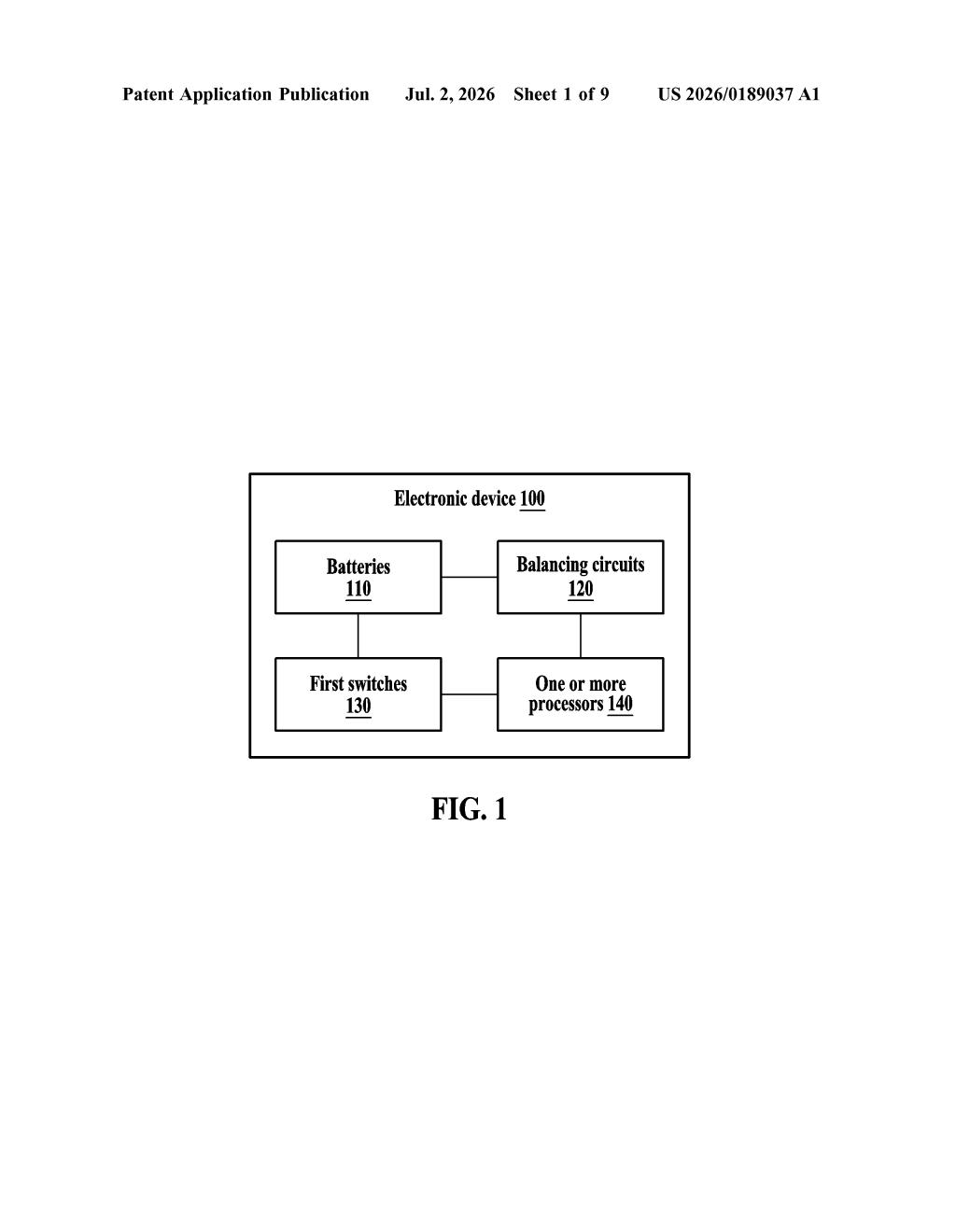
The patent describes an electronic device that contains multiple battery cells, each paired with two key components: a series switch (which can physically disconnect that cell from the circuit) and a balancing circuit (which manages how energy flows to and from that cell relative to its neighbors).
The balancing circuit is where the clever part lives. Each one contains a second switch and a transformer (a component with two coils that can transfer energy between them magnetically, without a direct electrical connection). The transformer can operate in one of two states:
- First state (normal operation): current flows from the primary coil to the secondary coil, allowing the cell to share or receive charge from the rest of the pack.
- Second state (bypass/abnormal): the primary coil is short-circuited, effectively disconnecting the balancing path for that cell and preventing it from interfering with the others.
The one or more processors monitor the cells and control both sets of switches. When a cell is flagged as abnormal, the processor opens its series switch (removing it from the main power path) and puts its balancing circuit into the short-circuit state. The remaining cells continue operating and balancing among themselves normally.
What this means for multi-battery devices and safety
For consumer electronics, this kind of per-cell fault isolation could mean the difference between a device shutting down and a device continuing to work at reduced capacity. An aging battery pack in a laptop or a Galaxy device wouldn't necessarily trigger a full shutdown the moment one cell degrades, which is a real quality-of-life improvement over the course of a device's life.
The approach is also relevant for safety. Failing lithium cells can overheat, and isolating them quickly, before they pull down the pack voltage or cause thermal stress on neighbors, is a meaningful safeguard. This kind of architecture could be useful not just in phones and laptops but in any multi-cell pack, including wearables or portable medical devices where reliability matters.
This is solid, incremental battery-management engineering. It won't make headlines at a product launch, but it's exactly the kind of under-the-hood work that separates a device that ages gracefully from one that becomes unreliable after two years. Worth noting because Samsung makes its own battery packs for Galaxy devices, so this has a clear internal application.
Get our take in your Top Stories
Liked this breakdown? Add Patentlyze as a preferred source on Google, and our plain-English take shows up more often in your Top Stories the next time Samsung patent news breaks.
There are more where this came from
We read every patent application Big Tech publishes and send you the ones worth knowing. Plain English, free, every week.
Want this weekly breakdown for a company we don't cover? Patentlyze Pro →