
IBM Patents a Reinforcement Learning System for Compiling Quantum Circuits
Writing a quantum program is one problem. Getting real quantum hardware to actually execute it is a completely different, and often harder, one. IBM's new patent tries to hand that translation job to an AI.
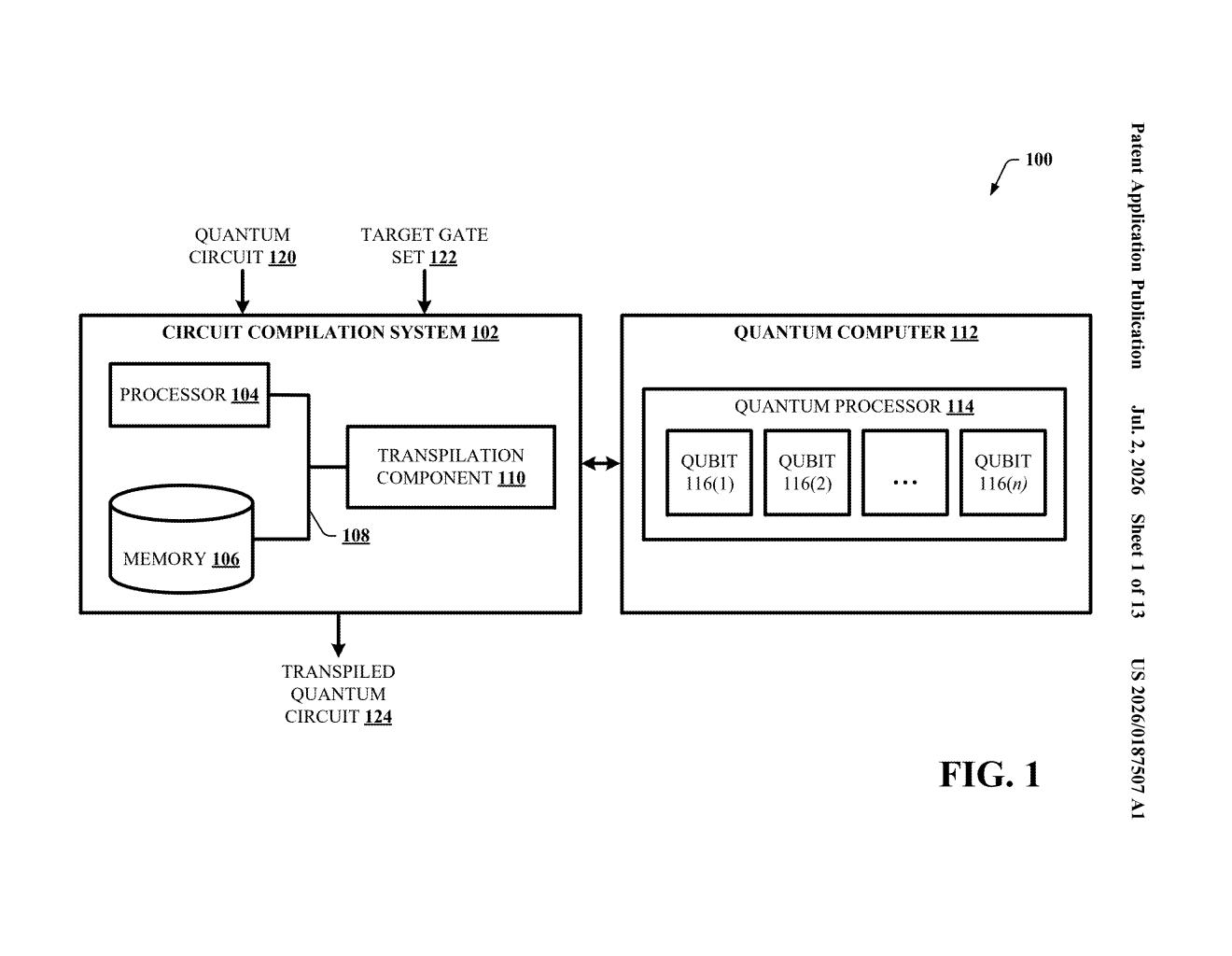
What IBM's AI quantum compiler actually does
Imagine you write a recipe, but your kitchen only has three specific tools, and none of them match what the recipe calls for. You'd need to figure out how to reproduce every step using only those three tools. That's roughly the situation every quantum programmer faces: the code they write rarely matches the limited set of operations a real quantum chip can perform.
IBM's patent describes a system that uses a type of AI called reinforcement learning (the same family of techniques behind game-playing AIs like AlphaGo) to automatically handle that translation. You feed it your quantum circuit, and it figures out how to rewrite it using a specific set of operations the hardware actually supports.
The target format is a sequence of operations called Pauli rotations, which are a kind of fundamental building block some quantum processors are designed around. Instead of a programmer manually reworking their circuit, the AI learns, through trial and error, the best way to do that conversion.
How the reinforcement learning model rewrites quantum gates
Quantum computers don't run arbitrary instructions. Like classical chips that have a fixed instruction set, quantum processors support only a specific gate set (the set of physical operations the hardware can perform). A quantum program written in a high-level way must be compiled down to that gate set before it can run. This compilation step is notoriously difficult to do well.
IBM's patent describes a synthesis component that uses a reinforcement learning model (an AI that learns by receiving rewards for good outcomes and penalties for bad ones) to translate an incoming quantum circuit into a sequence of Pauli rotations. A Pauli rotation is an operation of the form exp(iθP), where P is a tensor product of Pauli matrices (think of it as a precisely defined rotation applied across multiple qubits simultaneously). Some quantum hardware architectures are built specifically to execute these operations natively.
The reinforcement learning angle is significant because this kind of translation is a combinatorial search problem (there are enormous numbers of possible ways to rewrite a circuit) that is hard to solve with traditional rule-based compilers. An AI that learns from experience can discover efficient rewrite strategies that a hand-coded compiler might miss.
- An access component receives the input quantum circuit
- A synthesis component runs the reinforcement learning model to rewrite it
- The output is a gate sequence the target quantum architecture can physically execute
What this means for running quantum programs on real hardware
One of the biggest practical barriers in quantum computing right now isn't hardware raw power, it's the gap between what programmers write and what machines can run. Compilation errors and inefficient translations waste precious qubit operations and introduce noise. A system that learns to compile circuits well could meaningfully improve the performance of quantum programs on near-term hardware without touching the hardware itself.
For IBM, which operates real quantum computers through its IBM Quantum platform, better compilation directly translates to better results for every researcher and developer using those systems. This patent points toward a future where the painful manual tuning that quantum programmers do today gets automated away.
This is genuinely interesting work in an area that doesn't get enough attention. Most quantum computing coverage focuses on qubit counts and error rates, but compilation quality is just as important for real-world performance. Using reinforcement learning here is a reasonable bet: the search space is huge and rule-based compilers plateau quickly. Whether IBM's specific approach beats existing tools like Qiskit's transpiler in practice is the real question, and patents don't answer that.
Get our take in your Top Stories
Liked this breakdown? Add Patentlyze as a preferred source on Google, and our plain-English take shows up more often in your Top Stories the next time IBM patent news breaks.
There are more where this came from
We read every patent application Big Tech publishes and send you the ones worth knowing. Plain English, free, every week.
Want this weekly breakdown for a company we don't cover? Patentlyze Pro →