
Xilinx Patents a Way to Trace AI Model Bugs Back to Their Source on Neural Chips
When an AI model misbehaves on a specialized chip, engineers often have no clean way to figure out which part of the model caused the problem. Xilinx wants to fix that with a debugging system that ties raw chip-level memory snapshots back to the original model structure.
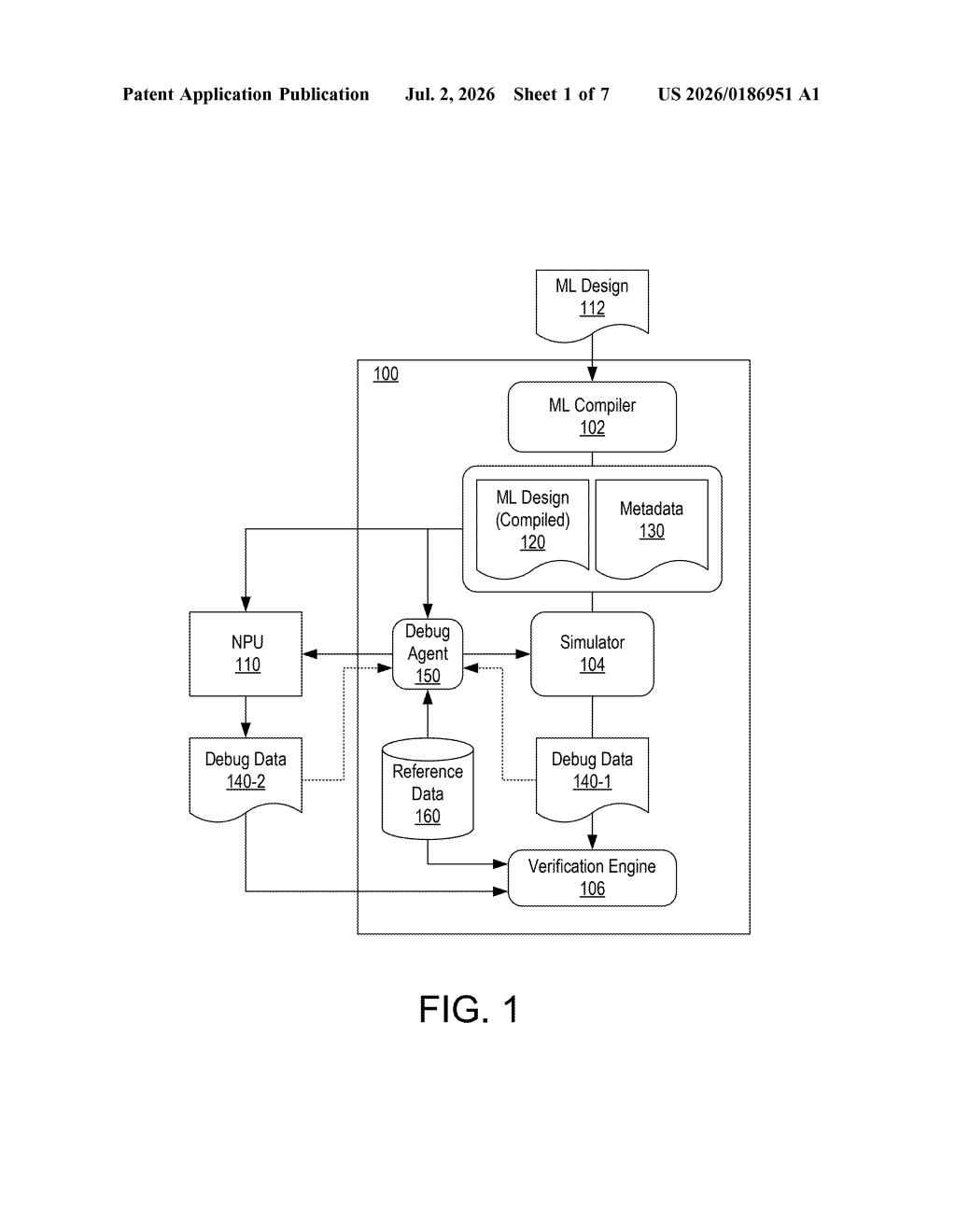
What Xilinx's AI chip debugger actually does
Imagine you bake a complicated layered cake, but when it comes out of the oven something tastes wrong. You know the result is bad, but you have no idea which layer had the bad ingredient. That's roughly the problem AI engineers face when a model runs incorrectly on a specialized chip: the chip produces wrong numbers, but the chip speaks a very different language than the original model.
Xilinx's patent describes a system where, as your AI model is being prepared to run on a chip, a record is created that notes exactly where each piece of the model's data ends up in the chip's memory. When something goes wrong during a real run, the system can dump that memory and then use the record to translate the raw chip data back into terms the model's designer actually recognizes.
The result is that instead of sifting through chip-level memory dumps that look like gibberish, engineers can see which specific layer or operation in their AI model produced the bad output. It's a significant quality-of-life improvement for teams building AI on custom hardware.
How the metadata maps memory to model boundaries
The patent describes a three-part process centered on a piece of software called a compiler (a program that translates a high-level AI model into instructions a chip can run).
- Compilation with metadata generation: When the compiler translates the AI model for the target chip, it simultaneously produces a metadata record that maps each data buffer in the model (think: the temporary storage slots that hold numbers as they flow through the model's layers) to specific locations in the chip's memory hierarchy. Neural processing chips typically have several tiers of memory, from fast on-chip buffers to slower external memory, and data moves between them during a run.
- Boundary tagging: The metadata also records the boundaries of the machine learning design, meaning the logical checkpoints that separate one operation or layer from the next. This is the key bridge between the chip's physical memory and the model's logical structure.
- Debug dumping and correlation: While the model is running, the system can capture ("dump") data from any of those memory levels at the right moments. Because the metadata records the mapping, the debug data can be automatically correlated back to the correct boundary in the original model.
In practice, this means an engineer can point to a specific layer of their neural network and ask, "what did the data look like here?" rather than manually reverse-engineering chip memory addresses.
What this means for AI chip development teams
Right now, debugging AI models on custom neural processing hardware is a painful process. The compiled instructions running on a chip look nothing like the original model a researcher designed, so when numbers go wrong it takes significant manual effort to trace the error back to its source. This patent describes infrastructure that makes that translation automatic.
For teams building AI accelerators or deploying models on Xilinx's FPGA and AI chip products, this kind of tooling can cut debugging time from days to hours. It also matters as AI models grow more complex: the more layers and operations a model has, the harder manual chip-level debugging becomes, and the more valuable an automated tracing system is.
This is unglamorous but genuinely useful engineering tooling. Debugging AI on custom silicon is one of the real friction points in the industry right now, and Xilinx is filing in exactly the right direction. It won't make headlines, but teams building on neural processing hardware will care about it.
Get our take in your Top Stories
Liked this breakdown? Add Patentlyze as a preferred source on Google, and our plain-English take shows up more often in your Top Stories the next time AMD patent news breaks.
There are more where this came from
We read every patent application Big Tech publishes and send you the ones worth knowing. Plain English, free, every week.
Want this weekly breakdown for a company we don't cover? Patentlyze Pro →