
ATI Technologies Patents a Hardware System That Keeps Streaming Rights Locked Inside the Chip
Every streaming service has its own content-protection system, and right now keeping those systems from interfering with — or leaking into — each other is mostly a software problem. ATI Technologies wants to solve it in silicon instead.
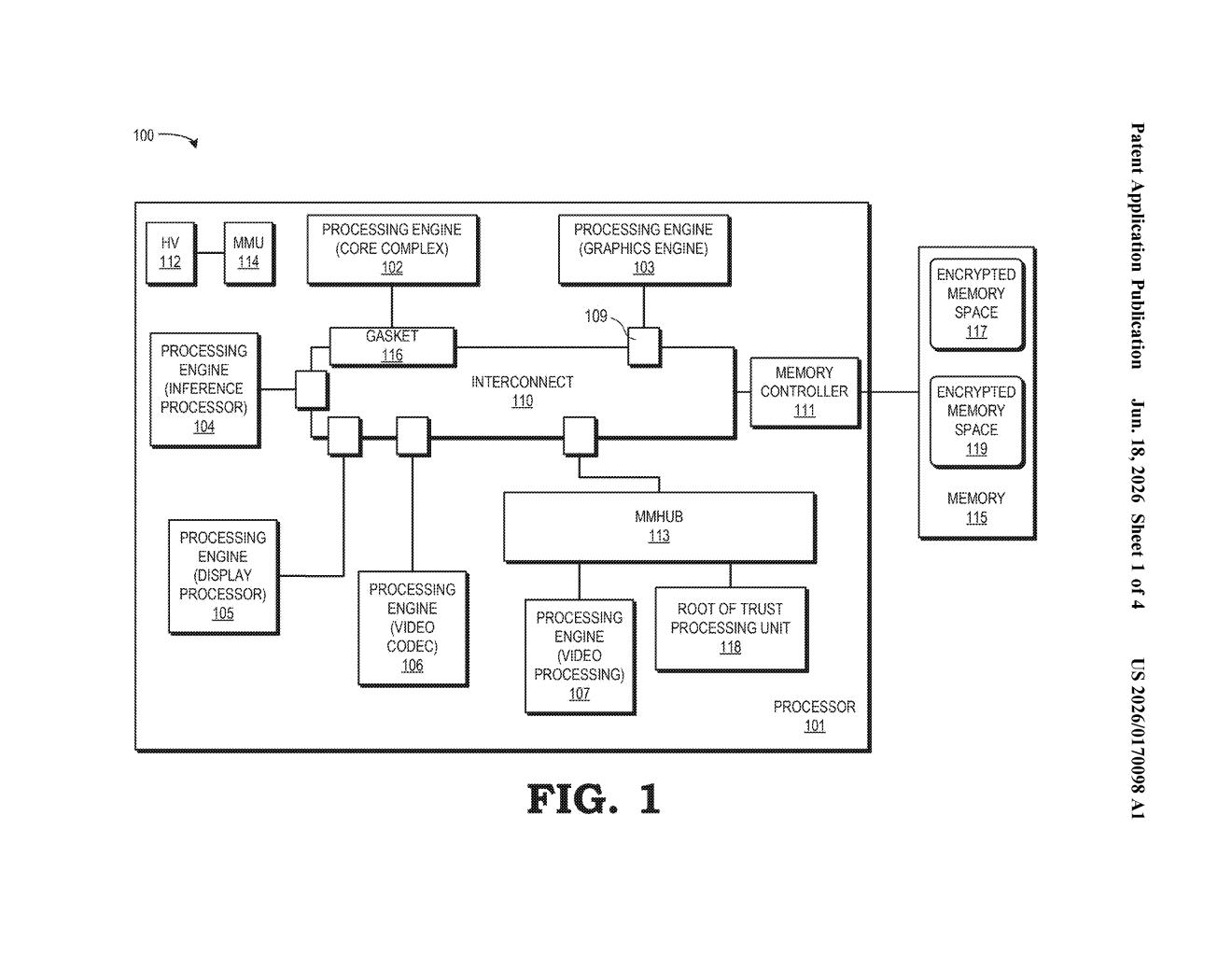
What ATI's chip-level content protection actually does
Imagine your GPU is handling a Netflix stream, a Disney+ stream, and a gaming session all at once. Each of those services uses its own digital rights management (DRM) system — a set of locks that keeps the video encrypted and uncopiable. The tricky part is making sure those locks never accidentally open the wrong door.
ATI's patent describes a way to do that entirely in hardware, right inside the processor chip. A dedicated security chip on the processor assigns each DRM system its own keyspace — think of it like a numbered locker that only accepts the matching key. Then a hardware component called a "security gasket" sits between the chip's pipelines and checks that every incoming request has the right locker number before it's allowed through.
The result is that different content-protection systems run side by side without any risk of one accidentally reading or interfering with another. Because it's enforced by hardware rather than software, it's much harder for malicious code to bypass.
How the keyspace system separates DRM pipelines
The patent describes a processor architecture built around three main pieces:
- Root-of-Trust (RoT) processor — a small, highly trusted security processor embedded in the chip that acts as the authority. It assigns a unique keyspace (essentially a numbered namespace that acts like a password domain) to each DRM channel — Netflix's Widevine, Microsoft's PlayReady, and so on.
- Security gaskets — hardware gate components that sit in front of each DRM pipeline. Before any data transaction is allowed through, the gasket checks whether the keyspace tag carried by that transaction matches the keyspace assigned to the pipeline it's targeting. Mismatches are blocked.
- DRM pipelines — the dedicated processing lanes inside the GPU that handle decryption and rendering of protected content for a specific service.
The key insight is that isolation is enforced at the hardware transaction level, not by an operating system or driver. A transaction (a request to read or write data) must carry the correct keyspace identifier, which only the RoT processor can assign. Software running above this layer — including a compromised driver — cannot forge or reassign a keyspace.
Why it matters
DRM enforcement on PCs and GPUs has historically been a cat-and-mouse game fought mostly in software, where a determined attacker can eventually find a way to intercept decrypted frames. Moving the enforcement boundary into chip hardware raises the bar significantly, because bypassing it would require physically tampering with the silicon or finding a flaw in the RoT processor itself.
For you as a viewer or gamer, this is largely invisible — but it's what allows streaming services to offer their highest-quality tiers (4K HDR with lossless audio, for instance) on a platform. Services like Netflix only enable premium quality on hardware that meets strict content-protection standards. A GPU with this architecture would be in a stronger position to qualify for those tiers, which could matter for AMD's next-generation discrete and integrated graphics products.
This is foundational security work, not a flashy consumer feature, but it's the kind of thing that quietly determines whether a GPU can stream 4K Netflix at all. AMD's ATI division solving this in hardware rather than software is a meaningful step — hardware roots of trust are considered best practice in chip security, and bringing that discipline to DRM specifically is worth attention from anyone who cares about where premium streaming on PC is headed.
There are more where this came from
We read every patent application Big Tech publishes and send you the ones worth knowing. Plain English, free, every week.
Want this weekly breakdown for a company we don't cover? Patentlyze Pro →