
ATI Technologies Patents a Chip Power System That Adjusts Its Own Safety Buffer
Chips always keep a little extra voltage in reserve, just in case. ATI Technologies is filing a patent for a system that figures out how much extra is actually needed, then dials it back automatically.
How ATI's voltage margin trick saves power in real time
Imagine your car always driving 10 mph under the speed limit, just to be safe. That caution costs you time (and fuel) even when the roads are perfectly clear. Graphics chips do something similar: they run at slightly higher voltages than strictly necessary, keeping a buffer in case of sudden power spikes.
ATI Technologies wants to shrink that buffer dynamically. Its patented system watches the actual voltage levels a chip is experiencing during real work, then adjusts the safety cushion up or down based on what it sees. When the chip is doing something easy, it can cut the excess. When things get intense, it adds it back.
The result is a chip that wastes less power during lighter tasks without sacrificing stability when things heat up. That kind of efficiency gain matters whether you're talking about a gaming GPU running a desktop screensaver or a data center card processing AI workloads in a power-constrained rack.
How the power supply monitor drives margin decisions
Every processor operates with a voltage margin, an extra buffer of electricity added on top of the minimum needed to keep the chip stable. This margin protects against sudden voltage drops caused by rapid changes in workload. The problem is that a fixed margin is almost always too conservative, wasting power during easy tasks.
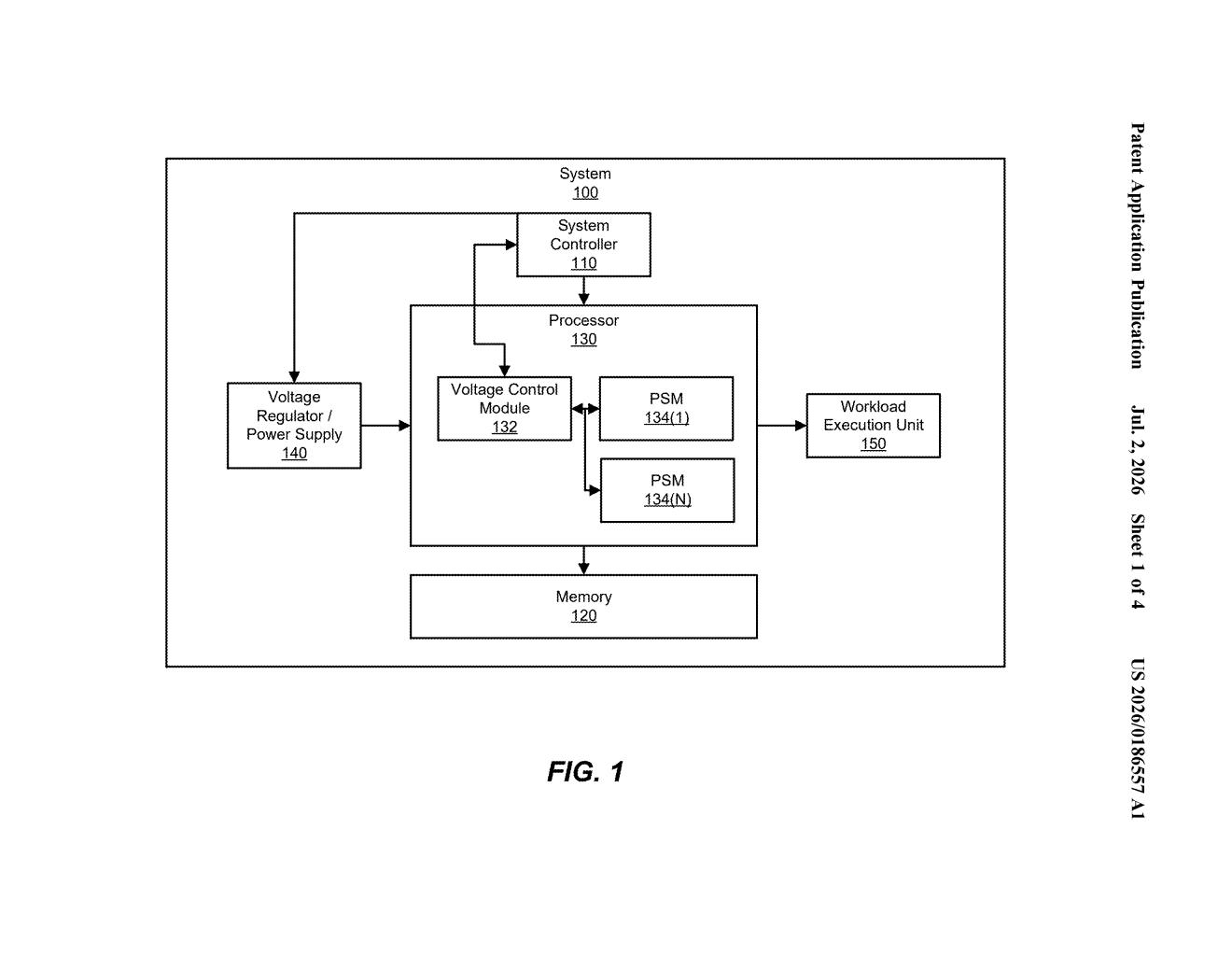
ATI's patent describes a three-part system:
- A Power Supply Monitor (PSM) that continuously measures the actual voltage levels the processor is experiencing.
- A voltage control module that compares those real measurements against preset thresholds.
- A dynamic adjustment loop that raises or lowers the voltage margin in real time based on what the comparison reveals.
If the chip is cruising through a light workload and the PSM reports that voltages are staying well above the danger zone, the system trims the margin. If a heavy workload pushes voltages closer to the threshold, the margin widens again. The key word is real-time: this isn't a one-time calibration at boot but a continuous feedback loop running during normal operation.
The patent also notes that different workload characteristics can be factored in, meaning the system can learn that certain types of tasks (say, shader-heavy rendering versus memory transfers) carry different voltage risk profiles and respond accordingly.
What this means for GPU efficiency and battery life
Power efficiency is one of the most competitive battlegrounds in chip design right now. Every watt saved at idle or moderate load translates directly into lower electricity bills in data centers, longer battery life in laptops, and cooler-running desktop GPUs. A dynamic margin system that continuously right-sizes the voltage buffer could squeeze meaningful efficiency gains out of hardware that's already been optimized at the silicon level, without changing the chip itself.
For AMD (ATI Technologies is AMD's GPU subsidiary), this fits neatly into a broader strategy of wringing more performance-per-watt from its Radeon and Instinct GPU lines. If the system works as described, you could see it show up in driver-level or firmware updates for existing hardware, not just future chips, which would make this a relatively quick win rather than a long-term research project.
This is unglamorous power-management plumbing, but it's the kind of patent that actually ships. Dynamic voltage margin adjustment is a real and well-understood problem in chip design, and ATI's approach of using a continuous hardware monitor to drive real-time decisions is practical and production-friendly. Don't expect a press release, but do expect something like this to appear in an AMD GPU driver changelog.
Get our take in your Top Stories
Liked this breakdown? Add Patentlyze as a preferred source on Google, and our plain-English take shows up more often in your Top Stories the next time AMD patent news breaks.
There are more where this came from
We read every patent application Big Tech publishes and send you the ones worth knowing. Plain English, free, every week.
Want this weekly breakdown for a company we don't cover? Patentlyze Pro →