
AMD Patents an AI That Tunes Your PC Settings and Rolls Back Bad Ones
AMD is patenting a system where an AI engine experiments with your computer's settings, checks whether performance improved, and automatically undoes any change that made things worse.
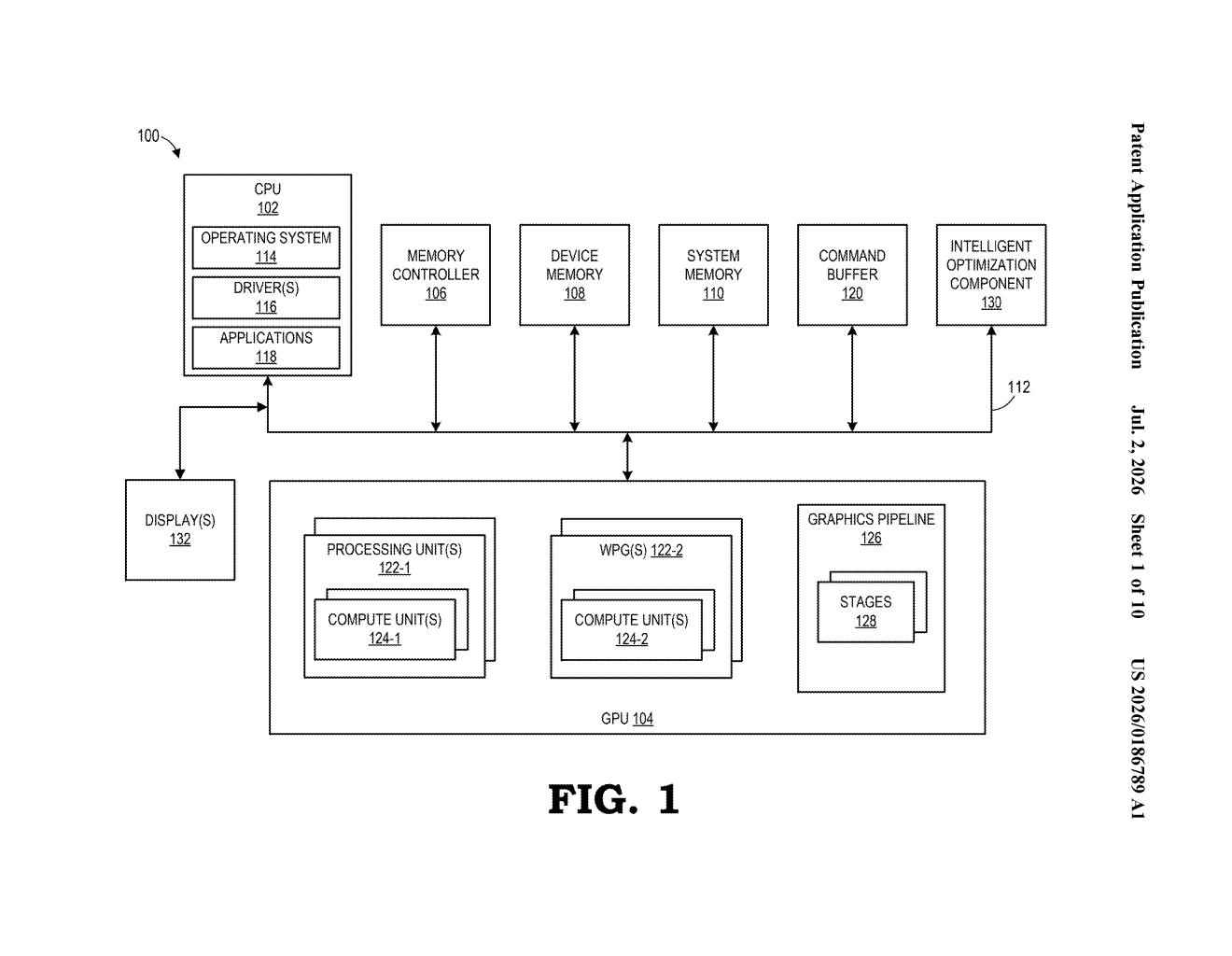
What AMD's self-correcting PC tuner actually does
Imagine your phone automatically adjusting its screen brightness, background app limits, and battery mode all at once while you're on a video call, then silently reverting those changes if your call quality drops. AMD is applying that same idea to full PCs and workstations.
The patent describes an AI-powered tuning engine built into the processor itself. It can change settings for either the hardware (like power limits or clock speeds) or the software running on it, then measure whether those changes actually helped. If they didn't, it rolls the system back to whatever configuration was last working well.
The key idea is that the AI doesn't just set something and forget it. It watches the real-world results and treats every tweak as a reversible experiment. You get a system that's continuously learning what combination of settings works best for whatever you happen to be doing, without you touching a single slider.
How the inference engine tests and reverts configurations
At the center of this patent is what AMD calls an inference engine, essentially an AI model running on the processor that acts as an automated settings manager. Instead of a user (or a fixed factory profile) deciding how the chip and software should be configured, the engine makes those calls in real time.
The process works in three steps:
- Adjust: The engine moves from a current configuration (call it Config A) to a new candidate configuration (Config B), changing things like power limits, core frequencies, or application-level parameters.
- Evaluate: It measures the impact of Config B on at least one performance metric (frames per second, processing throughput, response time) and on the overall state of the system (temperature, power draw, stability).
- Commit or revert: If the new configuration is an improvement, it stays. If it's not, the engine rolls back to the last known stable configuration.
The claim covers both the processor hardware and the applications running on it, so this isn't just about overclocking. It could apply to any tunable parameter across the stack, from GPU clocks to software thread priorities.
What this means for PC gaming and workstation performance
Auto-overclocking tools already exist, but they're typically one-shot or require manual tuning and carry real risk of instability. What AMD is describing here is a continuous feedback loop: the system never stops experimenting, and it always has a safe fallback. For you as a user, that could mean a gaming PC that automatically finds the right balance between raw performance and heat without you ever opening a tuning app.
For AMD specifically, this fits a broader push to differentiate its processors on software intelligence, not just raw specs. If this kind of engine ships in a future Ryzen or EPYC product, it becomes a selling point that's hard for a competitor to match purely on silicon. The real question is whether the AI model is accurate enough to avoid endless oscillation between configs, but the rollback mechanism suggests AMD is at least thinking carefully about stability.
This is a genuinely useful idea, and the rollback mechanism is the detail that makes it credible rather than just another overpromised auto-tuning feature. The hard engineering problem is training a model that can judge 'better' fast enough to be useful without causing instability in the process of experimenting. AMD hasn't solved that publicly yet, but the patent shows they're thinking about it seriously.
There are more where this came from
We read every patent application Big Tech publishes and send you the ones worth knowing. Plain English, free, every week.
Want this weekly breakdown for a company we don't cover? Patentlyze Pro →