
Apple Patents a Wi-Fi Handshake System for Ultra-Low Latency Transmissions
Before sending time-sensitive data over Wi-Fi, what if your device and router could agree on a special fast-lane mode in advance? That's the core idea behind Apple's latest 802.11 filing.
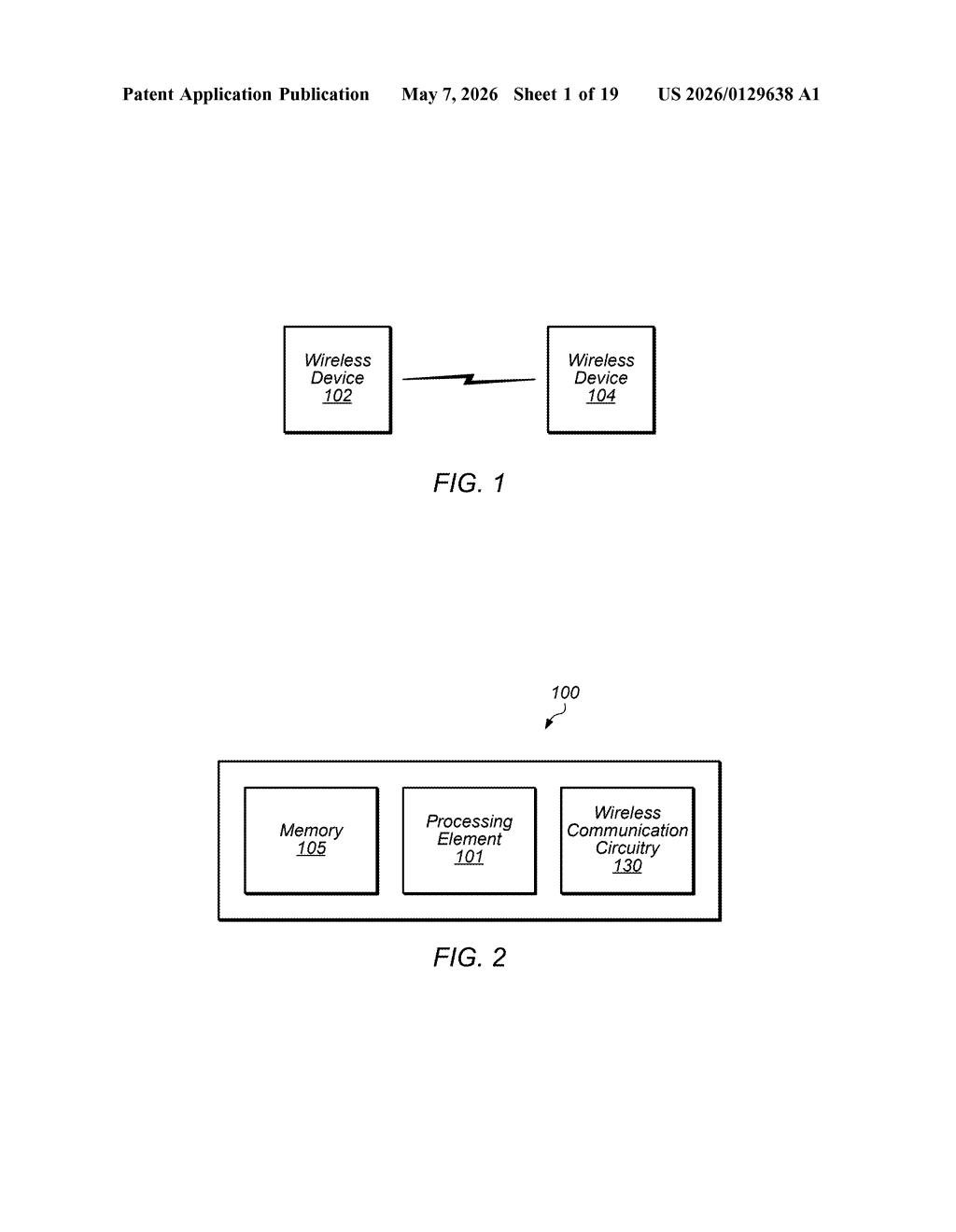
What Apple's low-latency Wi-Fi negotiation actually does
Imagine you're in a video call and your laptop needs to send audio and video data to your router right now — not in a few milliseconds, but immediately. Normal Wi-Fi wasn't really designed with that urgency in mind. Apple's patent describes a way for two devices to agree, before any real data flies, that this particular session needs to run in a special low-latency mode.
The way it works is a simple back-and-forth: your device tells the router "I support low-latency mode," the router confirms it does too, and then the actual data transmission happens under those relaxed-delay rules. When the data arrives, the receiver sends back an acknowledgment to close the loop.
This is less about raw speed and more about predictable, consistent timing — the kind that matters for gaming, AR headsets, voice calls, or any application where a delayed packet is worse than a lost one.
How the LL capability handshake sequence works
The patent describes a signaling protocol layered on top of standard 802.11 (Wi-Fi) that lets two stations — an access point (AP, i.e. your router) and a non-AP device (your phone, laptop, or headset) — explicitly negotiate a low-latency (LL) transmission mode before data is exchanged.
The sequence has four steps:
- Step 1: The first station transmits a frame that includes an indication of its LL capability — essentially a flag saying "I can do low-latency mode."
- Step 2: The second station responds with its own signaling confirming it also supports the LL capability.
- Step 3: Only after that handshake completes does the first station transmit the actual payload, now structured according to the LL rules.
- Step 4: The second station sends an acknowledgment, confirming receipt.
The key insight is the negotiation-first design. Rather than blindly transmitting low-latency frames and hoping the receiver understands them, both sides confirm compatibility upfront. This avoids wasted transmissions and allows the protocol to fall back gracefully if one side doesn't support the mode.
The patent covers both the AP-side and non-AP-side implementations, meaning Apple is claiming the method for both the router and the client device roles.
What this means for real-time Wi-Fi applications
Wi-Fi latency has always been somewhat unpredictable — packets queue, contend for the channel, and get retransmitted. For most web browsing that's fine, but for spatial computing, wireless gaming, or real-time audio, even 20ms of jitter feels broken. A standardized LL negotiation mechanism in 802.11 would give device makers a clean way to prioritize those sessions at the protocol level rather than hacking around it in software.
For Apple specifically, this lines up with the kind of wireless infrastructure Vision Pro and AirPods would need to operate reliably. If Apple can get this approach baked into a future 802.11 amendment, it controls a meaningful piece of how low-latency Wi-Fi works industry-wide — not just on its own hardware.
This is standards-layer infrastructure work — not flashy, but genuinely important if you care about wireless AR or real-time audio. Apple filing this in 2025 suggests they're actively pushing 802.11 standards bodies toward LL support, which would benefit their spatial computing lineup. The four-step handshake is elegantly simple, and the dual-role coverage (AP and non-AP) signals Apple wants this adopted broadly, not just on Apple Silicon chips.
There are more where this came from
We read every patent application Big Tech publishes and send you the ones worth knowing. Plain English, free, every week.
Want this weekly breakdown for a company we don't cover? Patentlyze Pro →