
Apple Patents a Smarter Way for Wireless Chargers to Spot Dangerous Metal
Wireless chargers already try to detect stray metal objects — like a coin or key that could heat up dangerously. Apple's new patent tackles the harder problem: what happens when the metal is *supposed* to be there, like a phone case or Apple Watch band?
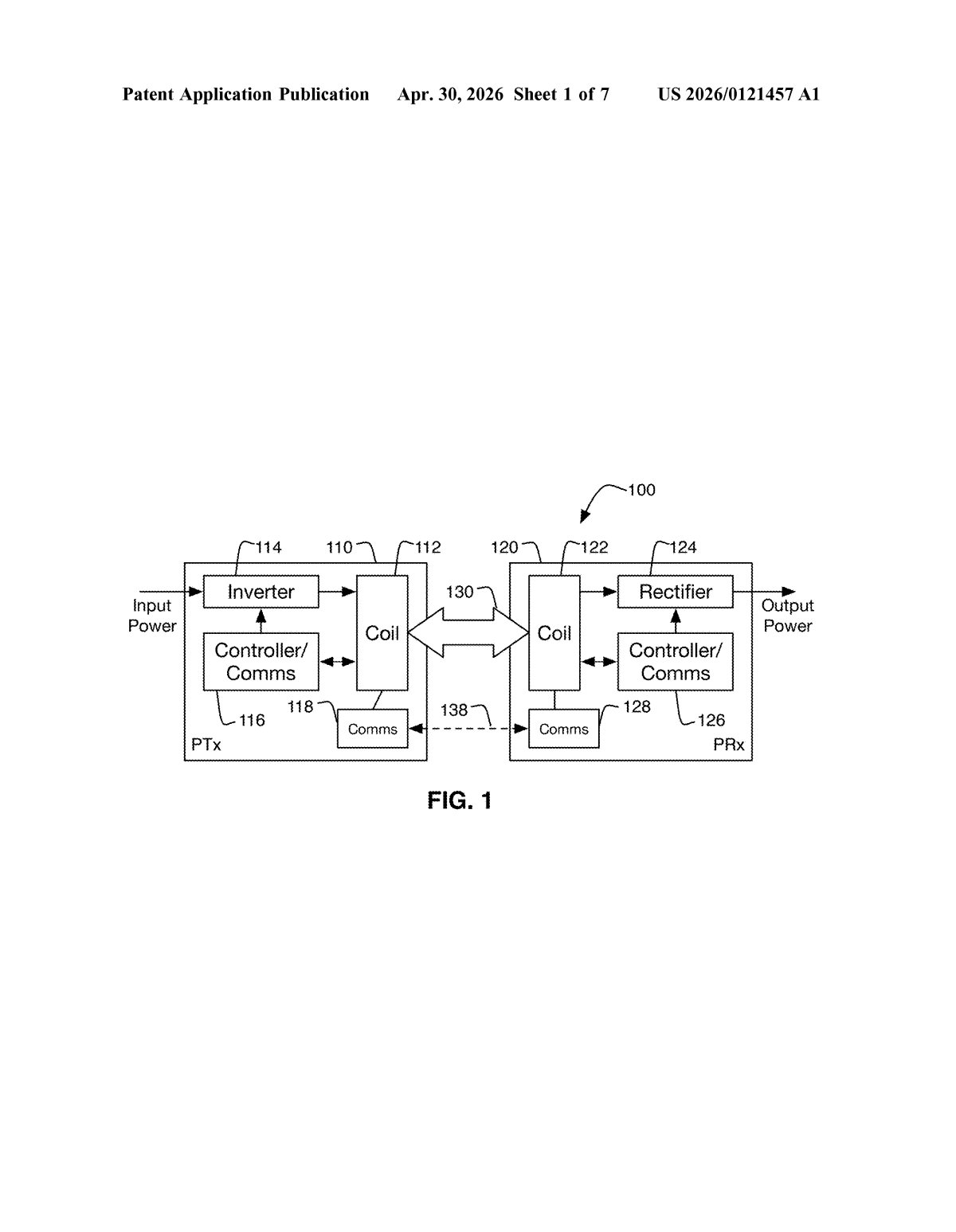
What Apple's 'friendly metal' wireless charging trick actually does
Imagine you drop your keys on a wireless charging pad next to your phone. The charger is supposed to notice the metal and shut off so your keys don't heat up like a stovetop burner. That safety feature is called foreign object detection, and it's been a standard part of wireless charging for years.
The tricky part is that your phone itself contains metal — coils, shielding, even parts of your case — and the charger has to learn to ignore those. Apple calls this "friendly metal": the metal that's supposed to be there. The problem is, if the charger can't precisely account for friendly metal losses, it misreads the energy budget and either misses a real hazard or triggers false alarms.
This patent describes a method where the charger's control circuitry carefully measures power loss, strips out the contribution from friendly metal using calibrated scaling factors, and then uses what's left to build a much sharper model for spotting genuinely dangerous objects. The result is a charging system that should be both safer and less likely to annoy you with unnecessary interruptions.
How Apple's loss-coefficient model separates safe metal from dangerous metal
The patent outlines a multi-step algorithm running on the control circuitry of either the wireless power transmitter (the charging pad) or the wireless power receiver (your device).
At its core, the method tries to isolate "friendly metal losses" — the energy that's naturally absorbed by expected metal components in the charging ecosystem — from losses caused by something unexpected sitting on the pad. Here's the flow:
- Measure circuit parameters: The system reads voltage and current on both the transmitter and receiver side to calculate how much power is being lost in total.
- Subtract friendly metal effects: It removes the known contribution of expected metal from the loss figure, producing a "modified friendly metal loss" — essentially a baseline for what normal looks like.
- Derive ecosystem scaling parameters: Using comparisons against a reference transmitter and reference receiver (a calibration pairing), the system builds scale factors that account for how different device combinations behave.
- Add losses back as coefficients: In a separate calculation, voltage/current effects are re-added to generate "friendly metal loss coefficients" — precise numerical descriptors of the friendly metal's behavior.
- Run foreign object detection: A final model incorporating those coefficients compares real-time measurements against the expected baseline. Any significant deviation flags a potential foreign object.
The key insight is using the same voltage/current measurements in two complementary ways — once to subtract noise, once to characterize it — giving the detection model a much tighter signal to work with.
What this means for MagSafe and future wireless charging safety
Wireless charging safety is a real engineering problem, not a marketing checkbox. Qi and MagSafe standards already require foreign object detection, but accuracy degrades when you introduce the huge variety of real-world device combinations — different cases, accessories, and charging pads all introduce variability that can fool a simple power-loss comparison. Apple's approach of calibrating per ecosystem pairing using reference devices means the model adapts to actual hardware rather than relying on a one-size-fits-all threshold.
For MagSafe in particular — where Apple tightly controls the magnetic alignment and accessory ecosystem — this kind of precision calibration is a natural fit. A more accurate friendly metal model could allow higher charging wattage with less conservative safety margins, or reduce the false-positive shutoffs that sometimes interrupt charging when you place the phone at a slight angle. It also matters for third-party Qi2 chargers that want to meet stricter safety certifications.
This is genuinely useful, if unglamorous, safety engineering. The clever move here is using the same voltage/current measurements twice — once to isolate the known-good signal, once to characterize it as a model coefficient — which is an elegant way to squeeze more accuracy out of hardware that already exists. It's not a flashy AI feature, but it's the kind of careful work that separates a charger you can trust from one you quietly worry about.
There are more where this came from
We read every patent application Big Tech publishes and send you the ones worth knowing. Plain English, free, every week.
Want this weekly breakdown for a company we don't cover? Patentlyze Pro →