
Intel Patents a Two-Track System for Real-Time Video Call Effects
Fancy video call effects like background relighting or face touch-ups usually cost you CPU cycles and introduce lag. Intel's new patent describes a way to run those effects in a separate, lightweight track so your video stays smooth and sharp.
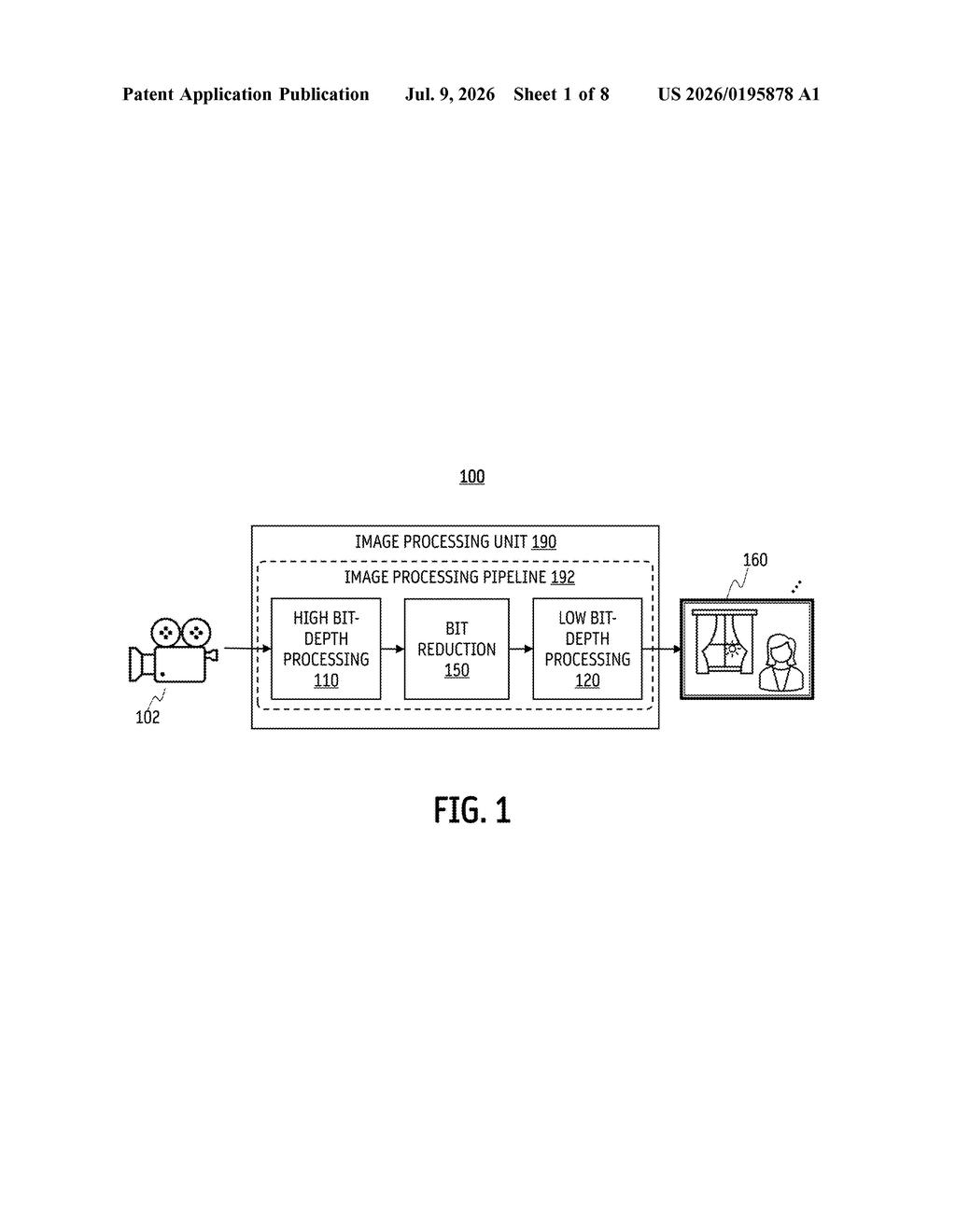
What Intel's dual-pipeline video trick actually does
Imagine you're on a video call and the app wants to soften the lighting on your face, blur your background edges, or add a graphic overlay. Normally, doing all that in real time on a full high-definition video stream is expensive work for your processor, and it can make the picture stutter or drain your battery.
Intel's idea is to split the work into two parallel lanes. One lane handles your full-quality video as it normally would. A second, much lighter lane takes a shrunken-down version of that same video, runs it through an AI model, and produces a small "correction map" that says, in effect, "brighten this region, darken that one, emphasize this face here." That map is then blown back up to full size and stamped onto the main video at the last moment.
Because the AI is only ever crunching on tiny, low-resolution images rather than your full 1080p or 4K stream, it uses far less processing power. And because existing chip hardware handles the resizing and blending steps, the whole thing adds very little extra delay or battery drain.
How the gain map pipeline and main video track work in parallel
The system described in the patent creates two concurrent processing paths running side by side inside a device's image processing hardware.
Path 1 (the main pipeline) takes the full-resolution, high-bit-depth video frames and moves them through standard image processing steps, ending with a finished frame ready for display or transmission.
Path 2 (the gain map pipeline) takes a downscaled copy of each frame, feeds it through a neural network, and outputs a gain map (a grid of per-pixel multipliers that tells the hardware how to adjust brightness, color, or intensity in each region of the image). Because the neural network is only looking at a small, low-resolution version of the frame, inference is fast and cheap.
The gain map is then fed back into Path 1, where an upscaler (already built into the image processing unit) stretches it back to full resolution. A gain function application step blends the map with a base correction curve to produce a composite adjustment, which is applied to the full-quality frame. A final bit-reduction step compresses the bit depth of the processed image to the required output format.
Use cases the patent specifically lists include:
- Face relighting (adjusting where light appears to fall on a person's face)
- Content emphasis and de-emphasis (drawing attention to or softening certain parts of the frame)
- Graphics overlay effects
- Scene tone-mapping (adjusting overall contrast and brightness to match an environment)
What this means for video call quality on Intel hardware
For everyday users, this is about getting polished video call effects without your laptop fan spinning up or your battery dropping faster. The patent targets real-time video conferencing specifically, which means the goal is effects that work frame-by-frame at 30 or 60 frames per second without noticeable lag.
For Intel, the significance is in where the work happens: the gain map is upscaled using existing image processing unit hardware, not extra dedicated silicon. That means these capabilities could ship on current or near-future Intel processors without requiring a new chip design. If this approach makes it into production software or drivers, it could give Intel-powered laptops a built-in advantage in video call quality over machines that rely purely on software-side processing from apps like Zoom or Teams.
This is a solid, practical patent that solves a real problem: video call effects are genuinely taxing and the industry has not found a clean hardware-level answer yet. The dual-pipeline approach is clever precisely because it offloads the heavy AI work onto tiny images rather than full frames, which is the kind of engineering discipline that actually ships in real products. It won't make headlines at a product launch, but it's the kind of plumbing that makes a difference on a Tuesday afternoon call.
Get our take in your Top Stories
Liked this breakdown? Add Patentlyze as a preferred source on Google, and our plain-English take shows up more often in your Top Stories the next time Intel patent news breaks.
There are more where this came from
We read every patent application Big Tech publishes and send you the ones worth knowing. Plain English, free, every week.
Want this weekly breakdown for a company we don't cover? Patentlyze Pro →