
Microsoft Patents a Hinge That Keeps Both Halves of a Folding PC Moving in Sync
Folding devices live or die by their hinge, and Microsoft is filing patents on a mechanism designed to keep both halves of a foldable device rotating together at exactly the same rate, no wobble, no misalignment.
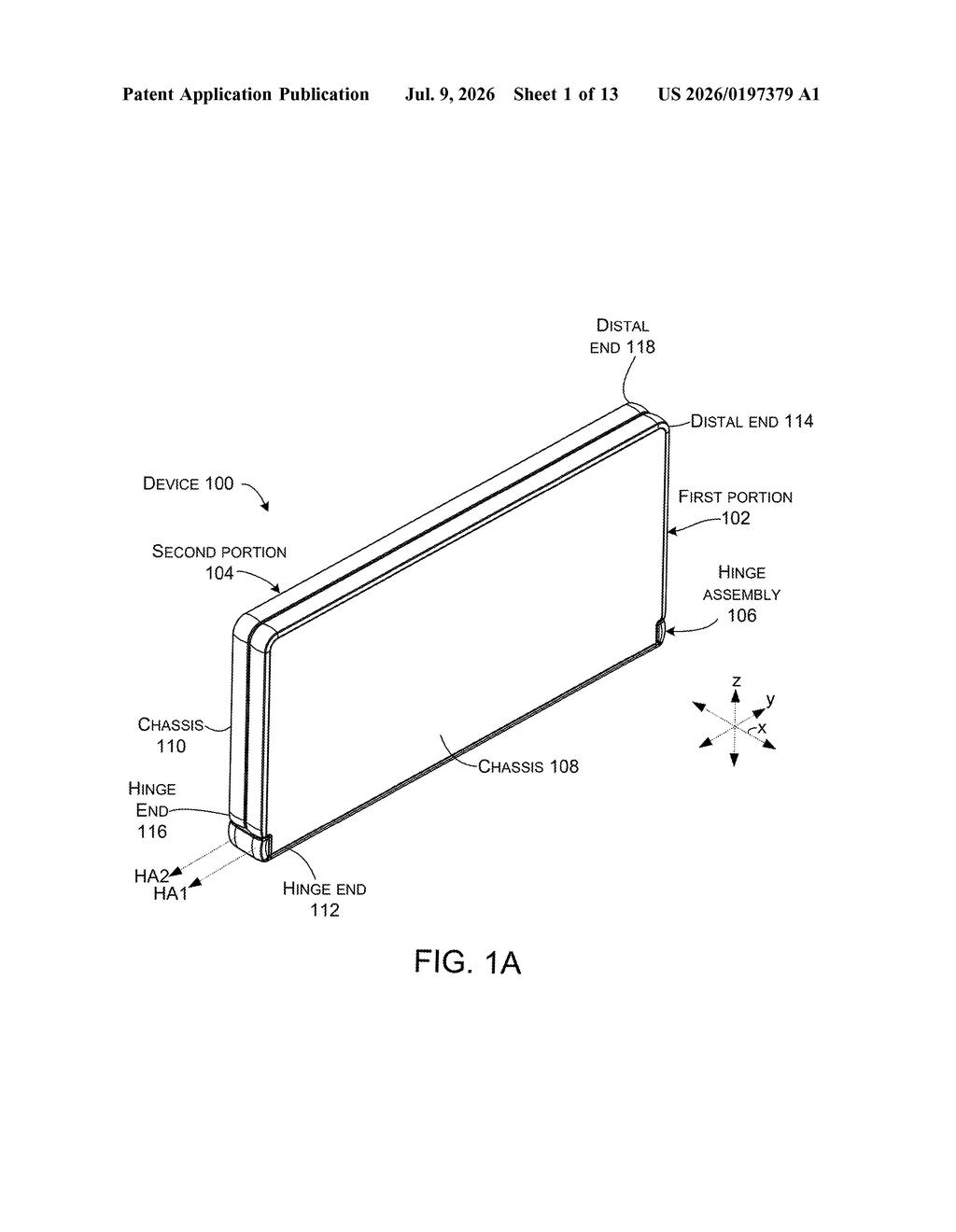
What Microsoft's synchronized folding hinge actually does
Imagine folding a laptop in half, but one side of the hinge rotates a little faster than the other. The screen flexes unevenly, the device feels cheap, and over time the crease wears unevenly. That's a real engineering headache for any foldable device.
Microsoft's patent describes a hinge system built around a "timing shuttle," a small mechanical part that sits between the two halves of the hinge and physically forces both sides to rotate at the same speed, like a coordinating bar between two spinning wheels. There's also a clutch-like stack of components that tightens or loosens depending on the angle you've folded the device to, giving more resistance at some positions and less at others.
The result is a hinge that feels controlled and deliberate at every angle, not just at the fully open or fully closed position. Think of it like the hinge on a high-end notebook that stays put wherever you leave it, except this version uses an interlocking mechanical system to make that happen precisely across both pivot points.
How the clutch stack and timing shuttle control rotation
The patent describes a dual-axle hinge for a foldable device, meaning there are two separate rotation points side by side rather than one single pivot. Each half of the device is attached to one of these axles.
The key innovation is a timing shuttle: a component positioned between the two axles that physically engages with angled surfaces on each hinge guide. As each half rotates, the shuttle is pushed and pulled in a way that forces both sides to move at the same rate. Think of it like the timing belt in a car engine, but mechanical and spatial rather than rotational.
Layered on top of that is a clutch stack, a series of components that span both axles and can be compressed (tightened) or released (loosened). Compression creates friction, which creates resistance when you're folding or unfolding. The patent's notable detail is orientation-dependent cams, angled surfaces that automatically change how much the clutch compresses depending on the fold angle:
- At some angles, the cams limit compression, so the hinge moves more freely
- At other angles, the cams allow compression, so the hinge holds its position with more firmness
This means the hinge can be tuned to feel stiff near certain positions (like fully flat) and looser through the mid-range of the fold, all passively, with no motors or sensors.
What this means for Microsoft's foldable PC ambitions
Foldable devices have had a hinge problem since day one. A hinge that lets one side outpace the other puts uneven stress on flexible displays and creates a sloppy feel that erodes user confidence fast. A mechanical system that enforces synchronized movement without electronics could be more reliable and thinner than motor-driven alternatives.
Microsoft has a history with foldable hardware, most visibly the Surface Duo line. A patent like this signals ongoing investment in the hinge engineering that makes or breaks that category. If this mechanism makes it into a product, you'd feel it as a device that opens and closes with a smooth, consistent pull rather than the uneven flex that plagues cheaper foldables.
This is exactly the kind of unsexy mechanical engineering that separates a foldable device people actually want to use from one they return after a week. The timing shuttle concept is clever because it enforces sync passively, no firmware, no sensors, just geometry. Whether Microsoft ships this in a consumer device or keeps it in the Surface engineering library is the real question.
Get our take in your Top Stories
Liked this breakdown? Add Patentlyze as a preferred source on Google, and our plain-English take shows up more often in your Top Stories the next time Microsoft patent news breaks.
There are more where this came from
We read every patent application Big Tech publishes and send you the ones worth knowing. Plain English, free, every week.
Want this weekly breakdown for a company we don't cover? Patentlyze Pro →