
Nvidia Patents an AI That Builds 3D Scene Maps From Ordinary Cameras
Cameras are cheap; lidar sensors are not. Nvidia has filed a patent for an AI pipeline that reads ordinary 2D photos and reconstructs a detailed, label-rich 3D map of the world around a vehicle or robot, no expensive depth hardware required.
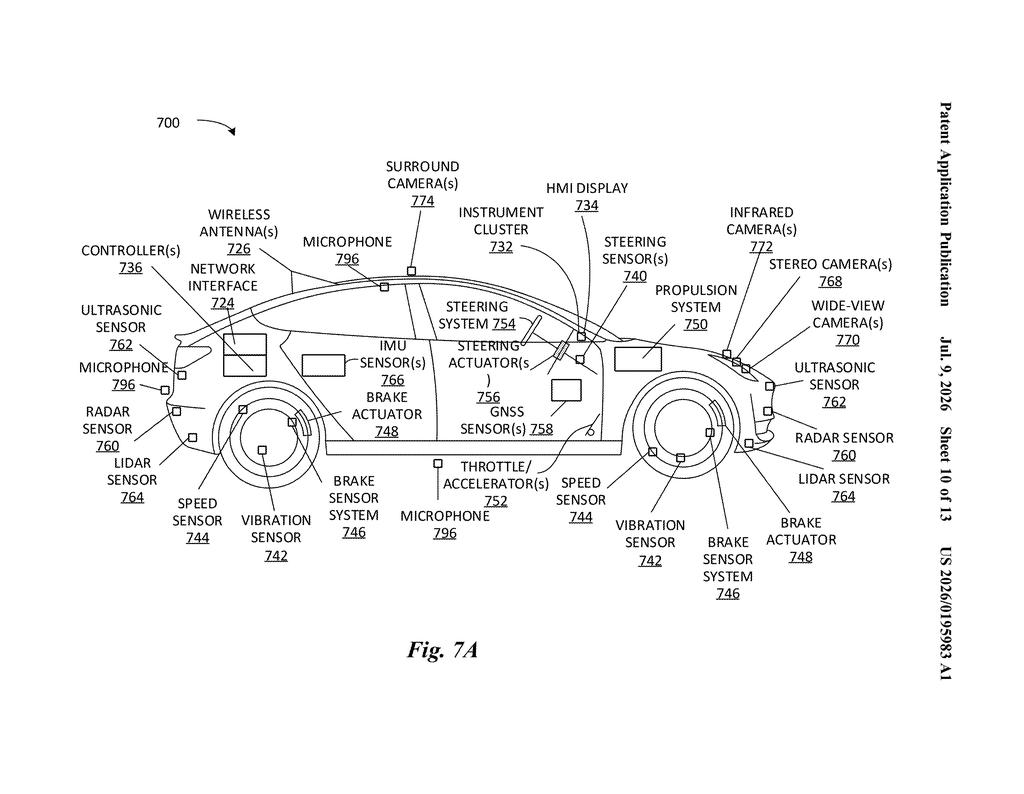
How Nvidia turns flat photos into a full 3D picture
Imagine you're trying to describe a busy street corner to someone who can't see it. You'd have to say what every object is AND where it sits in three-dimensional space. Right now, most vehicles and robots that need that kind of spatial awareness rely on laser scanners called lidar, which are costly and bulky. Nvidia's patent describes an AI system that does the same job using nothing but regular 2D camera images.
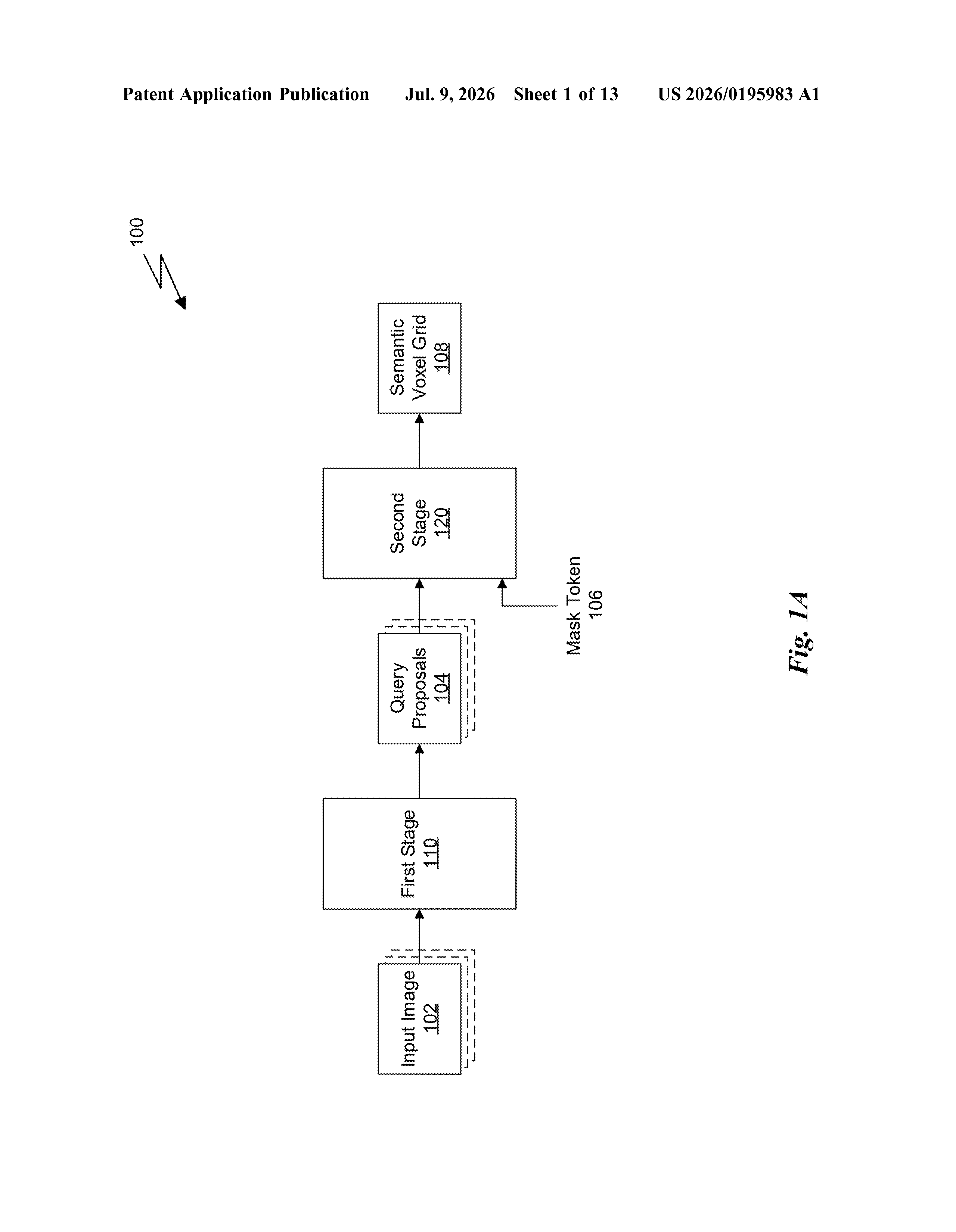
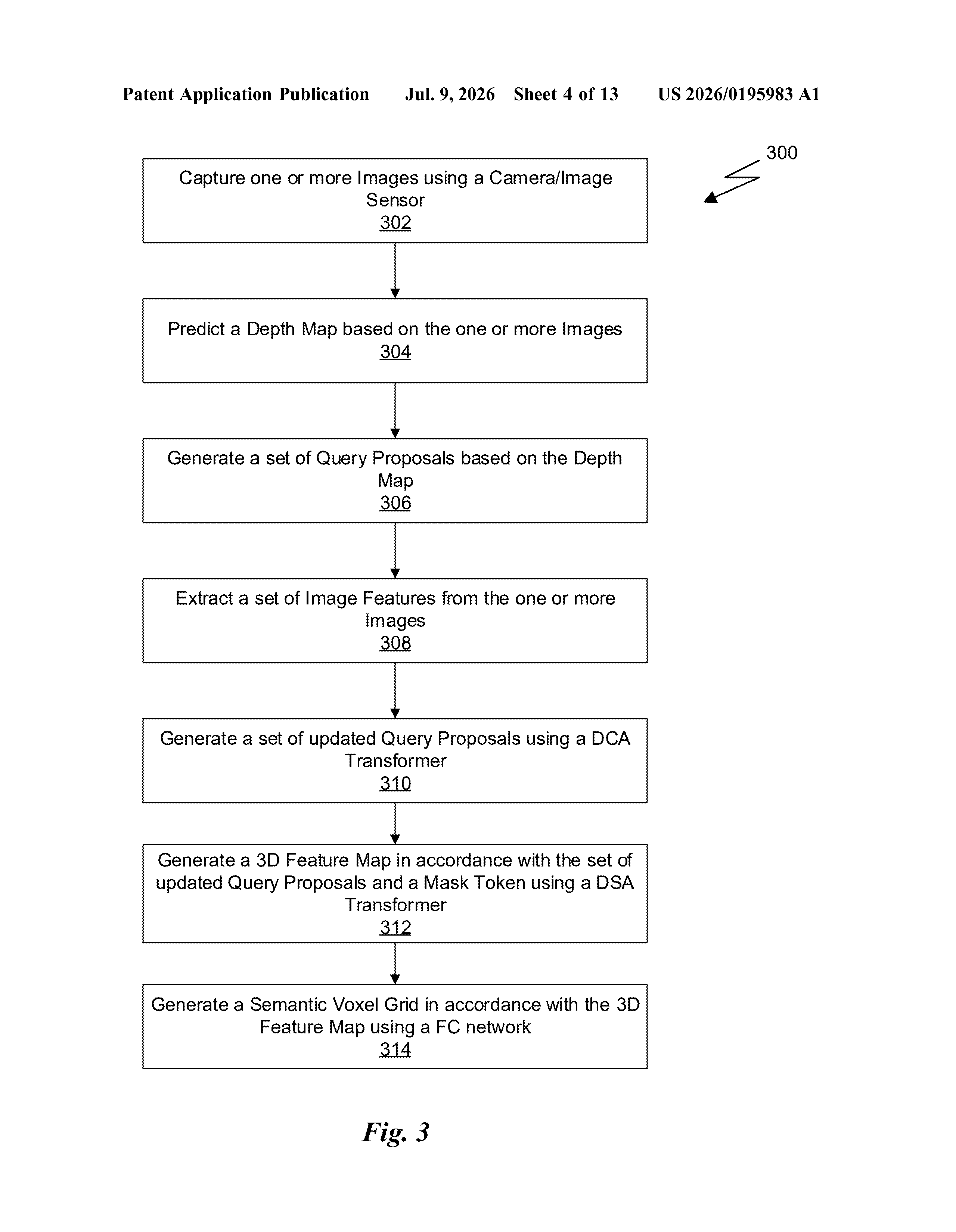
The system takes one or more photos, figures out how far away things are just from visual cues, and then builds what's called a semantic 3D map: a grid of tiny cubes (voxels) where each cube is labeled with what it contains, whether that's road, pedestrian, parked car, or empty air. The whole process runs through two specialized AI modules that progressively sharpen the picture, focusing compute only on the parts of the scene that actually contain something interesting.
For you, the end result is technology that could make self-driving systems and robots significantly cheaper to build, because a camera array costs a fraction of what a full lidar rig does.
How the two-transformer pipeline refines voxel features
The patent describes a multi-stage AI pipeline designed to convert 2D images into a 3D semantic scene completion output, meaning a volumetric grid where every occupied region of space is labeled by category.
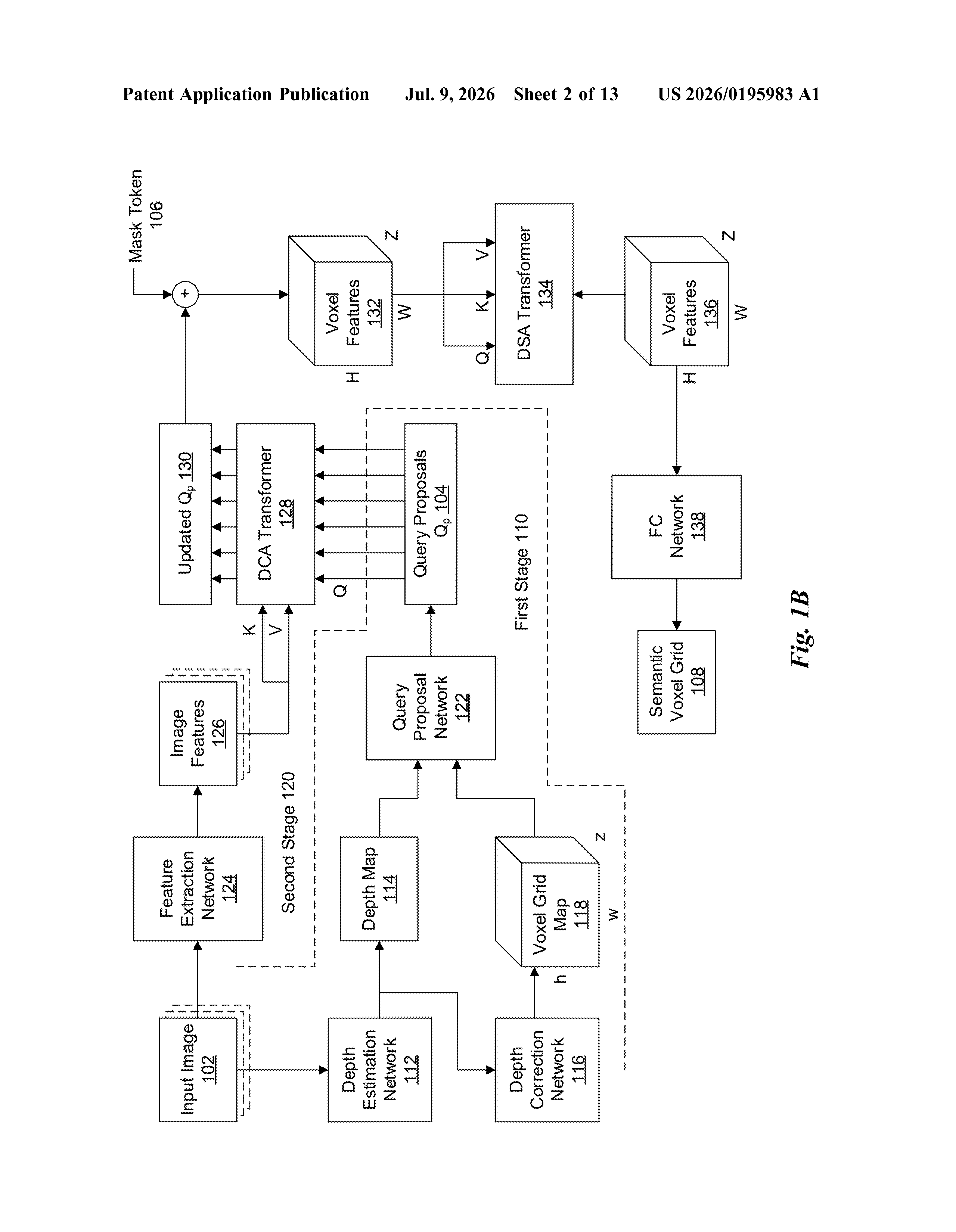
The process works in four broad steps:
- Image encoding: One or more neural networks process the input photos to extract feature maps (compressed representations of visual content) and estimate depth, inferring how far objects are from subtle visual cues like size and perspective.
- Query proposal generation: Using that depth estimate, the system generates a set of candidate 3D locations called query proposals: guesses about where objects probably sit in 3D space.
- Cross-attention transformer (DCA): A first transformer (think of a transformer as an AI module that weighs which parts of the input are relevant to which parts of the output) compares each 3D query proposal against the 2D image features, using a deformable attention scheme that samples only a small, relevant neighborhood of pixels rather than the whole image. This produces refined 3D feature representations called initial voxel features.
- Self-attention transformer (DSA): A second transformer then lets those voxel features talk to each other, refining the 3D structure by considering spatial relationships between neighboring voxels. The result is upsampled to full resolution and passed through a lightweight final network to produce the finished 3D semantic map.
The sparse aspect is key: instead of processing every possible voxel in a scene (which would be enormous), the system focuses compute on occupied regions, keeping the workload tractable.
What this means for self-driving cars and robotics
Self-driving vehicles and autonomous robots need to know not just where objects are but what they are, all in three dimensions, in real time. Lidar handles that job today but adds thousands of dollars to hardware costs and creates sensor packages that are hard to miniaturize. A camera-only approach that achieves comparable 3D understanding would shift the economics considerably, making capable autonomy more accessible.
Nvidia is already the dominant supplier of chips and software to the autonomous-vehicle industry. A patent covering the core AI architecture for camera-based 3D scene understanding fits directly into that business, particularly as competitors and customers push toward lower-cost, camera-first sensor stacks. This kind of foundational perception IP is exactly where Nvidia has been building a moat beyond just selling hardware.
This is serious perception research, not a paper patent. The inventor list includes well-known names from Nvidia's AI research side, and the core technique (sparse voxel transformers for monocular or multi-camera 3D completion) aligns with a genuine industry need. Whether or not this specific patent shapes a product, the underlying direction matters: camera-only 3D understanding is where the autonomous-vehicle industry is heading, and Nvidia is clearly positioning itself at the foundation of that stack.
Get our take in your Top Stories
Liked this breakdown? Add Patentlyze as a preferred source on Google, and our plain-English take shows up more often in your Top Stories the next time Nvidia patent news breaks.
There are more where this came from
We read every patent application Big Tech publishes and send you the ones worth knowing. Plain English, free, every week.
The drawings
13 drawing sheets from US 2026/0195983 A1 · click any drawing to enlarge
Want this weekly breakdown for a company we don't cover? Patentlyze Pro →