
Nvidia Patents a Way for GPU Thread Groups to Share Memory Directly
Nvidia has filed a patent for a low-level API that lets separate groups of GPU workers read each other's memory without going through the usual roundabout handoffs. It's a small change on paper, but memory coordination is one of the biggest bottlenecks in GPU computing.
What Nvidia's thread-group memory sharing actually does
Imagine a factory floor where hundreds of workers are building something together, but each team has its own locked supply cabinet. If one team finishes cutting parts that another team needs, they can't just hand them over directly, they have to log a request, wait for a supervisor to move the parts to a shared bin, and then the second team fetches them. That delay adds up fast.
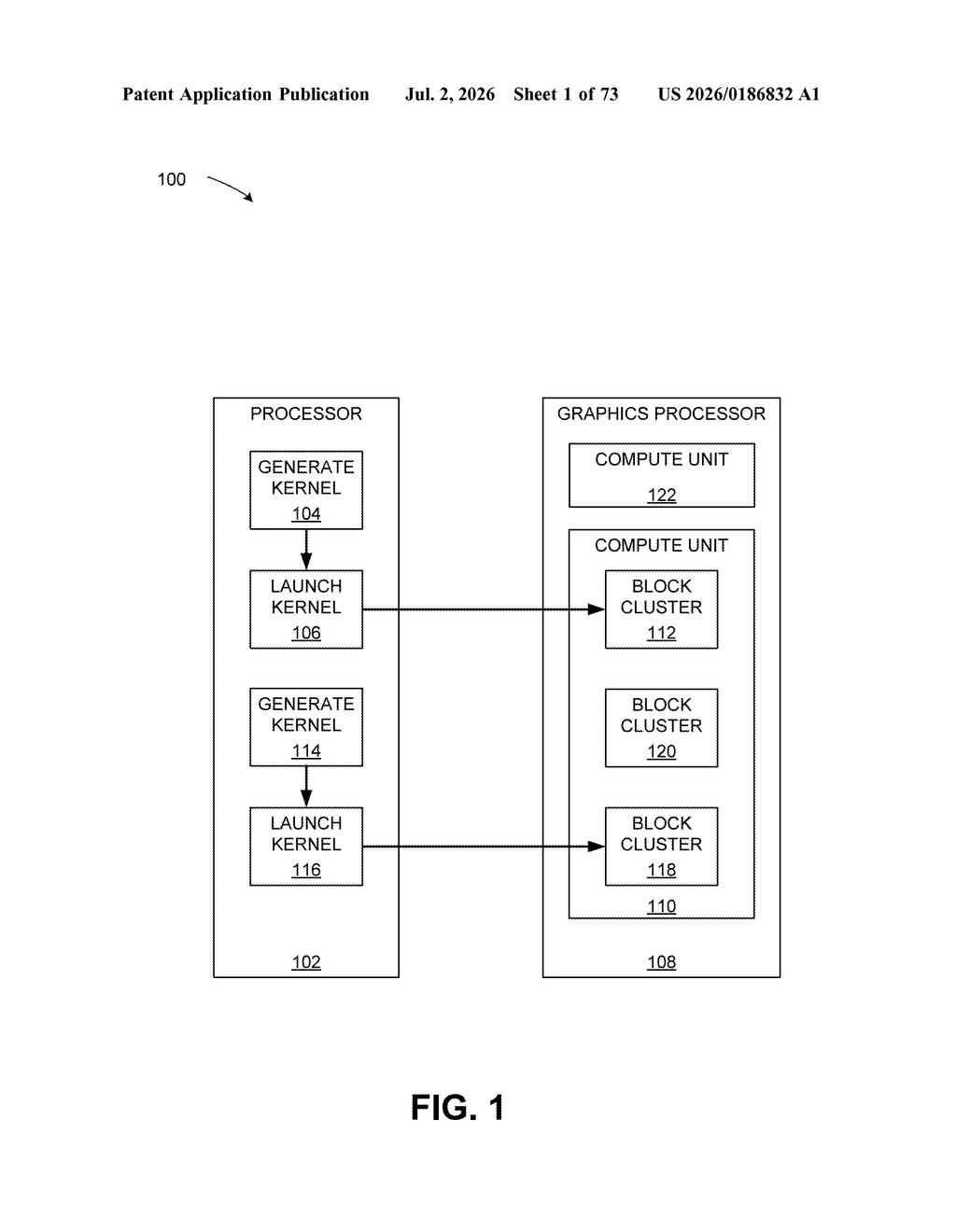
Nvidia's patent describes an API (a programming shortcut that developers use to talk to hardware) that effectively gives teams a master key. One group of GPU workers can flag a chunk of memory it's using, and the system translates that address so another group can read the same data directly, no detour required.
This is squarely aimed at developers writing CUDA programs, Nvidia's software platform for running parallel tasks on GPUs. It won't change what end users see on screen, but it gives programmers a cleaner, more direct way to coordinate large parallel workloads, which matters for anything from AI training to scientific simulations.
How the API translates memory addresses between thread blocks
GPUs work by running thousands of small programs simultaneously. Those programs are organized into thread blocks, teams of threads that share fast local memory. The problem: that local memory is normally invisible to other thread blocks. If two blocks need the same data, the usual approach is to copy it out to slower global memory first, which wastes time.
This patent describes an API call (a function a developer invokes in code) that does the following:
- Accepts a memory address held by one group of thread blocks
- Translates that address into an equivalent address that a second group of thread blocks can actually use
- Returns that translated address to the second group so it can read the original data directly
The translation step is the key part. Memory addresses that are valid for one thread block are not automatically valid for another, the hardware namespaces them separately. The API bridges that gap by performing the address remapping in hardware circuitry rather than forcing the programmer to manage it manually.
The patent situates this inside the CUDA programming model, Nvidia's framework for writing GPU software. It's an infrastructure-level addition: one new API call that handles a coordination task developers currently have to work around with more cumbersome techniques.
What this means for GPU programmers and CUDA workloads
For GPU workloads that involve lots of cooperation between thread groups, large matrix operations, graph algorithms, certain AI model architectures, memory coordination overhead is a real cost. Giving developers a direct API for cross-group memory sharing means they can write tighter, faster code without manually routing data through slower memory tiers.
For Nvidia, this kind of low-level CUDA improvement is also strategic. The more expressive and capable the CUDA programming model becomes, the harder it is for developers to switch to competing GPU platforms that don't support the same features. This patent is less about a flashy capability and more about deepening the moat around Nvidia's software ecosystem.
This is deep plumbing work, the kind of patent that matters a lot to GPU programmers and essentially no one else. But in Nvidia's case, 'deep plumbing' is exactly where competitive advantage is built. CUDA's dominance in AI and scientific computing comes precisely from years of these incremental, low-level improvements that competitors haven't replicated.
Get our take in your Top Stories
Liked this breakdown? Add Patentlyze as a preferred source on Google, and our plain-English take shows up more often in your Top Stories the next time Nvidia patent news breaks.
There are more where this came from
We read every patent application Big Tech publishes and send you the ones worth knowing. Plain English, free, every week.
Want this weekly breakdown for a company we don't cover? Patentlyze Pro →