
Intel Patents a Leaner Way to Store Numbers Inside AI Chips
AI chips spend most of their time doing one thing: multiplying enormous tables of numbers together. Intel thinks it has found a cheaper way to pull that off by changing how numbers are stored in memory in the first place.
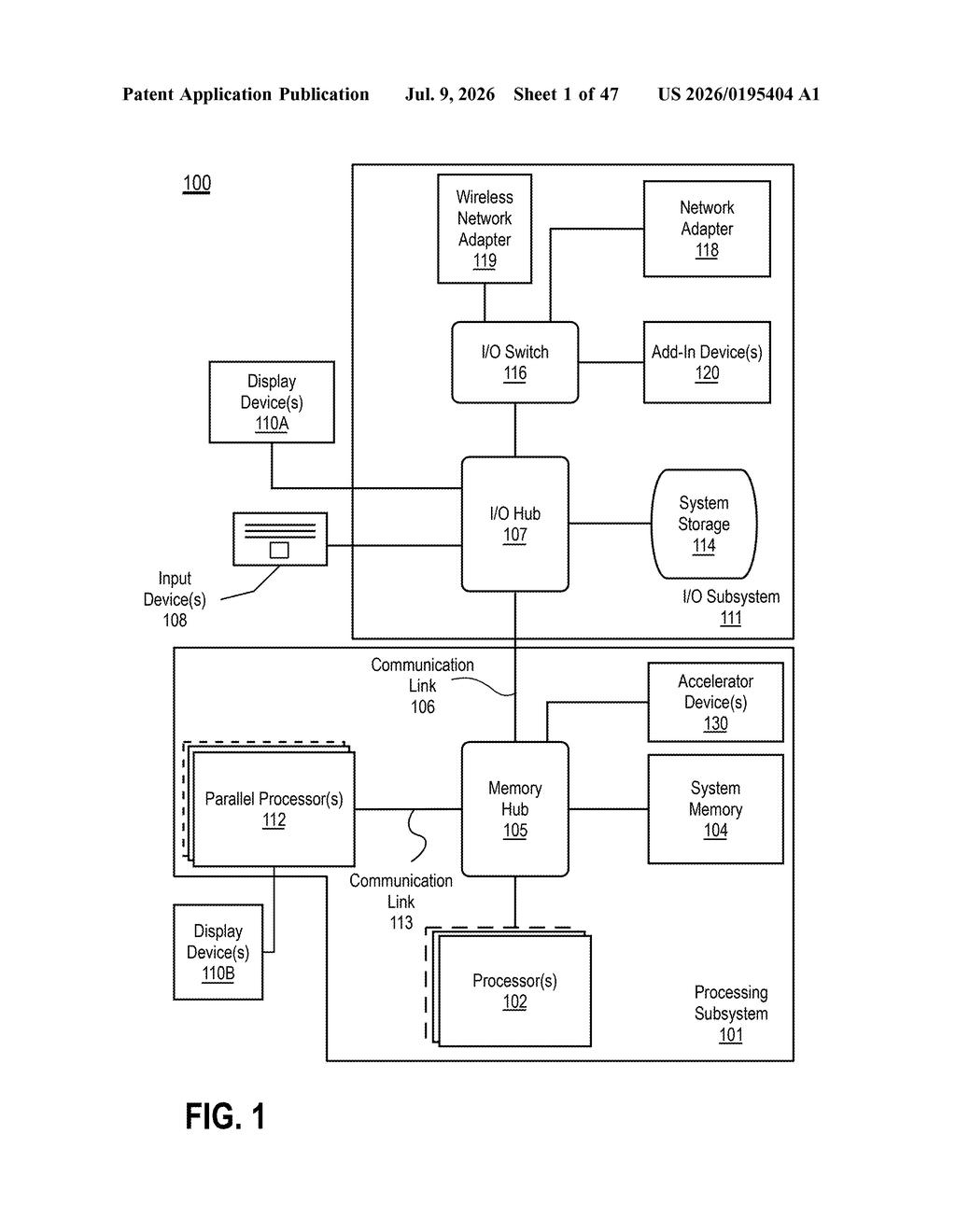
What Intel's bit-plane memory format actually does
Think of how your phone stores photos. It packs red, green, and blue values for every pixel in a neat row, one pixel at a time. Now imagine instead sorting all the red values together, then all the green, then all the blue. That reorganization sounds cosmetic, but it can make certain operations dramatically faster because the chip grabs exactly what it needs without wading through the rest.
Intel's patent does something similar for the numbers an AI processes. Instead of storing each value as a complete block of bits lined up in a row, it stores the numbers in bit plane format, which groups the same "position" of every number together. That lets the chip handle values of different sizes without wasted space, and it lets simpler circuits called adders do work that normally requires more power-hungry multiplier circuits.
The claimed payoff is faster AI processing and lower memory use. Whether that gap is big enough to matter in real products is the real question.
How adders replace multipliers in Intel's matrix engine
At the center of every AI model is a matrix multiplication, which is the process of multiplying large grids of numbers against each other millions of times per second. Normally, each number is stored as a fixed-width block of bits sitting one after another in memory. The chip's circuits are designed around that fixed layout, which means any variation in number size wastes space or requires extra bookkeeping.
Bit plane format flips the layout. Instead of storing all the bits for value A, then all the bits for value B, and so on, it groups bit position 0 from every value together, then bit position 1 from every value, and so on. This lets the chip mix values of different bit widths in the same memory space without padding or gaps.
The architectural benefit is that this layout is naturally suited to addition-based computation. The patent describes using adders (simpler, lower-power circuits) rather than the more expensive multiplier circuits that standard matrix engines rely on. In hardware terms, fewer transistors doing the same logical work means lower energy per operation and potentially higher throughput.
The key claims are:
- A processor with memory that stores data in bit plane format and uses adder arrays for matrix operations
- A full system pairing that memory and processor with a dedicated matrix multiplication module
- A method covering store, retrieve, and compute steps in the same format
What this means for AI chip efficiency at scale
AI training and inference are already straining data center power budgets, and chip designers are under pressure to do more math per watt. A memory layout that cuts waste while enabling simpler circuits is exactly the kind of low-level architectural bet that compounds over thousands of chips running in parallel. Intel is competing hard against Nvidia and AMD for AI accelerator market share, and efficiency gains at this level of the stack are a legitimate engineering lever.
For the average person, this kind of work is invisible but consequential. If it ships in real silicon, the AI assistant you talk to or the image generator you use could respond faster or cost less to run, without any change to the software you see.
This is a real engineering idea, not a patent placeholder. Bit-serial and bit-plane computation have genuine academic backing as ways to trade multiplier complexity for adder arrays, and Intel filing in this space signals it is taking alternative number formats seriously for AI workloads. That said, the patent covers a broad architectural principle, and the distance from a filed claim to a shipped product with measurable gains is long.
Get our take in your Top Stories
Liked this breakdown? Add Patentlyze as a preferred source on Google, and our plain-English take shows up more often in your Top Stories the next time Intel patent news breaks.
There are more where this came from
We read every patent application Big Tech publishes and send you the ones worth knowing. Plain English, free, every week.
Want this weekly breakdown for a company we don't cover? Patentlyze Pro →