
Intel Patent: Faster 3D Scene Rendering Through Smarter Geometry Sorting and Culling
Intel has filed a patent for a technique that takes the spatial-organization hardware normally used for ray tracing and puts it to work accelerating the older, more common style of 3D rendering. It's a clever cross-wiring of two systems that usually operate independently.
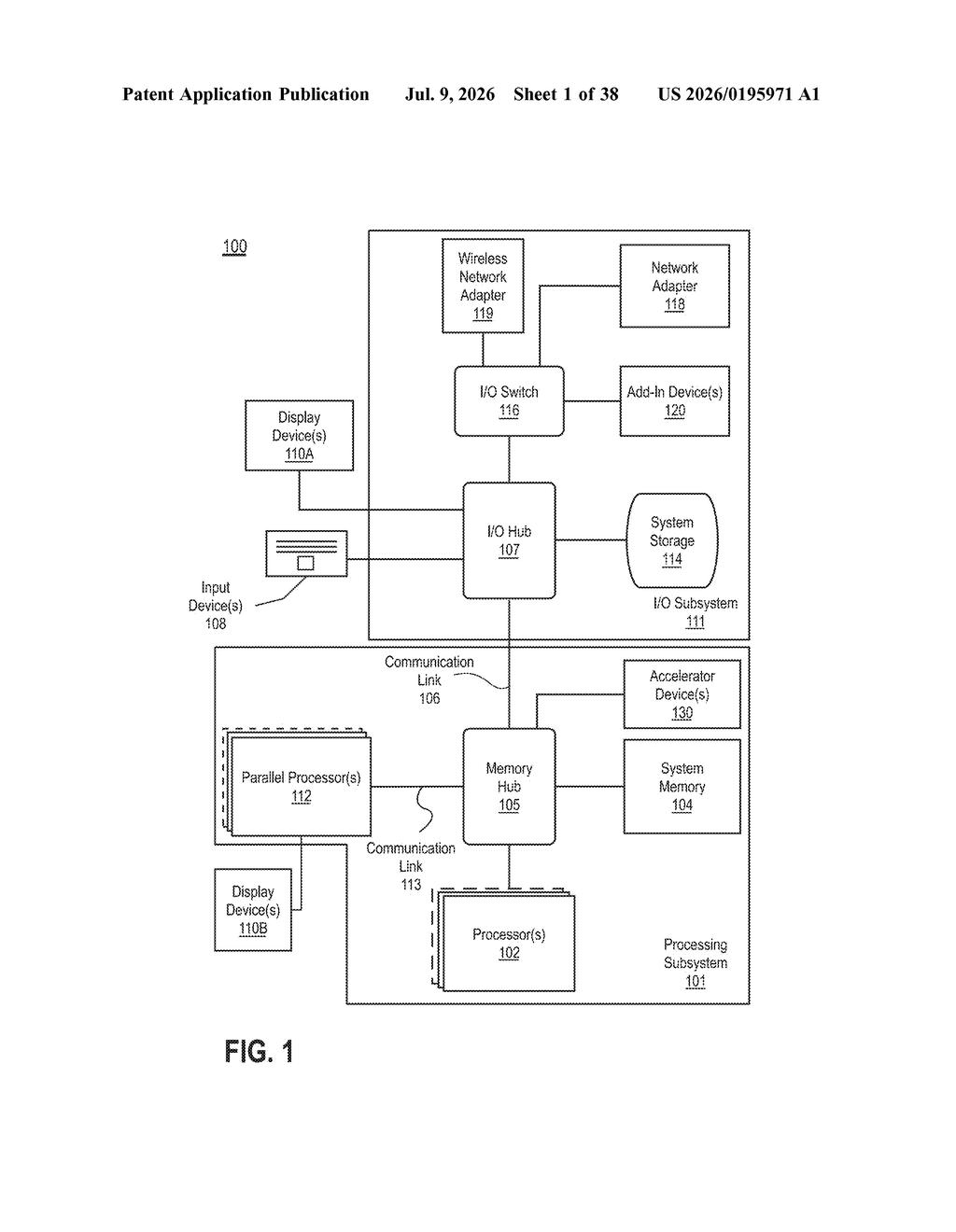
How Intel's rasterization shortcut actually works
Imagine you're trying to find every item in a massive warehouse that's visible through a single window. You could check every shelf one by one, or you could use a smart map that lets you skip entire wings of the building that are clearly out of view. That second approach is essentially what Intel is patenting here.
Most games and 3D apps render images using a method called rasterization, which works by projecting geometry onto your screen pixel by pixel. Intel's idea is to use a spatial index, the kind of organized tree-shaped map that ray-tracing engines rely on, to quickly figure out which chunks of a scene are even visible before sending them to the renderer. Invisible geometry gets thrown out early, so the chip does less work overall.
The patent also describes splitting the screen into smaller regions and rendering them in parallel, and sorting visible geometry so the chip handles depth comparisons more efficiently. The result is a rendering pipeline that does the same job with fewer wasted steps.
Inside Intel's BVH-to-rasterizer pipeline
The patent describes a graphics processor that applies a bounding volume hierarchy (BVH) traversal unit, the same kind of tree-structured spatial data organization used in ray tracing, to accelerate conventional rasterization.
Here's the sequence the chip follows:
- Geometry in a scene is organized into a BVH, a nested set of bounding boxes where each box contains either smaller boxes or actual triangles.
- The chip tests each box against the view frustum (the camera's visible cone of space) to determine whether it's in view, partially in view, or completely hidden.
- Boxes that don't intersect the frustum are discarded immediately. Boxes that are fully inside bypass clipping calculations entirely, saving additional work.
- The geometry from visible leaf nodes (the deepest level of the tree, containing actual triangles) is sent to the rasterizer for final rendering.
The patent adds two further optimizations. First, visible leaf nodes are sorted by depth before rendering, which helps the depth-testing unit reject occluded pixels earlier. Second, the view frustum can be divided into screen-aligned sub-regions, each handled by a dedicated rasterization thread, enabling parallel rendering across the chip's execution units.
What this means for GPU rendering performance
Modern GPUs already include dedicated BVH traversal hardware for ray tracing, but that hardware sits mostly idle during conventional rasterized rendering, which still describes the vast majority of real-time graphics workloads. Intel's approach would put that traversal silicon to work even in non-ray-traced frames, potentially improving frame rates or allowing more complex scenes without adding new transistors.
For you as a PC gamer or developer, the practical upside would be faster rendering at the same power budget, or the ability to push more geometry into a scene before hitting a performance ceiling. This matters especially as game worlds get larger and more detailed, and as integrated graphics (where Intel competes strongly) faces tighter power constraints than discrete cards.
This is a genuinely interesting architectural idea: recycling BVH traversal hardware that already exists on the die to do useful work during rasterization passes. It's not a flashy consumer feature, but it's the kind of low-level efficiency gain that can move the needle on GPU performance without requiring bigger chips or more power. Intel's Arc GPU line needs every efficiency win it can find, so the timing makes sense.
Get our take in your Top Stories
Liked this breakdown? Add Patentlyze as a preferred source on Google, and our plain-English take shows up more often in your Top Stories the next time Intel patent news breaks.
There are more where this came from
We read every patent application Big Tech publishes and send you the ones worth knowing. Plain English, free, every week.
Want this weekly breakdown for a company we don't cover? Patentlyze Pro →